Quick Answer
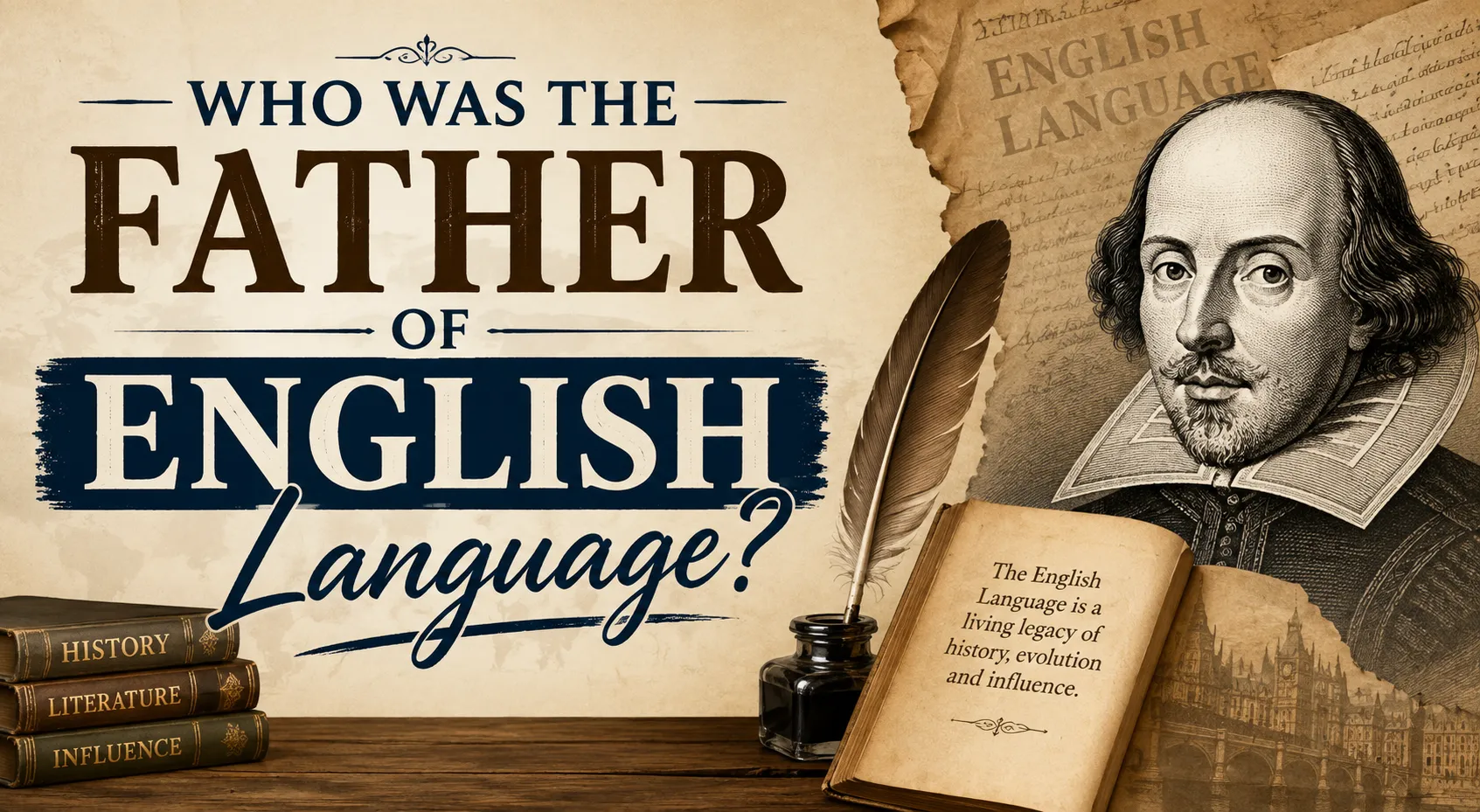
When exploring the rich history of world literature, a common question arises: who was the father of English Language? The answer is Geoffrey Chaucer. Living in the 14th century, Chaucer is widely celebrated as the father of English literature and the English language because he was the first great poet to write extensively in Middle English. At a time when the royal court and intellectuals strictly used French and Latin, Chaucer's masterpiece, The Canterbury Tales, proved that the everyday English spoken by common people was beautiful, complex, and fully capable of literary greatness.
The Linguistic Divide in Medieval England
To understand why Chaucer's writing was so revolutionary, we must look at the linguistic landscape of 14th-century England. Following the Norman Conquest of 1066, French became the language of the aristocracy, the royal court, and the legal system. Latin was the strict domain of the Church and academia.
English—specifically Middle English—was considered a vulgar, peasant language. It was fractured into various regional dialects and was rarely written down in formal manuscripts. An author looking for prestige, wealth, or royal patronage would naturally choose to write in French or Latin to appease the educated elite.
Championing the Vernacular
Geoffrey Chaucer was not a peasant; he was a well-connected courtier, civil servant, and diplomat who was completely fluent in French, Latin, and Italian. However, instead of conforming to the linguistic norms of the elite, he made a bold choice: he wrote in the vernacular. He utilized the everyday Middle English spoken by the common people on the streets of London.
His crowning achievement, The Canterbury Tales, is a collection of stories told by a diverse group of pilgrims traveling to the shrine of Saint Thomas Becket. By featuring characters from all walks of life—from a noble knight to a drunken miller—Chaucer captured the varied voices, humor, and spirit of the English people.
Key Contributions to the English Language
Chaucer’s decision to write in his native tongue had a monumental ripple effect on the development of the language. Here are his core contributions:
Literary Legitimacy: He proved that English could rival Latin and French in poetic nuance, rhythm, and emotional depth.
Standardization: Because his works were so incredibly popular and widely copied, his specific London dialect of Middle English helped standardize the language across a fractured country.
Vocabulary Expansion: Chaucer is credited with introducing or popularizing hundreds of new words in the English lexicon, heavily borrowing from French and Latin and adapting them for English tongues.
Rhythmic Innovation: He pioneered the use of iambic pentameter, a rhythmic structure that would later become the absolute backbone of English poetry.
Geoffrey Chaucer at a Glance
To better understand the man behind the language, here is a quick summary of his historical profile:
Historical Detail | Fact / Information |
|---|
Birth / Death | c. 1340 – October 25, 1400 |
Most Famous Work | The Canterbury Tales |
Language Spoken/Written | Middle English |
Other Notable Works | Troilus and Criseyde, The Book of the Duchess |
Burial Site | Westminster Abbey (The first to be buried in "Poets' Corner") |
The Timeline of English
To see exactly where Chaucer fits into the broader evolution of the language we speak today, explore this interactive timeline of linguistic eras:
Frequently Asked Questions (FAQs)
Did Geoffrey Chaucer invent the English language?
No, he did not invent it. The English language evolved naturally over centuries from its Germanic roots (Old English). Chaucer's specific contribution was elevating the existing, spoken language (Middle English) into a highly respected medium for high literature.
How different is Chaucer's English from Modern English?
It is remarkably different. Chaucer wrote in Middle English, which sounds and looks quite foreign to modern readers. It predates the "Great Vowel Shift," meaning the pronunciation of vowels in Chaucer's time was much closer to modern European languages (like French or German) than to Modern English.
Why is William Shakespeare not considered the father of the English language?
While Shakespeare is arguably the greatest writer in the English language and coined thousands of words, he wrote during the Early Modern English period (late 16th century). Chaucer laid the foundational groundwork two centuries earlier, securing the survival of the language and making the literary landscape that Shakespeare inherited possible.
Conclusion
Whenever literature lovers and language historians ask, "who was the father of English Language?", they are paying tribute to a visionary who saw the inherent beauty in the everyday voices of his people. Geoffrey Chaucer took a language that was dismissed by the ruling elite and spun it into poetic gold. By choosing to write The Canterbury Tales in the native tongue of the commoners, he secured the survival and artistic legitimacy of English, laying a rock-solid foundation for every great writer who followed in his footsteps.
Sources & References: The British Library
Also Read: Who was the father of Vedavyasa?