
Quick Answer
When exploring the rich and complex tapestry of medieval Indian history, a fascinating question frequently emerges: Who was the first Muslim lady to rule the Delhi Throne? The answer is Razia Sultana (also known as Raziyya al-Din). She reigned as the Sultan of Delhi from 1236 to 1340—pardon me, from 1236 to 1240 CE—making history not only as the first female Muslim ruler of the Delhi Sultanate but also as one of the very few women to ever sit on the throne of Delhi in the entire medieval era. Her brief yet remarkable reign shattered conventional gender barriers in a deeply patriarchal society.
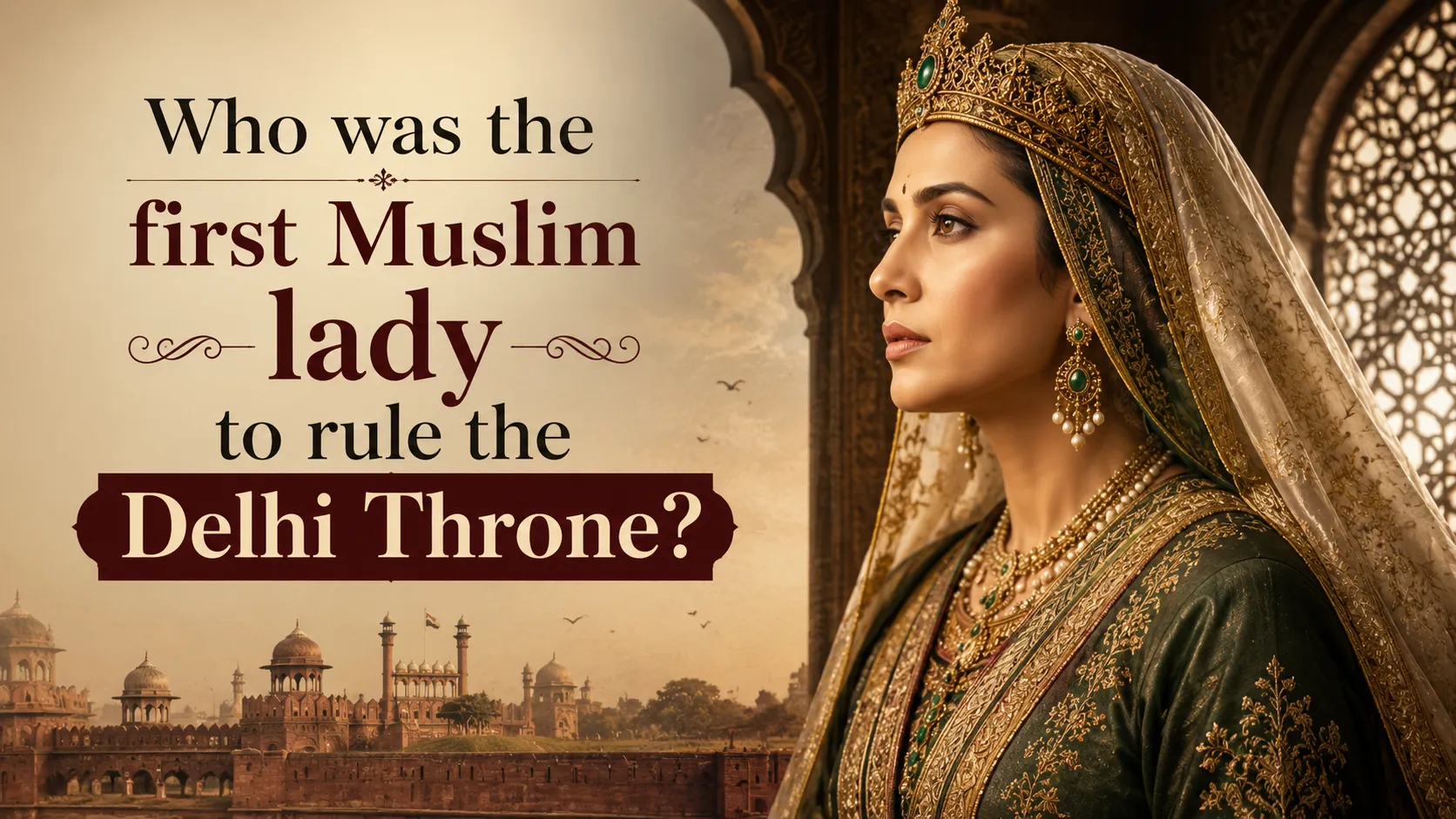
The Rise of a Visionary Monarch
To understand the magnitude of Razia’s ascension, one must look at the turbulent political landscape of 13th-century India. Razia was the daughter of Shams-ud-din Iltutmish, a brilliant slave-turned-sultan who laid the core foundation of the Delhi Sultanate under the Mamluk (Slave) dynasty.
Unlike many rulers of his time, Iltutmish recognized exceptional administrative ability and intelligence in his daughter. He famously remarked that his sons were unworthy of the crown, grooming Razia to take over the mantle of leadership. When Iltutmish passed away, the powerful Turkish nobility (known as the Chalisa or the "Group of Forty") initially bypassed Razia, placing her incompetent brother, Rukn-ud-din Firuz, on the throne. However, after a period of disastrous misrule and public uprisings, Razia seized the opportunity, won the support of the citizens of Delhi, and rightfully claimed the throne in November 1236.
Breaking Gender Norms and Facing Opposition
Razia Sultana was a revolutionary leader who refused to rule from behind a veil. Upon ascending the throne, she discarded traditional female seclusion, dressed in masculine royal attire (including a tunic and a headdress instead of a veil), and rode elephants into battle alongside her troops.
However, her progressive approach and refusal to submit to the elite nobility created fierce enemies. The powerful Turkish nobles could not digest the idea of a woman exercising absolute authority over them. They plotted constantly against her, viewing her independent spirit as a direct threat to their political privileges. Despite facing severe opposition, Razia proved herself to be a capable military commander and a wise administrator who focused heavily on infrastructure, trade, and the welfare of her subjects.
Razia Sultana's Reign at a Glance
To better understand the historical context of her rule, here is a summary of key details regarding her life and monarchy:
Historical Parameter | Fact / Detail |
|---|---|
Full Name | Jalal-ud-din Raziyya (Razia Sultana) |
Dynasty | Mamluk (Slave) Dynasty |
Period of Reign | 1236 – 1240 CE |
Predecessor | Rukn-ud-din Firuz |
Successor | Muiz-ud-din Bahram Shah |
Capital City | Delhi |
Key Achievement | First and only female Muslim ruler of the Delhi Sultanate |
Top Legacy Highlights of Razia Sultana
Even though her reign lasted less than four years, Razia left an indelible mark on Indian history. Here are the core highlights of her impactful legacy:
Unrivaled Administrative Courage: She established a strong, centralized justice system, frequently listening directly to public grievances in open court.
Military Leadership: She personally led military campaigns to suppress regional rebellions, proving her tactical competence on the battlefield.
Merit-Based Appointments: Razia challenged the monopoly of the Turkish nobility by promoting non-Turks to high administrative positions, which unfortunately triggered her political downfall.
Cultural Patronage: She actively supported schools, academies, research centers, and public libraries, fostering an environment of learning across her empire.
Frequently Asked Questions (FAQs)
How did Razia Sultana's reign come to an end?
The powerful nobility engineered a rebellion against her, led by Malik Ikhtiyar-ud-din Altunia, the governor of Bhatinda. Though Razia marched to suppress the revolt, she was captured. In a brilliant political maneuver, she married Altunia to secure his alliance and marched back to reclaim Delhi. However, their combined forces were defeated, and both were tragically assassinated during their retreat in October 1240.
Did Razia Sultana have any successors?
No other woman ever ruled the Delhi Sultanate after Razia. Following her death, the nobles placed her weak cousin, Muiz-ud-din Bahram Shah, on the throne, restoring the aristocratic control she had fought so hard to dismantle.
Why is Razia Sultana remembered today?
She is celebrated as a feminist pioneer in medieval history—a leader who dared to defy rigid patriarchal norms, military expectations, and political corruption to govern with absolute authority and dignity.
Conclusion
Whenever history enthusiasts ask, "Who was the first Muslim lady to rule the Delhi Throne?", they are uncovering the story of a truly exceptional trailblazer. Razia Sultana was a monarch ahead of her time. Trapped in an era of intense political betrayal and rigid gender prejudice, she chose to fight for her crown rather than yield to convention. Though her reign was cut tragically short, Razia remains immortalized as a fearless symbol of resilience, leadership, and gender equality in the annals of Indian history.
Sources & References: NCERT
Also Read: Who was the first female Governor of an Indian State?