Quick Answer
When exploring the vast and complex timeline of the Indian subcontinent, a highly debated question often arises among historians and enthusiasts: Who was the greatest Hindu ruler of ancient, medieval Indian history? Because "greatness" is subjective, there is no single, universally agreed-upon answer. However, historians generally highlight a select few whose military genius, administrative brilliance, and cultural contributions set them apart. In ancient history, Chandragupta Maurya and Samudragupta are often cited as the greatest. In the medieval era, Krishnadevaraya of the Vijayanagara Empire and Chhatrapati Shivaji Maharaj, founder of the Maratha Empire, are widely considered the most formidable and visionary Hindu monarchs.
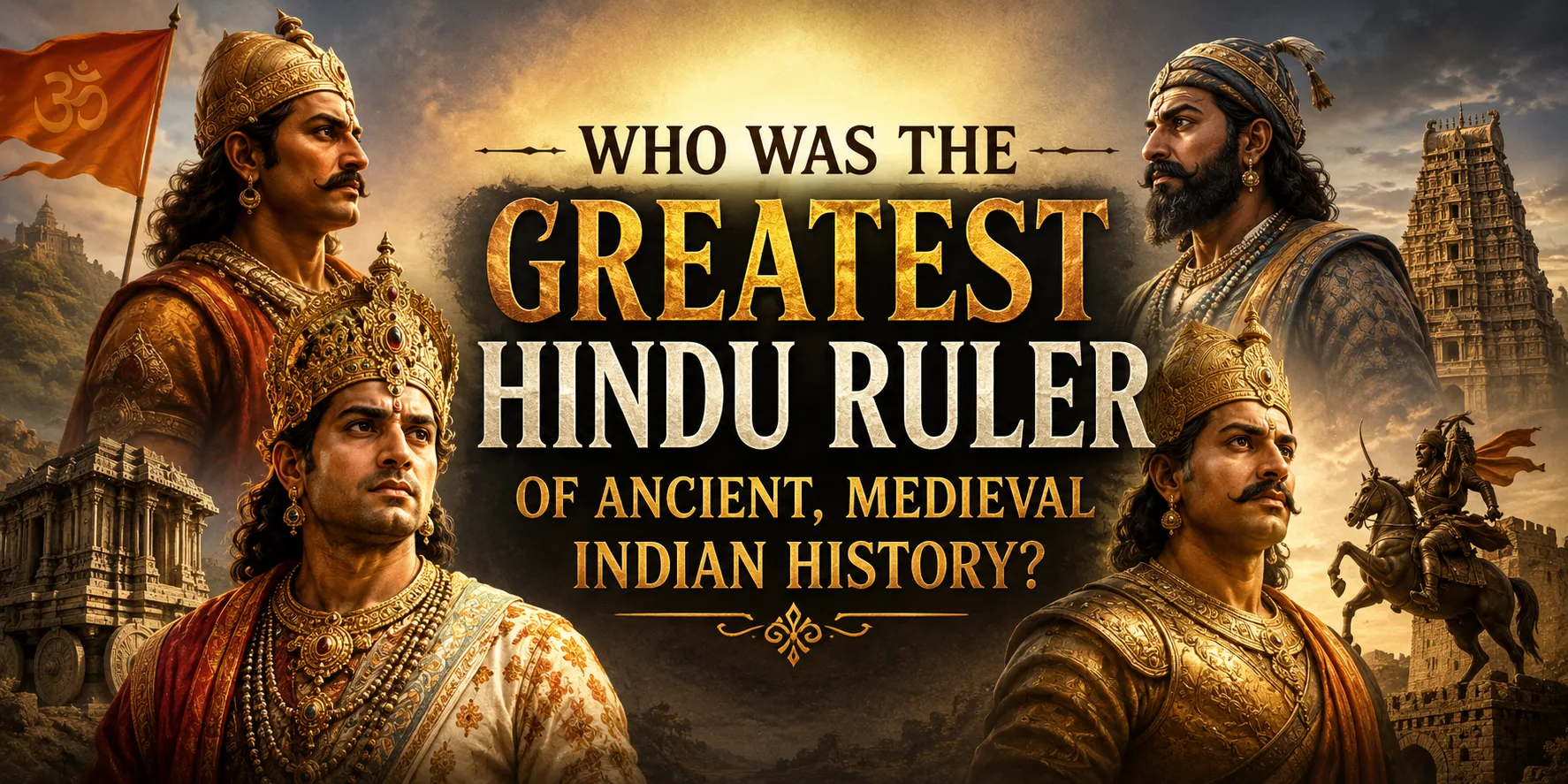
The Titans of Ancient India
To evaluate the greatest rulers, we must first look at the ancient era, a time when massive empires were forged through sheer military might and strategic statecraft.
Chandragupta Maurya (Reign: c. 322 – 298 BCE):
Chandragupta is renowned as the first ruler to unify most of the Indian subcontinent under one administration. Guided by his brilliant advisor Chanakya, he overthrew the Nanda Dynasty and established the Mauryan Empire. He is credited with creating a highly centralized administration and a massive standing army that successfully deterred the remnants of Alexander the Great's Macedonian forces from advancing further into India.
Samudragupta (Reign: c. 335 – 375 CE):
Often referred to by historians as the "Napoleon of India," Samudragupta was the second emperor of the Gupta Dynasty. His reign marked the beginning of what is widely considered the Golden Age of India. He was an undefeated military conqueror who drastically expanded his empire’s borders, but he was also a passionate patron of the arts, literature, and science, heavily promoting classical Sanskrit literature and Hindu philosophy.
The Champions of Medieval India
As the political landscape shifted during the medieval period, facing new invasions and the establishment of Sultanates, new Hindu powers emerged to defend their territories and preserve their cultural heritage.
Krishnadevaraya (Reign: 1509 – 1529 CE):
Krishnadevaraya was the third ruler of the Tuluva Dynasty and the most powerful emperor of the Vijayanagara Empire in South India. Under his leadership, the empire reached the zenith of its military power and cultural prosperity. He successfully defeated the Deccan Sultanates and the Kalinga kingdom. Beyond his military prowess, he was a prolific writer and a massive patron of Telugu, Kannada, and Sanskrit literature, as well as monumental Dravidian architecture.
Chhatrapati Shivaji Maharaj (Reign: 1674 – 1680 CE):
In the late medieval/early modern period, Shivaji emerged as a legendary figure. He carved out an independent Maratha kingdom from the declining Adilshahi sultanate of Bijapur and fiercely resisted the massive Mughal Empire led by Aurangzeb. Shivaji is celebrated for his innovative military tactics (pioneering guerrilla warfare in the region), his strict adherence to ethical codes in warfare, and his progressive civil administration, which included a disciplined navy and a council of ministers (Ashtapradhan).
Comparing the Great Rulers at a Glance
To better understand the diverse achievements of these legendary monarchs, here is a summary comparing their primary contributions:
Ruler | Era | Empire / Kingdom | Primary Achievements |
|---|---|---|---|
Chandragupta Maurya | Ancient | Mauryan Empire | First to unify the Indian subcontinent; established a centralized bureaucracy. |
Samudragupta | Ancient | Gupta Empire | Undefeated military conqueror; initiated the cultural Golden Age of India. |
Krishnadevaraya | Medieval | Vijayanagara Empire | Defended South India; massive patron of regional literature and temple architecture. |
Shivaji Maharaj | Medieval | Maratha Empire | Pioneered guerrilla warfare; established a progressive, modern naval and civil administration. |
Defining "Greatness" in Historical Context
When historians debate Who was the greatest Hindu ruler of ancient, medieval Indian history?, they evaluate the monarchs based on several key metrics:
Territorial Expansion: Did the ruler successfully expand and unify disparate regions under a single, stable government?
Administrative Reform: Did they establish a fair, efficient taxation and justice system that survived beyond their reign?
Cultural Patronage: Did their reign foster significant advancements in art, architecture, science, and literature?
Military Innovation: Did they adapt to new threats and utilize innovative military strategies (like Shivaji's navy and guerrilla tactics) to protect their kingdom?
Frequently Asked Questions (FAQs)
Was Ashoka considered a Hindu ruler?
Ashoka the Great, the grandson of Chandragupta Maurya, was born into a Hindu family and ruled as one early in his life. However, he is most famous for his conversion to Buddhism after the Kalinga War, making him primarily recognized historically as a great Buddhist emperor rather than a Hindu one.
Why is Shivaji Maharaj so highly revered today?
Shivaji is revered not just for his military victories against much larger empires, but for his visionary approach to governance. He promoted religious tolerance, respected women during warfare, recognized the strategic importance of a naval fleet, and established a merit-based administration.
Who was the last great Hindu king of Northern India before the Islamic conquests?
Prithviraj Chauhan (reign c. 1178–1192 CE) of the Chahamana dynasty is often cited as one of the last great Hindu kings of Delhi and Northern India before the establishment of the Delhi Sultanate by the Ghurid Empire.
Conclusion
Ultimately, attempting to pinpoint exactly Who was the greatest Hindu ruler of ancient, medieval Indian history? is impossible to answer with a single name. "Greatness" takes many forms. If you value the sheer scale of unification, Chandragupta Maurya stands unmatched. If you revere cultural prosperity and literature, Krishnadevaraya is the pinnacle. And if you admire strategic brilliance and the fierce defense of independence against overwhelming odds, Chhatrapati Shivaji Maharaj is the undisputed champion. Each of these extraordinary leaders left an indelible mark on the subcontinent, shaping the rich, diverse history of modern India.
Sources & References: Archaeological Survey of India (ASI)
Also Read: Who was the head of a family during Vedic period?