Quick Answer
When parents, students, and global employers ask, "Why is education system in India so bad", the answer points to a deeply entrenched structure that prioritizes rote memorization over critical thinking and practical skills. Despite having one of the world's largest youth populations, India struggles with outdated curricula, severe shortages of qualified teachers, and a massive divide between urban and rural infrastructure. While recent policy changes aim to modernize learning, the historical focus on high-stakes exams continues to hinder creativity, leaving many graduates unprepared for the modern workforce.
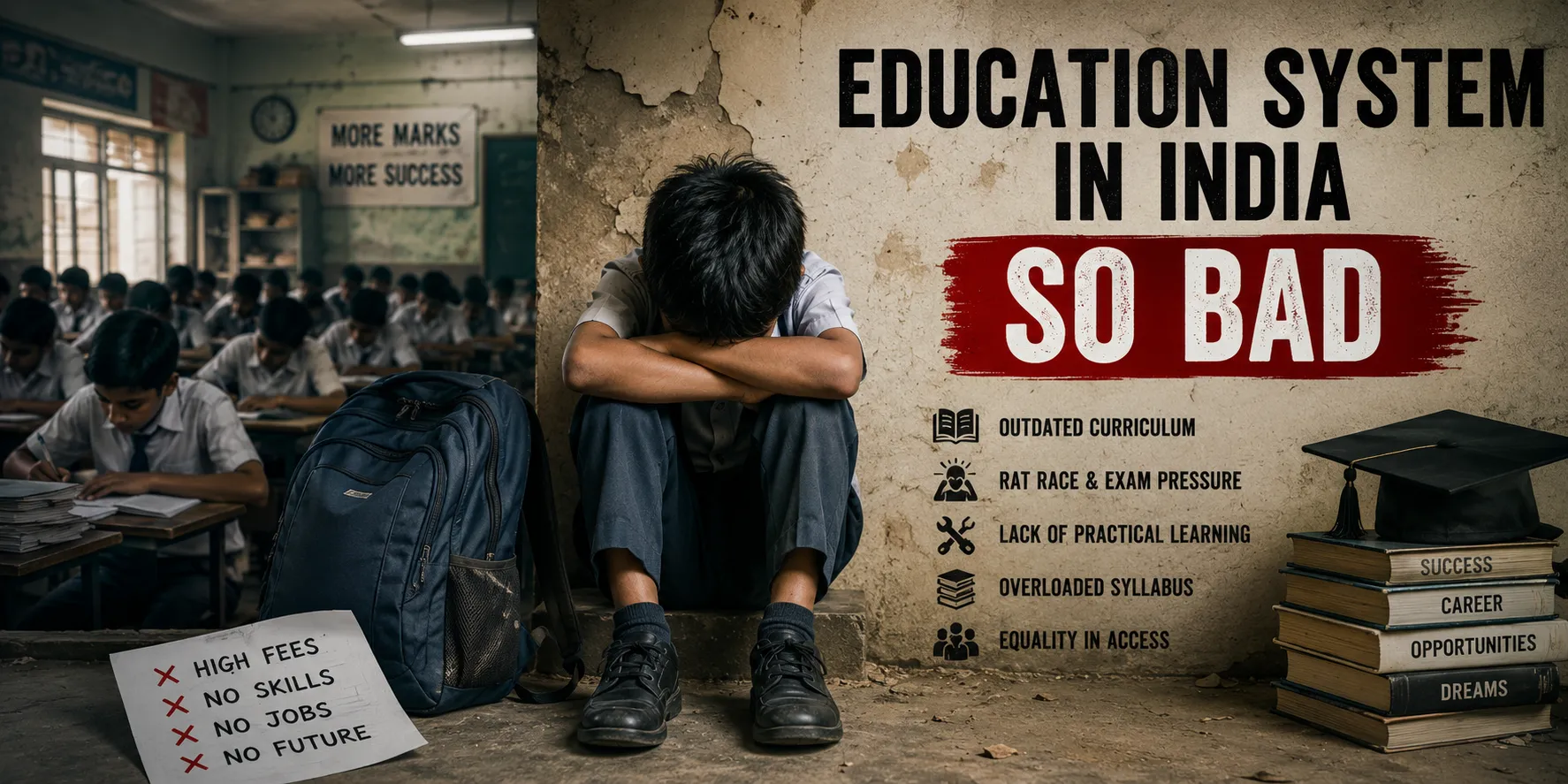
The Trap of Rote Learning and Exam Obsession
To understand the core of the problem, we must look at how success is measured in Indian schools. For decades, the system has been built around a "one-size-fits-all" approach. Students are expected to memorize vast amounts of information to pass standardized tests and board exams.
This intense focus on rote learning discourages students from asking questions, exploring creative solutions, or developing analytical reasoning. Instead of nurturing a child's natural curiosity, the system conditions them to accept information blindly just to secure high marks. Furthermore, the intense pressure surrounding entrance exams like JEE and NEET creates a hyper-competitive environment that severely impacts student mental health and narrows their focus to simply "cracking the test" rather than genuinely understanding the subject.
Infrastructure Gaps and the Teacher Shortage
Another massive hurdle is the unequal distribution of resources. There is a stark divide between elite urban private schools and rural government schools. According to recent data, millions of students in rural areas attend schools that lack basic facilities, such as functional science labs, digital tools, libraries, or even proper sanitation.
Compounding this issue is a severe shortage of qualified educators. Many schools rely on underqualified teachers, and even those who are qualified are often burdened with excessive non-teaching duties like election or census work. Without passionate, well-trained educators to guide them, students cannot receive the quality instruction necessary to build a strong foundational education.
Key Challenges at a Glance
To better understand the barriers preventing educational excellence, here is a quick summary of the system's structural flaws:
Challenge Area | Description | Impact on Students |
|---|---|---|
Rote Learning | Heavy emphasis on memorizing facts for exams rather than understanding concepts. | Stifles critical thinking, problem-solving, and creativity. |
Teacher Shortage | Millions of vacant teaching positions and a reliance on untrained educators. | Compromises the quality of learning, especially in rural areas. |
Urban-Rural Divide | Massive inequality in infrastructure, funding, and access to digital learning tools. | Leaves socio-economically disadvantaged students far behind. |
Outdated Curriculum | Syllabuses that do not align with modern industry or technological requirements. | Leads to a high rate of unemployability among recent graduates. |
Steps Toward Meaningful Reform
While the challenges are immense, the situation is not hopeless. To fix the system and prepare Indian youth for the global economy, several critical steps must be taken:
Shift to Skill-Based Learning: Schools must move away from memorization and implement project-based learning that teaches real-world problem-solving and digital literacy.
Invest in Teacher Training: The government must prioritize rigorous, continuous professional development for teachers and fill vacant positions with qualified professionals.
Bridge the Digital Divide: Expanding high-speed internet and access to digital devices in rural areas is essential for equitable education.
Implement the NEP 2020 Effectively: The National Education Policy 2020 outlines a shift toward multidisciplinary, holistic learning. For it to succeed, states must receive adequate funding and overcome implementation bottlenecks.
Frequently Asked Questions (FAQs)
Is the Indian education system changing for the better?
Yes, change is slowly occurring. The introduction of the National Education Policy (NEP) 2020 is a major step forward. It aims to dismantle rigid academic streams, promote vocational training, and focus on experiential learning rather than mere memorization. However, executing this policy on the ground remains a significant challenge.
Why do so many Indian graduates struggle to find jobs?
The root cause is a massive gap between what is taught in schools and what industries actually need. Because the curriculum often lacks practical, hands-on training, many graduates enter the workforce with theoretical knowledge but zero communication, technical, or analytical skills.
How does the system affect student mental health?
Tying a student’s entire future and self-worth to a single board exam or college entrance test creates immense psychological stress. This pressure often leads to severe anxiety, burnout, and an unhealthy competitive mindset from a very young age.
Conclusion
When addressing the question of "Why is education system in India so bad", it is clear that the system is functioning exactly as it was originally designed decades ago: to produce compliant workers rather than innovative thinkers. However, the modern world demands creativity, adaptability, and emotional intelligence. By acknowledging these deep-rooted flaws, fully embracing skill-based curriculums, and investing heavily in rural infrastructure and teacher training, India can transform its massive youth demographic from a struggling student body into a dynamic, future-ready global workforce.
Sources & References: Annual Status of Education Report (ASER)
Also Read: