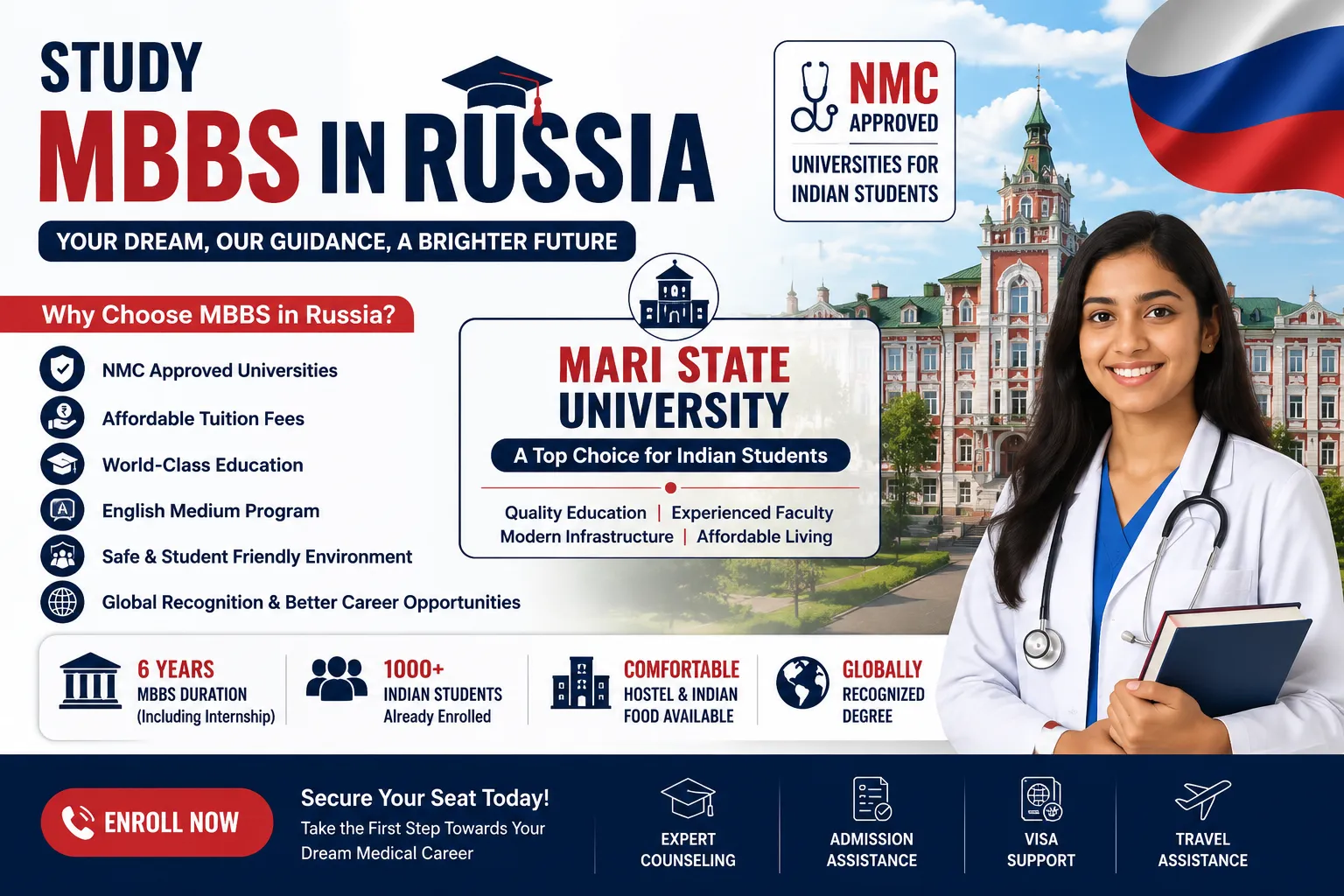
Choosing to study MBBS in Russia is a strategic decision for students seeking a globally recognized medical degree at a fraction of the cost of private institutions in India. Russian medical universities offer a high-quality education, advanced infrastructure, and a curriculum that aligns with international standards, making it one of the most practical options for international medical aspirants.
The primary reasons Indian students choose Russia for their medical education include:
- Cost-Effectiveness: Tuition and living costs are significantly lower than private medical colleges in India and many Western countries.
- Global Recognition: Degrees are recognized by the National Medical Commission (NMC), WHO, and other major international medical councils.
- English-Medium Instruction: Reputed universities offer dedicated English-medium programs, removing major language barriers.
- Ease of Admission: The admission process is streamlined, typically requiring a qualifying NEET score and basic academic eligibility.
- Modern Infrastructure: Universities provide high-tech simulation centers and advanced clinical training facilities.
Why Russia Stands Out for Medical Education
The academic quality in Russia is backed by a centuries-old tradition of excellence in science and medicine. Unlike many private colleges in India that may demand significant "donations" or capitation fees, Russian medical universities operate on a transparent, merit-based fee structure. For many students, this creates a clear, predictable financial pathway to becoming a doctor.
Furthermore, Russian universities emphasize hands-on clinical exposure. By the senior years, students work in affiliated hospitals, applying theoretical knowledge to real-world patient scenarios. This practical training is vital, as it builds the confidence and diagnostic skills necessary for a medical career.
Critical Considerations for Indian Students
While the advantages are clear, it is essential to approach this decision with full awareness of regulatory requirements:
- NMC Compliance: To practice in India, you must choose a university that fully complies with the NMC's Gazette regulations. This includes ensuring your course duration is at least 54 months of academic study plus a 12-month internship completed in the same institution.
- FMGE/NExT Preparation: A degree from Russia is a gateway, but you must pass the Foreign Medical Graduate Examination (FMGE) or the future National Exit Test (NExT) to obtain a license to practice in India. It is highly recommended to start preparing for these exams from your first or second year of MBBS.
- Language Adaptation: While the course is taught in English, learning basic Russian is a professional necessity for your clinical years, as you will need to communicate with local patients.
Ultimately, studying MBBS in Russia is a high-value option, provided you select an NMC-compliant university and remain disciplined in your preparation for the licensure exams back home.
Also Read: Study in Germany 2026: Top Universities, Visas and Costs
 Answered by