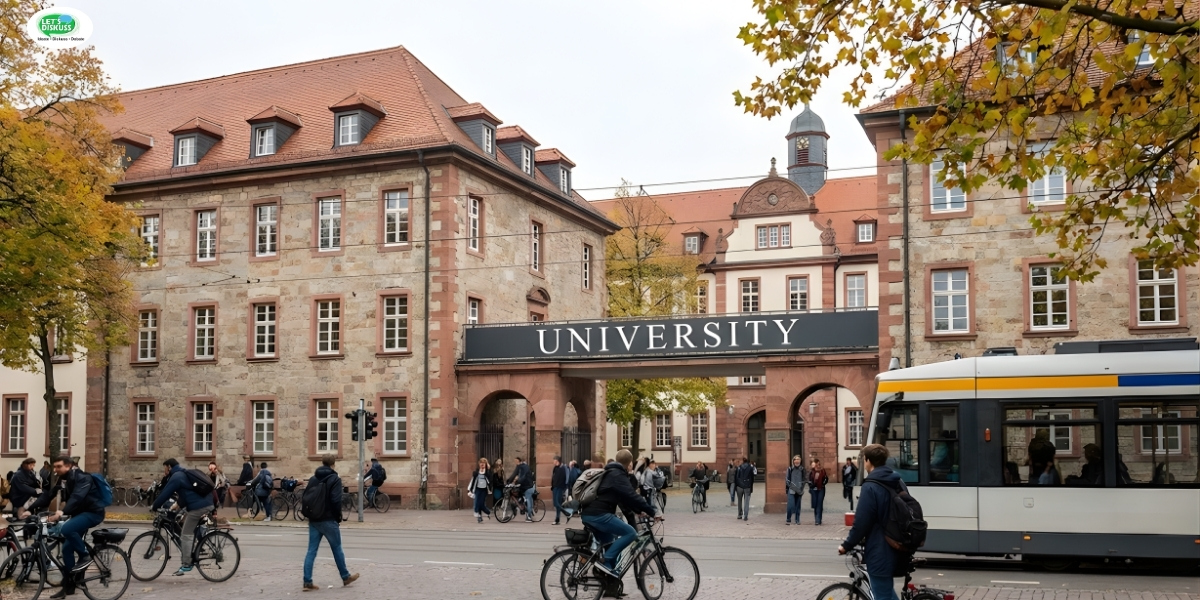
Over the last decade, people have been preferring Universities in Germany for international education as it has become the top non-English speaking destination. If you are thinking Germany is all about Oktoberfest and fast cars, you seriously need to upgrade your knowledge. It is currently the global powerhouse for higher education in Germany.
Why Choose Germany for Higher Education?
Choose the best universities in Germany for higher education because it provides:
Labs with cutting-edge technology that look like they came straight from the future.
The cost of tuition is so low that it is almost nonexistent.
Universities that are among the best in the world and have been around longer than many modern countries.
Germany is known for its cars, but its academic degrees are just as impressive as its cars.
Recognition from employers: Your degree is worth a lot right away to top companies all over the world.
Post-study benefits: The generous 18-month post-study work visa is one of the best reasons to study in Germany.
German Higher Education System
Frankly, the Germany higher education system is diverse. It has about 400 officially recognized institutions. Your field doesn’t matter here, as Germany has high-tech research hubs, as well as small and specialized art colleges.
This complete system is built on “Lernfreiheit” (freedom of learning). It means that you are responsible for your own progress. Here, nobody is going to hold your hand and tell you what to do. They teach you to be an independent thinker.
Types of Universities in Germany
Before you apply, you need to understand your vibe and which college it matches, as not all Universities in Germany are created equal.
Public Universities in Germany
The public university system is the USP of Germany higher education system. These universities are state-funded, so you don’t get charged traditional tuition fees. This is regardless of your nationality. You only have to pay a semester contribution. The public universities in Germany are your best bets when it comes to receiving the best international education with low tuition fees.
Quick Facts:
Nearly 50,000 to 60,000 Indian students are enrolled in German higher education institutions. This is based on the 2023-24 winter semester. Germany has India as the largest group of international students, studying in STEM fields at German public universities.
Don’t be surprised when I say that India has surpassed China when it comes to international student enrollment in Germany for two consecutive years.
Indian students' enrollment is rapidly increasing as they are taking advantage of the minimal or no tuition fees of German public universities and getting global exposure.
Top public universities in Germany include the Technical University of Munich (TUM), Ludwig Maximilian University of Munich (LMU), and Heidelberg University.
Private Universities in Germany: When are they the right choice?
There are fewer private universities in Germany, but they offer specific perks. As of data, about 10% students attend these private universities in Germany. You get the advantage of small class sizes, stronger ties to niche industries, and the best career coaching services personalized to you. They do charge tuition fees. However, it’s a great consideration when you are looking for a guided experience or targeting a very specific niche.
Quick facts:
Private Universities in Germany offer more English-taught programs compared to public universities.
From 100% of Indian students who choose Germany for higher education, only 10% enrolled in private universities due to high tuition fees and expenses.
Private universities have better annual intakes than public universities in Germany.
The top five best private universities in Germany are Charité - Universitätsmedizin Berlin, Jacobs University Bremen, Catholic University of Eichstätt-Ingolstadt (KU), Witten/Herdecke University, and ESMT Berlin.
Academic Excellence & Rankings
Any discussion of the best German universities is sure to include TU Munich and Heidelberg. The best school, however, is the one that best suits your major, not the one that ranks highest. So, choose accordingly.
Best German Universities
University | QS World Rank (2026) | THE World Rank (2026) | Academic Speciality / Strength |
|---|---|---|---|
Technical University of Munich (TUM) | #22 | #27 | Engineering, AI, Data Science, and Aerospace. It is often called the Silicon Valley of Europe. |
LMU Munich | #58 | #34 | Natural Sciences, Medicine, Economics, and Humanities. It is known for deep theoretical research. |
Heidelberg University | #80 | #49 | Medicine, Life Sciences, and Physics. Germany’s oldest university that has a massive Nobel Prize legacy. |
Free University of Berlin (FU Berlin) | #88 | #113 | Social Sciences, Humanities, and Political Science. It is known for being a very liberal and international campus. |
RWTH Aachen University | #105 | #92 | Mechanical Engineering and Automotive Tech. It is called the Engineer's Mecca with strong ties to companies like BMW and Bosch. |
Humboldt University Berlin | #130 | #89 | Arts, Humanities, and Philosophy. It is famous for its traditional academic influence and research history. |
Karlsruhe Institute of Technology (KIT) | #98 | #166 | Computer Science (Informatics) and Energy Technology. It is focused on heavy research and industry innovation. |
Technical University of Berlin (TU Berlin) | #145 | #160 | Architecture, Mathematics, and Innovation Management. It’s very hands-on and practically oriented. |
Top Universities in Germany by Subject
Engineering & Technology: Technical University of Munich (TUM), RWTH Aachen University, TU Berlin.
Computer Science & Information Systems: Technical University of Munich, KIT (Karlsruhe Institute of Technology).
Natural Sciences (Physics, Chemistry): TUM, Heidelberg University, LMU Munich.
Medicine & Life Sciences: Charité - Universitätsmedizin Berlin, Heidelberg University, LMU Munich.
Business, Accounting & Finance: University of Mannheim, Humboldt-Universität zu Berlin, Goethe University Frankfurt.
Social Sciences & Humanities: LMU Munich, Humboldt-Universität zu Berlin, Freie Universität Berlin.
Earth & Marine Sciences: Christian-Albrechts-Universität zu Kiel, Universität Bremen, Universität Hamburg.
Planning Your Journey: Admissions & Intakes
Timing is everything. In Germany, the academic year is split into two semesters. It means that if you miss a deadline, you have to wait another six months to apply.
Winter Intake vs. Summer Intake: Which one should you choose?
Feature | Winter Intake (Primary) | Summer Intake (Secondary) |
|---|---|---|
Other Names | October Intake / Fall Intake | April Intake / Spring Intake |
Classes Begin | September - October | March - April |
Application Period | Usually ends by July 15th | Usually ends by January 15th |
Course Availability | Almost all programs and universities are open. | Fewer courses, especially at public universities. |
Competition Level | Large volume of international applications. | Fewer students apply, which makes it less competitive. |
Acceptance Rate | Generally higher due to more seats/programs. | Lower availability of seats, though less competition. |
Visa Processing | Can be slower due to high student traffic. | Embassies handle fewer applications during this period. So, it is faster. |
Scholarships | Most financial aid is aligned with this intake. | Limited scholarship and funding options available. |
Academic Alignment | Aligns well with most international (e.g., Indian) graduation dates. | Best for those who missed the Winter deadline. |
Which one should you choose?
Choose Winter Intake if:
You want the widest variety of courses to choose from.
You are applying to a top-tier public university (most only open in Winter).
You are looking for scholarships or financial aid, as most are awarded for the start of the academic year in October.
You have just finished your undergraduate degree and want to start your Master's without a long gap.
Choose Summer Intake if:
You missed the Winter deadline and don't want to wait an entire year to start.
Your specific course (e.g., a certain Engineering or Data Science Master's) is offered in the Summer.
You want a less stressful application process with lower competition.
You need faster visa processing and a more relaxed timeline to prepare for your ELP tests (IELTS/TOEFL).
Can you study without knowing German?
Of course! Especially at the Master's level, studying in Germany in English is certainly within your reach. Over 2,000 programs have been added on a global scale. Still, most Bachelor's degree programs use German as their medium of instruction. Hence, you must have a basic understanding of German. It will even benefit you in your daily life when you shop for groceries and network with locals.
Language Proficiency Requirements (IELTS/TOEFL and TestDaF/DSH)
You require IELTS (6.5+) or the TOEFL for admission to English-language programs. The TestDaF or DSH is required for admission to German programs.
Financials: The Cost of Studying in Germany
Now comes the most important part of your journey, which is planning finances. I agree that the tuition fees are low, but living there is not. You need to plan a budget when you are at Universities in Germany.
Tuition-Free Universities
Tuition-free doesn't mean zero cost. Every student pays a Semester Contribution (Semesterbeitrag), which is usually between $176 to $473. This covers administrative costs and, usually, a “Semesterticket” for free public transport in your region.
Cost of Studying in Germany
There is a catch here. Since 2017, the state of Baden-Württemberg (home to Stuttgart and Heidelberg) has charged non-EU students $1,771.11 per semester. Recently, TU Munich also introduced fees for non-EU students ranging from $2,360 USD to $5,910 USD per semester. Hence, you must always check the specific requirements to study in Germany for your chosen state.
Living Cost in Germany for Students
Each German city has its own living cost in Germany for students. Cities like Leipzig and Jena are considerably more budget-friendly than Berlin and Munich.
Expense Item | Monthly Average (Est. 2026) |
|---|---|
Rent (Shared Flat/WG) | $531 - $768 |
Food & Groceries | $235 - $295 |
Health Insurance | $141.50 - $165.20 |
Internet/Phone | $35.40 - $59.00 |
Total | $1,003 - $1,298 |
Step-by-Step Application Process
Let’s say you’ve found your dream program at one of the Universities in Germany. What now? Here is a step-by-step guide for the application process:
How to Apply to German Universities Step-by-Step
Find a Course and Check Requirements: Use the DAAD database to find programs. Check specific requirements (GPA, language tests like TestDaF/DSH for German or IELTS/TOEFL for English).
Check Qualification Recognition (HZB): Verify if your high school diploma or bachelor's degree is recognized in Germany using the Anabin database. If not, you may need to attend a Studienkolleg (preparatory course).
Prepare Documents: Assemble certified copies and, if necessary, hire professional sworn translation services to translate:
High school diploma/school-leaving certificate.
University certificates/transcripts (for Master’s).
Language certificates (German/English).
Passport copy and photo.
CV and Letter of Motivation.
Submit Application (Uni-Assist or Direct):
Uni-Assist: Most international applications go through this portal. Register, fill in your history, upload documents, and pay fees ($88.48 for the first application, $35.39 for each additional).
Direct: Apply via the university’s own online portal.
Obtain Preliminary Review Documentation (VPD): Some universities require a VPD from Uni-Assist, which confirms your eligibility and takes 4-6 weeks to process.
Apply for a Visa: Once admitted, apply for a student visa at your local German embassy. This also needs proof of funds (blocked account) and health insurance.
Requirements to Study in Germany: Documents you need (Uni-Assist, APS)
APS Certificate (Mandatory for India/China/Vietnam): It validates your academic history. Required for visa applications for stays over 90 days.
Documents for APS:
Passport
10th/12th marksheet
Bachelor's degree/transcripts
language certificate
fee receipt (approx. $197.84)
Uni-Assist (Application Processing): Screens documents for over 180 universities to check if they meet German standards.
Documents for Uni-Assist:
Certified copies of school-leaving certificates
University transcripts
Translated documents (if not in English/German)
Language proficiency proof
Valid passport.
Application Fees: Uni-Assist charges $88.48 for the first application and $35.39 for each subsequent one.
VPD (Vorprüfungsdokumentation): A document issued by Uni-Assist that confirms you meet the requirements. It is often needed to apply directly to a university.
Additional Documents: Depending on the program, you may need a CV, a letter of motivation, or a portfolio.
The German Student Visa Process
Congrats if you got the dream university in Germany. But this is only half the work. The other half is the visa process. Don’t wait for the last minute.
Types of Visas for International Students
You generally need a National Visa (Type D) for study purposes. Do not apply for a tourist visa when your motive is to study there. You cannot convert it once you are there.
Step-by-Step Visa Process and Interview Preparation
Firstly, receive your official admission letter from the German University that has selected you.
Open a blocked account to show the proof of financial resources you have.
Then, you need to arrange a valid health insurance for Germany.
Fill out the German student visa application form.
Book your slot for the visa appointment. You can do it at the German Embassy or the VFS centre.
Assemble all the documents that are needed.
Go for the visa interview and submit biometric data.
Then, you have to pay the visa application fee.
Wait for visa processing and its approval.
Finally, collect your visa and prepare for travel to Germany.
Nailing the Interview
Don't just memorize a script! The officer wants to see that you are a genuine student. Be ready to explain:
The Why: Why this specific course and why Germany instead of your home country?
The Plan: What are your career goals after graduation?
The Funds: Be very clear about how your Blocked Account works.
Tip: Dress professionally, arrive 15 minutes early, and honestly answer every question.
Documents Checklist for German Student Visa:
Valid Passport
University Admission Letter
APS Certificate (for Indian Students)
Academic Certificates and Transcripts
Blocked Account Proof or financial resources
Health insurance certificate
Visa application form
Passport-size photographs
Statement of purpose or motivation letter
Proof of accommodation (if available)
The Blocked Account (Sperrkonto) Requirement
To get a Germany student visa, you must prove you can support yourself. The current requirement for 2026 is $14,054 per year ($1171 per month). You deposit this amount into a Blocked Account, and the bank releases the monthly amount to you once you arrive.
Life After Graduation
Germany really wants you to stay. They are facing a labor shortage, which makes it a golden era for graduates of Universities in Germany.
Germany wants you to stay!
Post-Study Work Visa (Job Seeker Visa)
Once you finish your degree, you can apply for an 18-month post-study work visa. This gives you a year and a half to find a job related to your studies. During this time, you can work any job to support yourself.
Career Opportunities in the German Job Market
If you have a degree from one of the best German universities, and you can speak German, then you are already marketable to employers.
IT & Software Development: Honestly, this is the hottest sector right now. Germany is absolutely hungry for AI/ML specialists and cybersecurity experts. It’s really impressive to see that a Data Scientist can expect to start around $87,364, while an IT Security Specialists average about $80,280.
Engineering & Manufacturing: As the industrial heart of Europe, the demand for mechanical and automotive engineers is constant. However, it isn’t just about the old school manufacturing anymore. The focus has shifted towards high-tech automation. Mechanical Engineers often see median salaries between $76,738 and $79,276.
Healthcare & Nursing: Due to an ageing population, there is a critical need for medical professionals in the German Job Market. Salaries for these roles generally range from $53,127 to $82,641. It also depends on your specific area of expertise.
The Green Revolution: Germany is really leading the charge in sustainability. Therefore, if your degree from Universities in Germany is in renewable energy or environmental engineering, you are in an incredible position to negotiate a high salary.
The Power of Werkstudent Jobs: In Germany, practical experience is king. Doing a working student job is the most common way to secure a full-time contract before you even finish your exams. It really gives you an edge over the competition.
The Language Multiplier: While many tech roles are English-speaking, hitting a B1/B2 level in German can boost your employability by nearly 50%. Therefore, if you learn the local tongue, you can get a lifelong career there.
18-Month Search Period: Don't forget, your student visa transitions into an 18-month post-study work visa. This gives you a year and a half to find the job. However, I always tell students to start networking on LinkedIn and Xing at least six months before they graduate!
Average Annual Salary
Role | Average Annual Salary (USD) |
|---|---|
Data Scientist | ~$87,364 |
IT Security Specialist | ~$80,280 |
Mechanical Engineer | ~$76,738 |
Software Developer | $59,030 - $88,544 |
Healthcare Professional/Nurse | $53,127 - $82,641 |
Conclusion: Your Journey Starts Here
Going to universities in Germany is one of the best decisions you can make for your life. It is difficult, indeed. Winters can be dreary, and bureaucracy is a major pain. But all of this is going to give you a good payoff. An elite degree, connection with locals, speaking a new language, and access to Europe.
Frequently Asked Questions (FAQs)
Q1 Are public universities in Germany really tuition-free for international students?
Mostly, yes. Public universities in Germany do not charge tuition fees in 15 out of 16 states. The exception is Baden-Württemberg and specific universities like TUM that have introduced non-EU fees. You still have to pay a small semester fee everywhere.
Q2 Can I study in Germany in English, or is German language proficiency mandatory?
You can study in germany in english, especially for Master's programs. However, for daily life and many part-time jobs, German is highly recommended. Many universities offer free German classes to international students. So, you are stress-free.
Q3 What is the minimum amount required in a Blocked Account (Sperrkonto) for a German student visa?
For the 2025/2026 academic year, the amount is €11,904 (approx. $14,054) for one year. This covers your basic living expenses and is a mandatory requirement for the visa process.
Q4 What is the difference between the Winter and Summer intakes, and which one is better for international students?
The Winter intake Germany is the main intake with the most courses. The summer intake Germany is smaller. Winter is usually better because it aligns with the standard academic cycle and offers more scholarship opportunities.
Q5 How do the QS World University Rankings compare to the THE rankings for German universities?
The QS and the ranking systems use different metrics. QS focuses more on reputation and employability, while THE focuses on research and citations. Both consistently rank Universities in Germany like TUM, LMU, and Heidelberg in the global top 100.