I spent the last month talking to operators who run vending machine routes, kiosk franchise owners, and photo booth operators in Delhi NCR, Mumbai, and Bengaluru. The goal was simple: which of these three "passive income" categories actually delivers what it promises?
The short answer is that none of them are truly passive. But one comes dramatically closer than the other two, and the unit economics explain why.
Vending Machines: The Volume Play That Grinds You Down
Everyone starts here because the entry cost is seductive. You can buy a basic snack vending machine for ₹50,000 to ₹1.5 lakh. A branded coffee vending machine runs ₹1 to ₹2 lakh.
The math looks reasonable on paper:
- 40 to 80 transactions per day at ₹10 to ₹30 per transaction
- ₹12,000 to ₹48,000 per month gross per machine
- After restocking, cash collection, electricity, and location rent: ₹8,000 to ₹25,000 net
The problem is not the per-unit economics. The problem is that you need 10 to 15 machines to generate meaningful income. That means 10 to 15 locations to manage, weekly restocking routes, cash collection logistics, and mechanical issues across a distributed fleet. One operator in Gurgaon told me he drives 140 km every Saturday to restock his 12 machine route. His net across all twelve? ₹2.8 lakh per month. Not bad, but he works a full Saturday every week and spends ₹15,000 per month on fuel and vehicle maintenance.
The "passive" part is a myth unless you hire a restocking employee, which cuts into margins.
Kiosk Franchises: Rent + Staff + Franchise Fees = Thin Margins
The kiosk franchise category spans everything from chai brands to juice bars to phone accessories. Entry cost is ₹3 to ₹15 lakh depending on the brand and location.
I spoke with three kiosk franchise operators. The numbers:
Chai brand kiosk (₹4 lakh investment, mall location in Noida). Monthly gross ₹1.8 lakh. After rent (₹25,000), staff (₹15,000 per shift times two shifts), raw materials (₹40,000), franchise royalty (8 percent), and miscellaneous: net ₹28,000 per month. Payback: over 14 months, and that is a good outcome.
Juice kiosk (₹8 lakh investment, metro station in Bengaluru). Monthly gross ₹2.5 lakh. After all costs: net ₹45,000. Payback: 18 months. Owner visits daily to check inventory and staff performance.
Phone accessories kiosk (₹3.5 lakh investment, Pune mall). Monthly gross ₹1.2 lakh. After costs: net ₹20,000. Owner considering shutting down after 8 months.
The recurring theme: the franchise promises a turnkey business, but the reality is you are running a micro-retail operation with thin margins and at least one full-time employee per shift.
AI Photo Booths: The Anomaly in the Category
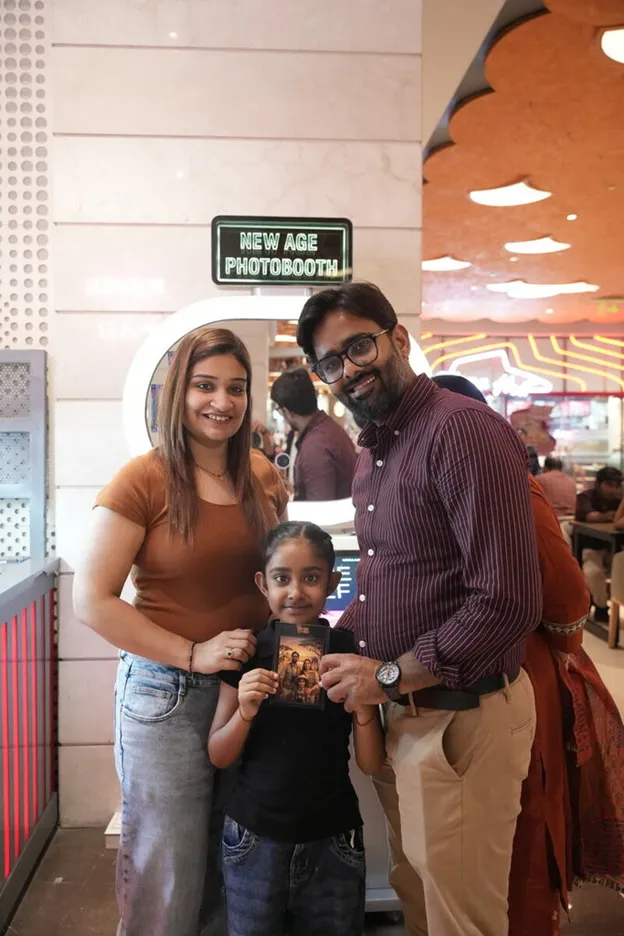
Here is where the comparison gets interesting. An AI photo booth is a self-service kiosk that uses generative artificial intelligence to transform a customer's photo into stylized portraits: Mughal royalty, Bollywood transformations, Korean style photo strips, festival overlays. It prints the result on dye-sublimation photo paper in under 30 seconds. The customer pays ₹129 to ₹250 per session via UPI. No staff required.
The AI photo booth is an equipment purchase, not a franchise. You buy the machine outright at ₹3.5 to ₹6 lakh including GST and place it in a mall, gaming zone, hotel, or event venue.
The operator I spent the most time with runs four machines across three locations in Delhi NCR. His numbers:
Per unit economics (average across four machines): - 60 to 90 sessions per day - ₹150 average session price via UPI - ₹2.7 to ₹4 lakh per month gross per machine - Revenue share to venue: 20 to 30 percent - Annual maintenance: ₹20,000 to ₹30,000 per year - Net per machine: ₹1.2 to ₹2.2 lakh per month
Fleet economics: - Total investment: ₹18 lakh (4 machines) - Total monthly net: ₹5.5 to ₹6 lakh - Payback achieved: month 5 on first machine, month 9 across all four - Time spent per week: 2 to 3 hours checking fleet dashboard
The machine processes UPI payments autonomously. Customers walk up, tap their phone, select an AI effect, and collect their printed photo in 30 seconds. If the paper roll runs low or the internet drops, the operator gets an alert on his phone. According to RBI data, UPI processed 13.9 billion transactions in March 2025, making it the default payment method for self-service kiosks across India.
No staff. No inventory management. No franchise royalty. No restocking route.
The Comparison
|
Factor |
Vending Machine |
Kiosk Franchise |
AI Photo Booth |
|
Entry cost |
₹0.5 to 2L per unit |
₹3 to 15L |
₹3.5 to 6L |
|
Monthly net per unit |
₹8K to 25K |
₹20K to 45K |
₹1 to 2.2L |
|
Staff required |
No (but restocking) |
Yes (1 to 2 per shift) |
No |
|
Daily involvement |
Weekly restocking |
Daily management |
Dashboard check |
|
Payback period |
6 to 10 months |
14 to 36 months |
6 to 14 months |
|
Scalability |
Needs fleet of 10+ |
Each unit needs staff |
1 person runs 6 to 8 units |
|
Asset ownership |
Yes |
Limited by franchise |
Yes |
What I Actually Learned
The unit economics are not the full story. The deeper insight is about operational leverage.
Vending machines scale linearly. Each new machine adds proportional work. Kiosk franchises scale with staff. Each new location needs headcount. Photo booths are the only category in this comparison where adding the next unit does not add proportional operational burden. The same fleet dashboard that manages two machines manages eight.
That operational leverage is why the small investor class, people with ₹5 to ₹20 lakh who want monthly income without building a team, is migrating toward this category. It is not passive income in the infomercial sense. Nothing is. But it is the closest thing to a self-managing asset that exists in the Indian small business landscape right now.
The per-unit revenue also helps. When each machine nets ₹1 to ₹2 lakh per month, you do not need a fleet of fifteen to generate meaningful income. Three machines at decent locations can replace a mid-level salary. Try doing that with vending machines.
There is also a second-order advantage that the kiosk and vending categories cannot match: the AI photo booth experience improves over time without additional capital. Indian manufacturers push new AI effects every month. Festival-specific overlays for Diwali and Holi, trending Korean style photo strip layouts, wedding season portrait styles. Each update refreshes the product for repeat customers. A vending machine sells the same Lays packet in January and December. A kiosk franchise pours the same chai. The photo booth offers a different creative experience every time someone walks up, which is why repeat usage rates at high footfall locations run 15 to 20 percent of total sessions.
India's indoor entertainment market is estimated at approximately ₹15,000 crore by the Indian Association of Amusement Parks and Industries (IAAPI), with the indoor amusement segment growing at 16 percent CAGR through 2030. The AI photo booth sits at the intersection of that growth and the broader Indian demand for low capex, self-managing income assets. It is a small category today. The unit economics suggest it will not stay small.