Key Takeaways
- Smart cities are creating new land investment opportunities around infrastructure corridors, transport hubs, industrial zones, and planned urban expansion areas.
- The best smart city land investment is not always inside the city. Many investors look at land near smart cities where prices are still accessible and future demand is stronger.
- Land appreciation near smart cities depends on connectivity, zoning, legal title clarity, civic development, employment zones, and actual infrastructure progress.
- Platforms like 2Bigha help buyers and sellers explore verified land listings, map-based land discovery, and subscription-based plans for better visibility and smarter property decisions.
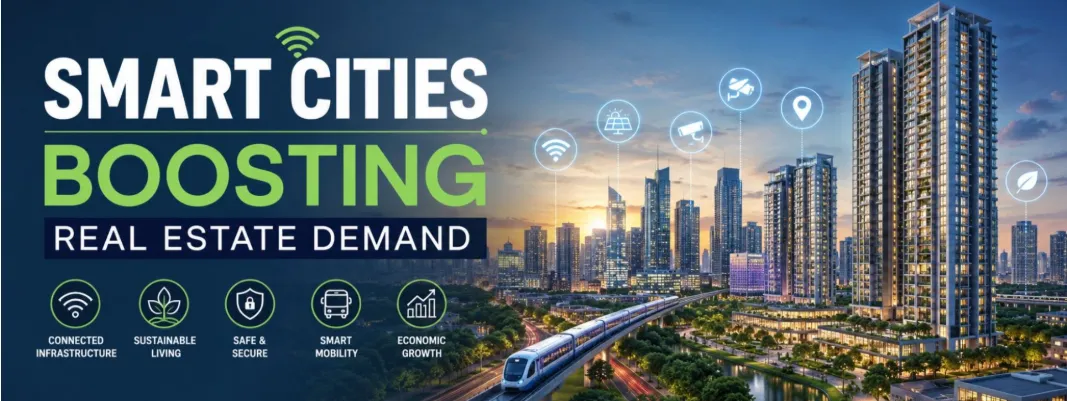
Introduction: Why Smart Cities Matter for Land Investors
India’s real estate story is no longer limited to metro cities like Delhi, Mumbai, Bengaluru, Hyderabad, and Pune. The next phase of growth is moving towards smart cities in India, planned townships, industrial corridors, airport zones, expressway belts, logistics parks, and developing regions where infrastructure is improving fast.
That is why smart city land investment has become a serious topic for buyers, landowners, developers, NRIs, brokers, and long-term investors.
The Government of India launched the Smart Cities Mission in 2015 with 100 cities selected for better infrastructure, mobility, technology-led governance, public safety, water systems, and urban services. As per a Press Information Bureau update, 7,380 out of 8,075 projects had been completed by December 2024, showing 91% project completion under the mission.
For land investors, this matters because infrastructure changes land value. A road, metro line, airport, industrial park, smart traffic system, drainage upgrade, or commercial hub can turn a slow-moving location into a future growth corridor.
But smart investment does not mean blindly buying any plot with a “smart city” tag. You need to understand where growth is real, where land is legally clear, and where future demand can actually support price appreciation.
What is Smart City Land Investment?
Smart city land investment means buying land in India that is benefiting from planned urban development, digital infrastructure, transport upgrades, industrial activity, and civic improvements.
This can include:
- Land near smart cities
- Plots close to expressways and ring roads
- Agricultural land near future urban expansion zones
- Land near airports, logistics parks, and industrial corridors
- Property near smart cities with residential or commercial potential
- Investment plots in developing regions
In simple words, investors are not just buying land. They are buying into future accessibility, future population growth, and future economic activity.
India’s urban growth supports this trend. The Economic Survey 2023-24 noted that more than 40% of India’s population is expected to live in urban areas by 2030. More people in cities means more housing, more warehousing, more commercial spaces, more weekend homes, and more demand for land around expanding urban zones.
How Smart Cities Are Changing Land Investment Opportunities
1. Infrastructure Is Becoming the Main Value Driver
Earlier, many buyers looked at land mainly through location names. Today, smart investors look at infrastructure.
They ask:
- Is there a new expressway nearby?
- Is the area connected to a smart city?
- Is metro, airport, railway, or logistics development planned?
- Is the land near an industrial or economic growth zone?
- Is the region part of planned city development?
This shift is important because land near infrastructure projects often sees stronger buyer interest. A village road becoming a four-lane road can change the entire investment equation. A nearby industrial park can create demand for rental housing, shops, warehouses, and worker accommodation.
That is why smart infrastructure projects are directly linked with land value appreciation.
2. Growth Is Moving Beyond City Centers
Most city centers are already expensive. In places like Pune, Ahmedabad, Jaipur, Indore, Lucknow, Surat, Nagpur, Coimbatore, and Bhubaneswar, buyers are increasingly looking at the outer belts.
These areas are attractive because:
- Entry prices are lower than developed city areas.
- Land parcels are larger.
- Future appreciation potential can be higher.
- Road and utility upgrades are improving accessibility.
- Developers are entering nearby regions early.
For example, someone who cannot afford prime city property may still be able to buy land near smart cities or in a nearby growth corridor. This is where future real estate investment becomes more practical for middle-income investors as well.
3. Smart Cities Create Better Buyer Confidence
Land investment in India has always had trust issues. Buyers worry about unclear titles, fake listings, boundary disputes, wrong location details, and inflated pricing.
Smart city development improves confidence because planned infrastructure brings more government attention, better mapping, better roads, better public systems, and more formal development activity.
However, this does not remove the need for due diligence. Even in a strong location, investors must check:
- Title documents
- Mutation records
- Land use classification
- Access road
- Boundary clarity
- Encumbrance status
- Conversion rules
- Local development plan
- Nearby government notifications
This is where a verified land marketplace can make a major difference.
Where Investors Should Look for Smart City Land Opportunities
A good investment location is not just “near a smart city.” It should have practical growth signals.
Look for Real Growth Corridors
Growth corridors in India usually form around expressways, highways, airports, ports, metro extensions, industrial belts, and logistics hubs.
Investors should study areas where movement of people, goods, and businesses is improving. These locations often become future investment hotspots because connectivity creates demand.
Check Planned Urban Expansion
Many cities grow outward. Today’s outskirts can become tomorrow’s residential or commercial belt. If the local master plan shows future urban expansion, that land may attract developers later.
But check the zoning carefully. Agricultural land, residential land, commercial land, and industrial land all have different rules.
Study Employment Drivers
Land appreciation areas usually have one strong factor: jobs.
If a location has IT parks, manufacturing zones, industrial estates, education hubs, tourism zones, or logistics centers nearby, real estate demand usually follows.
People need housing. Businesses need shops. Transporters need warehouses. Developers need land.
That is how smart city property investment becomes linked with economic growth.
How 2Bigha Helps Buyers and Sellers in Smart City Land Investment
For anyone planning to buy land near smart cities or sell land online, 2Bigha can make the discovery process simpler and more transparent.
2Bigha is a land marketplace designed for buyers, sellers, agents, and landowners who want better visibility and trust in land transactions.
Why 2Bigha Works for Smart Land Investors
- Map-based listings: Buyers can explore land locations visually and understand the surrounding area better.
- Verified land listings: This helps reduce confusion caused by fake or incomplete property listings.
- Buy and sell land online: Sellers can list land digitally, while buyers can compare options without depending only on offline brokers.
- Better discovery for landowners: If someone has land for sale near a smart city, 2Bigha helps improve visibility among serious buyers.
- Subscription plan: Agents, sellers, and property professionals can use 2Bigha’s subscription plan to promote listings, reach more buyers, and manage property visibility more effectively.
For investors, this is useful because smart property investment starts with clear information. You should not buy land just because someone says the area will “boom.” You need location visibility, proper listing details, document checks, and market comparison.
Checklist Before You Invest in Land Near Smart Cities
Use this simple checklist before making a land buying decision:
- Check whether the smart city project or infrastructure work is actually active.
- Verify land title, ownership history, mutation, and encumbrance.
- Confirm land use: agricultural, residential, commercial, industrial, or mixed-use.
- Study the master plan and zoning rules.
- Check road access and distance from key infrastructure.
- Compare prices with nearby villages and developed localities.
- Avoid buying based only on future rumours.
- Use verified land listings and trusted property platforms.
- Keep a long-term holding mindset.
This checklist can protect you from emotional buying and overhyped locations.
Risks in Smart City Real Estate Investment
Smart city real estate has potential, but it is not risk-free.
Some risks include:
- Delayed infrastructure projects
- Overpriced land near hyped locations
- Unclear title or family ownership disputes
- Agricultural land restrictions
- Land conversion challenges
- Low resale liquidity in early-stage locations
- Misleading broker claims
Many investors lose money not because the location is bad, but because they enter at the wrong price or without legal clarity.
The smart approach is simple: buy only after checking documents, location, access, zoning, and future demand.
Future of Land Investment Near Smart Cities in India
The future of land investment in India will be shaped by urban expansion, smart infrastructure, digital land platforms, and regional development.
As more people move toward urban areas, demand will rise not only inside cities but also around them. This will create opportunities in:
- Peripheral land parcels
- Farmhouse and weekend home locations
- Logistics and warehousing land
- Residential plotting zones
- Land near industrial corridors
- Tourism-linked land belts
- Land near expressways and airports
Investors who identify these trends early can benefit from long-term land value appreciation. But patience is important. Land is not a quick-flip asset. It performs best when bought legally, at the right price, and held through the development cycle.
Conclusion
Smart cities are changing how Indians look at land. Earlier, land investment was mostly about buying in a known area and waiting for price growth. Today, investors are studying infrastructure, urban planning, smart city expansion, economic growth zones, and digital property platforms before making a decision.
The best opportunities may not always be inside smart cities. Often, the strongest growth comes from land near smart cities, especially where roads, industries, housing demand, and planned development are moving together.
If you are planning to invest in land, buy investment plots, or sell land online, use platforms like 2Bigha to explore verified land listings, map-based property discovery, and subscription plans that support better buying and selling decisions.
Smart city land investment can be rewarding, but only when you combine location potential with legal clarity, market research, and patience.