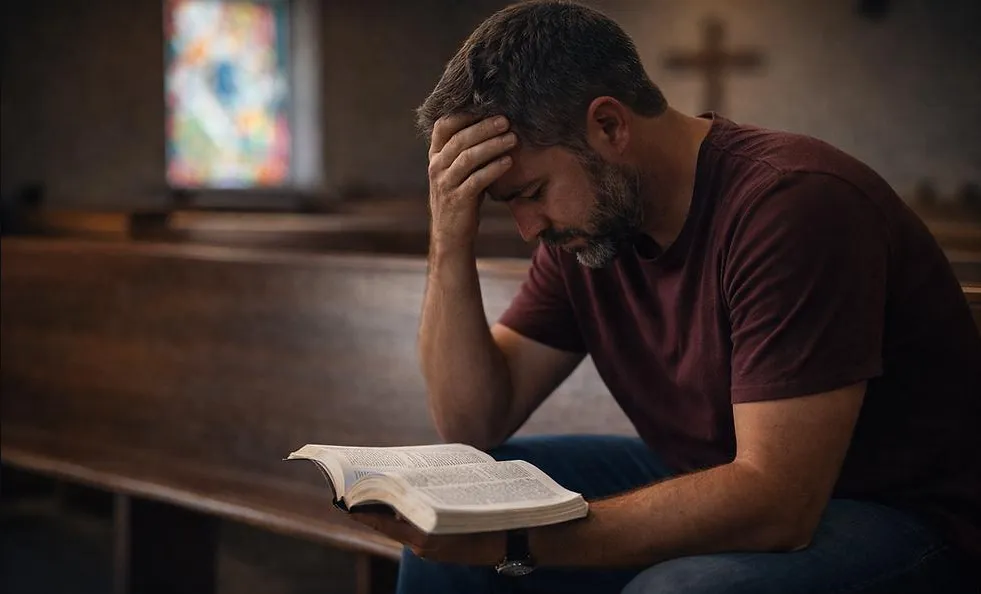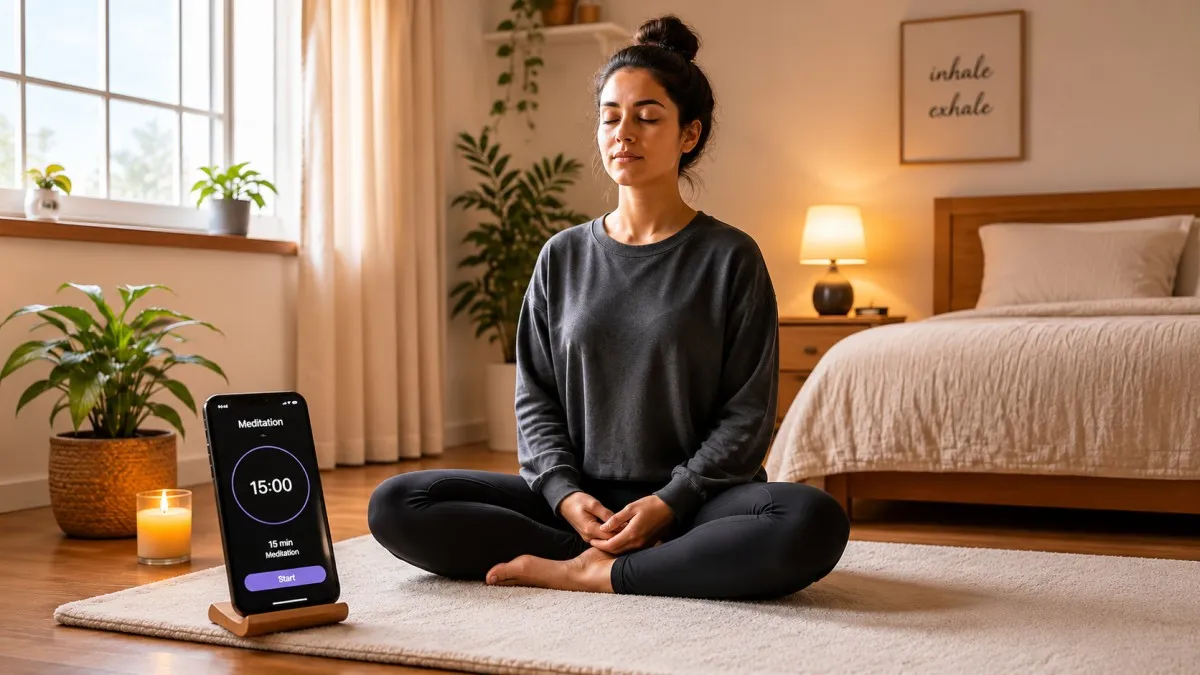
Every January I make the same promise. This is the year I become a 5 a.m. person: Bible open, coffee hot, an hour of uninterrupted time with God before anyone else in the house is awake. It's a lovely picture. It usually lasts until about the second week, when the dog throws up at 4:50 and the whole thing falls apart.
By March I'm lucky to get fifteen minutes. And for years I felt kind of guilty about that, like a 15 minute christian meditation was the participation trophy of devotional life. Better than nothing, sure. But was it actually doing anything?
I don't think I'm the only one who's wondered.
Okay, but What Is Christian Meditation?
Quick detour, because the word throws some people off. When the Bible talks about meditating, it doesn't mean clearing your mind or chasing some floaty feeling of peace. It means taking a piece of God's Word and mulling it over. Chewing on it, basically.
Psalm 1:2 talks about the person "whose delight is in the law of the LORD, and who meditates on his law day and night." I read somewhere that the Hebrew word there can mean to mutter or murmur, the way you do when a song gets stuck in your head and you catch yourself humming it in the shower. That image helped me a lot. Meditation isn't a performance. It's more like letting a verse get stuck in you.
And if that's what it is, then the clock matters less than I thought. I've "read my Bible" for forty-five minutes and walked away with nothing, because I was half-planning dinner the entire time. I've also spent five minutes on one verse and had it follow me around for a week.
God Doesn't Seem to Mind Small
Here's something I didn't notice for a long time. Jesus talks about small things constantly.
A mustard seed. A pinch of yeast. A widow dropping two little coins into the offering, which He says counted for more than everyone else's big gifts. In Luke 16:10 He says, "Whoever can be trusted with very little can also be trusted with much."
There's also this great moment in Zechariah. The people had just rebuilt the temple after the exile, and the older folks who remembered Solomon's temple were honestly kind of disappointed. It was smaller and plainer. And God says to them, "Who dares despise the day of small things?" (Zechariah 4:10).
I've thought about that verse a lot on mornings when fifteen minutes is all I've got.
It's the Showing Up
I once asked an older woman at church, someone whose faith always seemed so solid, what her secret was. I expected some intense routine. She just shrugged and said, "I didn't quit." That was it.
Fifteen minutes a day comes to roughly ninety hours a year, which surprised me when I worked it out. But it's not really about the total. Doing something every day slowly changes what your heart reaches for first. Eventually turning to God stops feeling like a task and starts feeling like reflex.
Galatians 6:9 is taped inside my kitchen cabinet: "Let us not become weary in doing good, for at the proper time we will reap a harvest if we do not give up." The phrase at the proper time gets me every time. God's timing, not mine. Unfortunately.
What I Actually Do With Fifteen Minutes
I'm not going to pretend I have this figured out, but here's roughly what my mornings look like when they go well.
I start by doing nothing for a minute or two. Phone goes in the other room, because if it's next to me I'll check it, no question. Psalm 46:10 says, "Be still, and know that I am God," and for me stillness takes a minute to kick in. Sometimes I just tell God I'm tired. Or cranky. He can handle it.
Then I read something short. Like, a few verses. Sometimes just one. I read it slowly, then again, and I pay attention to whatever word or phrase I keep snagging on. Last month it was "he refreshes my soul" from Psalm 23. I didn't get past those four words for about a week.
From there it kind of turns into prayer on its own. Thanking Him, asking for things, occasionally owning up to something I'd rather not.
And before I get up, I try to grab one phrase to carry with me. Joshua 1:8 talks about keeping God's Word "always on your lips," which sounds very holy, but in practice it means a Post-it on my dashboard.
Will your mind wander? Oh, absolutely. Mine does constantly. You just come back. Honestly, the coming back might be the whole point. And if silence makes you twitchy, try listening to Scripture or a guided meditation instead. Nobody's handing out medals for doing it the hard way.
Some Seasons Need More
I'd be lying if I said fifteen minutes always felt like enough. When my dad was sick, it didn't come close. Big decisions, grief, those stretches where God feels far away... sometimes you need to linger.
Jesus did. Mark 1:35 says, "Very early in the morning, while it was still dark, Jesus got up, left the house and went off to a solitary place, where he prayed." If He needed that kind of time, I'm pretty sure I do too, at least sometimes.
So fifteen minutes is where you start, not where you have to stop. Some mornings you'll look at the clock and realize it's been half an hour. Let it.
I Think I Was Asking the Wrong Thing
"Is fifteen minutes enough?" Enough for what, exactly? To pass? I think I'd turned God into a teacher with a grade book without really noticing.
Then there's Martha in Luke 10, slamming pots around while her sister Mary sits at Jesus' feet doing, as far as Martha can tell, absolutely nothing useful. Jesus doesn't lecture her. He just says, gently, "few things are needed—or indeed only one" (Luke 10:42).
Only one.
So tomorrow, if all you've got is fifteen minutes and coffee that went cold while you were finding your Bible, that's fine. Go anyway. I really don't think He's counting.