
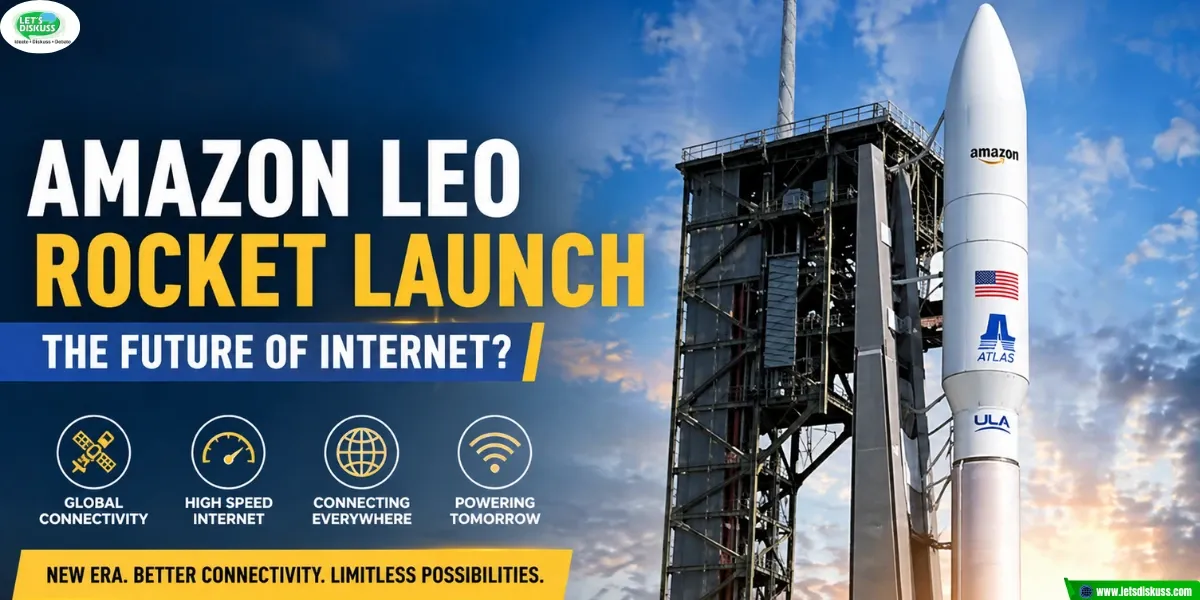
The Amazon LEO rocket launch is trending because it represents a major step toward building a global satellite internet system. In the Amazon LEO launch 2026, United Launch Alliance successfully used the Atlas V to deploy a new batch of Amazon LEO satellites into Low Earth Orbit (LEO). This mission is part of Amazon’s long-term plan to deliver fast, reliable internet worldwide.
The growing interest around this topic is also driven by the competition between Amazon and SpaceX, making the Amazon LEO rocket launch an important development in the future of internet connectivity.
What is Amazon LEO Rocket Launch?
The Amazon LEO rocket launch refers to the deployment of satellites under Amazon’s Project Kuiper program. These Amazon LEO satellites orbit closer to Earth, which allows them to deliver high-speed internet with lower latency compared to traditional satellite systems.
This technology is designed to solve real-world connectivity problems, especially in areas where fiber or mobile networks are not available. The Amazon LEO launch 2026 included around 29 satellites, moving Amazon one step closer to building a global broadband network.
Key highlights:
- Uses Low Earth Orbit (LEO) technology
- Provides faster internet with low delay
- Focus on global connectivity
- Supports remote and rural regions
ULA Atlas V Rocket Launch Explained
The ULA Atlas V rocket launch played a crucial role in this mission. The Atlas V is one of the most reliable rockets used for commercial and government space missions.
This launch was carried out by United Launch Alliance, ensuring high mission success and credibility. The rocket carried multiple Amazon LEO satellites into orbit and is part of its final missions before retirement.
Important points:
- Launch vehicle: Atlas V
- Organization: ULA
- Payload: Amazon LEO satellites
- Known for high success rate
What are Amazon LEO Satellites?
Amazon LEO satellites are advanced communication satellites designed to provide broadband internet globally. They operate at lower altitudes, which improves speed and reduces latency.
These satellites are built to handle modern internet needs such as streaming, online gaming, video conferencing, and remote work.
Core features:
- High-speed internet access
- Low latency performance
- Coverage in remote areas
- Supports digital services globally
Is Amazon LEO Rocket Launch the Future of Internet?
The Amazon LEO rocket launch shows strong potential, but the answer is partially yes—not completely. It is an important part of the future, but not the only solution.
Why it can be the future:
- Can provide internet in remote locations
- Reduces dependency on cables and towers
- Supports global digital growth
Why it is not the complete future yet:
- High cost of deployment
- Requires government approvals
- Strong competition from SpaceX
Final conclusion:
The Amazon LEO satellite network can become a major part of the internet ecosystem, but it will work alongside fiber and 5G instead of replacing them completely.
Why Amazon LEO Launch 2026 is Trending?
The Amazon LEO launch 2026 is trending due to its technological importance and market competition. It is not just a rocket launch but a step toward global internet transformation.
Main reasons:
- Entry of Amazon into satellite internet
- Competition with SpaceX
- Use of Atlas V in final missions
- High public interest in space technology
- Viral launch visuals
Real-Life Impact of Amazon LEO Satellites
The Amazon LEO rocket launch has practical benefits that directly impact people and businesses worldwide. It helps improve connectivity and supports digital growth.
Real-life examples:
- Remote villages can access high-speed internet
- Disaster-hit areas can maintain communication
- Freelancers can work from anywhere
- Students can access online education
Amazon vs SpaceX: Internet Space Race
The competition between Amazon and SpaceX is shaping the future of global internet.
Comparison points:
- Amazon: Building Project Kuiper network
- SpaceX: Already running Starlink
- Goal: Global internet coverage
- Result: Better services for users
Benefits of Amazon LEO Rocket Launch
The Amazon LEO launch 2026 offers multiple advantages that can transform global connectivity.
Key benefits:
- Expands internet access worldwide
- Reduces digital divide
- Supports online businesses
- Improves communication systems
Challenges and Concerns
Despite its benefits, the Amazon LEO rocket launch also faces several challenges that must be addressed for long-term success.
Main challenges:
- High operational costs
- Space debris risks
- Regulatory issues
- Strong market competition
Future of Amazon LEO Satellite Network
The future of the Amazon LEO satellite network looks promising as Amazon plans to launch thousands of satellites in the coming years. This could lead to faster, cheaper, and more reliable internet services globally.
Future expectations:
- Expansion into new countries
- Lower internet costs
- Better speed and coverage
- Increased competition in the market
Mus read: How AI in Financial Services is Replacing Advisors in 2026