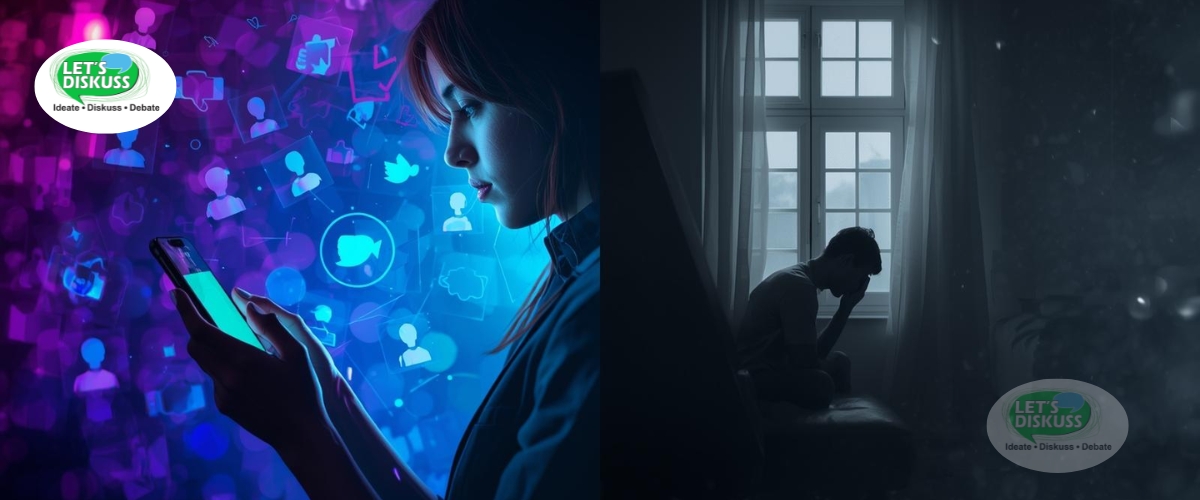
Most of us are used to social media on a daily basis. It keeps us in touch with friends, family and the world at large, whether it is in the morning or at a late time. A couple of taps make us share our thoughts, see what other people are doing and make us feel like a part of something bigger. But with all the advantages it has, there is one side that we cannot but notice. Most individuals believe that the more time they spend on the internet the less time they have to dedicate to face-to-face communication and real interactions. It even makes them feel lonely or disconnected, some say, even though they are always connected.
The Rise of Social Media in Our Daily Lives
Social media is not only a method of keeping in touch with friends anymore. It is influencing our mode of communication, learning, shopping and even our identity today. Instagram, Facebook, and Twitter are not simply applications on our phones anymore; they are part of our daily lives of many. Notifying has been normalized, just as time checking. An hour of scrolling on a coffee break, a story told after dinner, or updates read before bed, it is all natural now. The effects of social media are evident: the media has altered the way people consume their free time, their communication with other people, and even their perception of the surrounding world. Although this increase has brought an unlimited number of opportunities to interact with people in all parts of the world, it has led to a world where online communication is sometimes used instead of real communication.
Positive Social Media Effects
Social media does not have an impact that is entirely negative. When applied in a deliberate way, these platforms may help to strengthen connections, open opportunities, and add real value to people’s lives.
- Global connection: Social media closes the distance between family and friends, enabling communication regardless of location.
- Support communities: People facing obstacles can find assistance and motivation in online communities, demonstrating social media’s positive influence.
- Learning and awareness: Educational sites, news feeds, and skill-sharing communities support self-development.
- Networking possibilities: From jobs to partnerships, social platforms offer opportunities to expand careers.
- Enhancing relationships: Sharing updates, photos, and stories can make connections more enjoyable when used mindfully.
- Creativity and self-expression: Platforms motivate individuals to share art, writing, and ideas.
- Quicker access to information: Social media spreads awareness of critical causes, events, and opportunities in real time.
Disadvantages of Social Media
Although social media helps people stay connected online, it has introduced challenges to in-person interactions. As real-life communication is replaced with online exchanges, relationships can feel less meaningful.
- Minimal face-to-face interactions: Frequent social media use at the dinner table, on outings, or during gatherings interrupts meaningful conversations.
- Social media superficiality: Likes and short comments may feel like communication, but they are often shallow and lack depth.
- Weaker family and friendships: Time spent online can reduce quality bonding time with loved ones.
- Constant comparison: Curated content creates pressure to keep up, harming self-esteem and increasing stress.
- Losing attention to the present: People often focus on taking photos to share instead of fully experiencing the moment.
- Poor social skills: Overreliance on online communication can reduce confidence and ability in face-to-face settings.
- Feeling lonely despite being “connected”: Even with many online friends, individuals may feel isolated in the physical world.
Addiction to Social Media – Are We Becoming Addicted?
Social media addiction is a growing issue. Many people struggle to put down their phones, constantly checking notifications, updates, and messages. Over time, this behavior affects mental health, productivity, and real-life relationships.
- Unhealthy screen time: Hours on social media reduce time for hobbies, rest, and in-person interactions.
- Checking compulsively: Addiction symptoms include feeling the need to check notifications even during important tasks.
- Disruption of sleep: Late-night usage often causes poor sleep and daytime fatigue.
- Influence on productivity: Excessive social media distracts from studies, work, and priorities.
- Emotional addiction: Dependence on likes, comments, and shares for validation lowers self-esteem.
- More stress and anxiety: Inability to access social media may cause restlessness and stress.
- Poor in-person relationships: Endless scrolling weakens real-world relationships.
Is Social Media Making Us Lonely?
Although social media is designed to connect people, research shows it can increase feelings of loneliness. Online connections often fail to replace natural, face-to-face interactions.
- Shallowness of interactions: Likes and short responses leave people unfulfilled, lacking meaningful conversation.
- Evaluation against others: Comparing with others’ highlights leads to pressure and loneliness.
- False sense of connection: Hundreds of online friends may not translate into real closeness.
- Less physical interaction: Online activity reduces engagement with the real world.
- Loneliness despite being busy: Constant scrolling can make people feel more isolated.
Mental Health and Social Media
The relationship between social media and mental health is widely discussed. While it can provide support and awareness, excessive use often causes emotional challenges that affect overall well-being.
- Anxiety and stress: Constant notifications and pressure to stay updated harm peace of mind.
- Low self-esteem: Comparing appearance, achievements, or lifestyle online can damage confidence.
- Fear of missing out (FOMO): A continuous flow of updates can leave people feeling excluded.
- Addiction and dependency: Overuse leads to difficulty focusing, poor concentration, and mood swings.
- Positive support systems: On the positive side, support groups can show how social media helps mental health when used wisely.
Balancing Social Media Use – Finding a Healthy Approach
The key lies in balance. Instead of abandoning social media completely, it’s possible to minimize its negative impacts while keeping the positive aspects by learning to use it wisely.
- Limit time on screens: Regulate daily social media usage to prevent excessive reliance and addiction.
- Move away from digital relationships: Prioritize real-life connections and reduce the influence of virtual interactions.
- Thoughtful scrolling: Be selective with subscriptions so social media feels enriching rather than exhausting.
- Digital detox breaks: Taking short breaks from social media helps reduce stress and refresh the mind.
- Grow, not compare: Follow educational, inspiring, and supportive content to turn social media into a tool for growth.
Conclusion
Social media is neither entirely good nor bad—it depends on how we use it. While it offers global connectivity, learning, and opportunities, its negative sides such as loneliness, stress, and reduced real-life interaction are concerning. Problems like addiction and mental health effects can be managed with moderation and responsible use.
Instead of asking, “Are we becoming less social because of social media?” we should ask, “How can we use it without losing touch with real life?” By setting limits, valuing meaningful relationships, and using platforms for self-development, social media can become a powerful tool for positive impact.
Frequently Asked Questions: The Impact of Social Media on Real Life and Mental Relationships
Yes, in many cases. While it helps people stay connected online, overuse often replaces in-person communication, weakening real-life bonds.