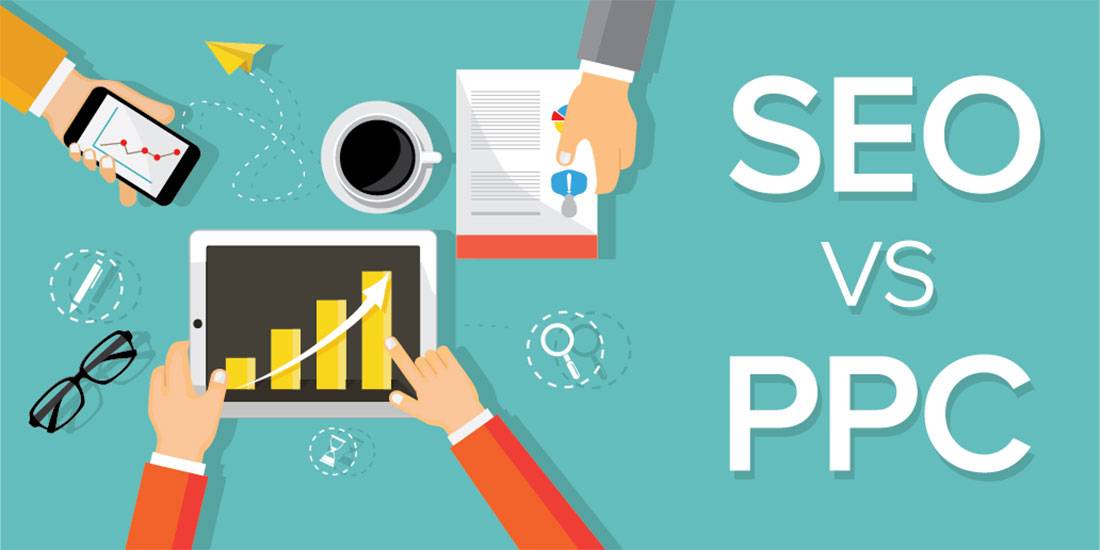
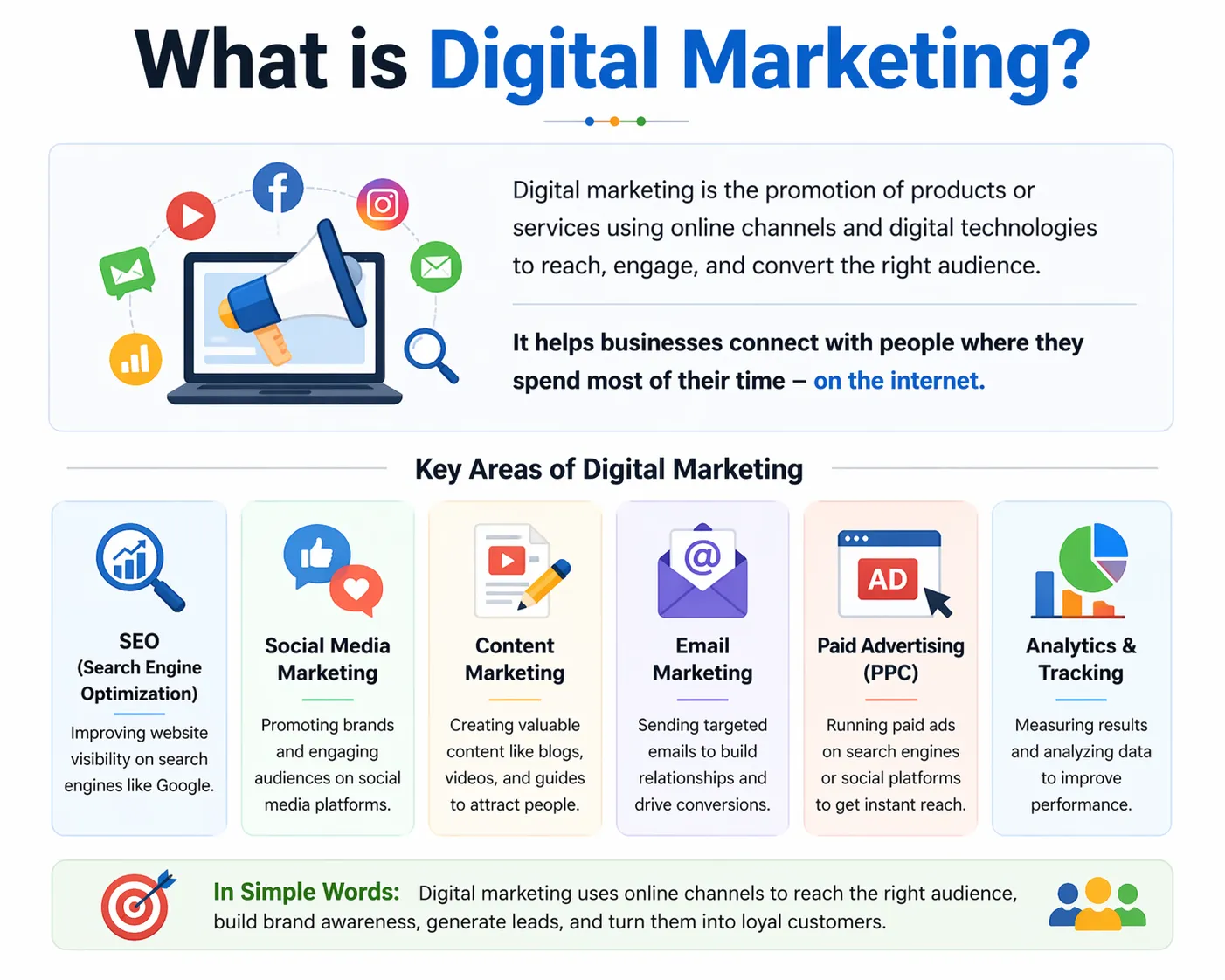
Digital marketing is the method of promoting products, offerings, businesses, or thoughts to certain demographics through the deliberate utilization of various internet platforms and techniques. It includes a broad range of operations geared at interacting with, luring, and persuading new clients using online tools and platforms. Digital marketing aims to use the internet's extensive reach and engagement to forge profound relationships, raise brand awareness, and encourage company expansion.

There are multiple crucial elements at the center of digital marketing:
Webpage and Visiting Pages: The focal point of a digital marketing approach is a well-organized, easy-to-use website. Organizations use it to advertise their products, provide information, and interact with customers. Landing pages, which are customized websites intended to turn viewers into clients or customers, are essential in promoting particular actions.
Search Engine Optimization (SEO): To increase a website's exposure in search engine results, SEO comprises optimizing the content and structure of the website. Organizations may increase their internet visibility and attract organic (unpaid) visitors by adding pertinent keywords, optimizing site efficiency, and acquiring quality backlinks.
Content advertising: To inform, enthrall, and captivate the target audience, useful and relevant material is produced, including posts on blogs, articles, graphics, videos, and more. Content advertising establishes the company's subject-matter knowledge, fosters customer loyalty, and promotes audience participation.
Social media advertising: To connect and communicate with a specific audience, networks like Facebook, Instagram, Twitter, LinkedIn, and many more are employed. In order to increase customer loyalty and congestion, social media marketing include providing frequent updates, providing information, running advertising, and nurturing discussions.
Pay-Per-Click (PPC): Pay-Per-Click (PPC) marketing entails developing and displaying paid advertisements on search engines (such as Google Ads) or social networking websites. When a user clicks on an advertiser's commercial, they are charged a fee. PPC campaigns can produce focused traffic as well as sales quickly.
Email marketing: Sending tailored emails to a database of subscribers is known as email marketing. For the purpose of nurturing prospects and preserving customer connections, successful email advertising provides personalized content, advertisements, and upgrades.
Influencer advertisement: Working with individuals who have a sizable and active digital audience enables firms to leverage their authority and accessibility in order to advertise goods and services.
Affiliate promotion: In this business model, companies pay affiliates (people or other companies) for directing customers to their webpage or generating sales there.
Data collection and evaluation: A lot of data is available in the digital environment that is able to be used to improve tactics. Analytics instruments are used to monitor user behavior, evaluate the success of initiatives, and acquire knowledge for improving future work.
Mobile marketing: As the use of smartphones and tablets rises, it is essential to tailor promotions to their needs. Mobile marketing must include elements like responsive websites, SMS advertising, and advertising within applications.
Digital marketing has a number of benefits, such as the ability to target specific age groups, reach an international audience, monitor results in real-time, and modify plans according to information-driven conclusions. Digital marketing is always evolving thanks to advancements like augmented reality, chatbots, AI, and others. However, a well-organized approach, persistent work, and an exhaustive knowledge of the target audience's tastes and behaviors are necessary for effective digital marketing.



 MBA is one of the highly skilled degrees which can convert your raw potentials into great opportunities. This course is perfect to succeed in business and management. It gives you several training to become a leader, manage and organize things properly in various business environments. An MBA still counts in the elite section of society who has the potential to change theory into practical by their infinite skills taught during their course.