H
Himani Saini· 2 years ago
Simplifying learning through practical guides, educational resources, and easy-to-understand explanations.

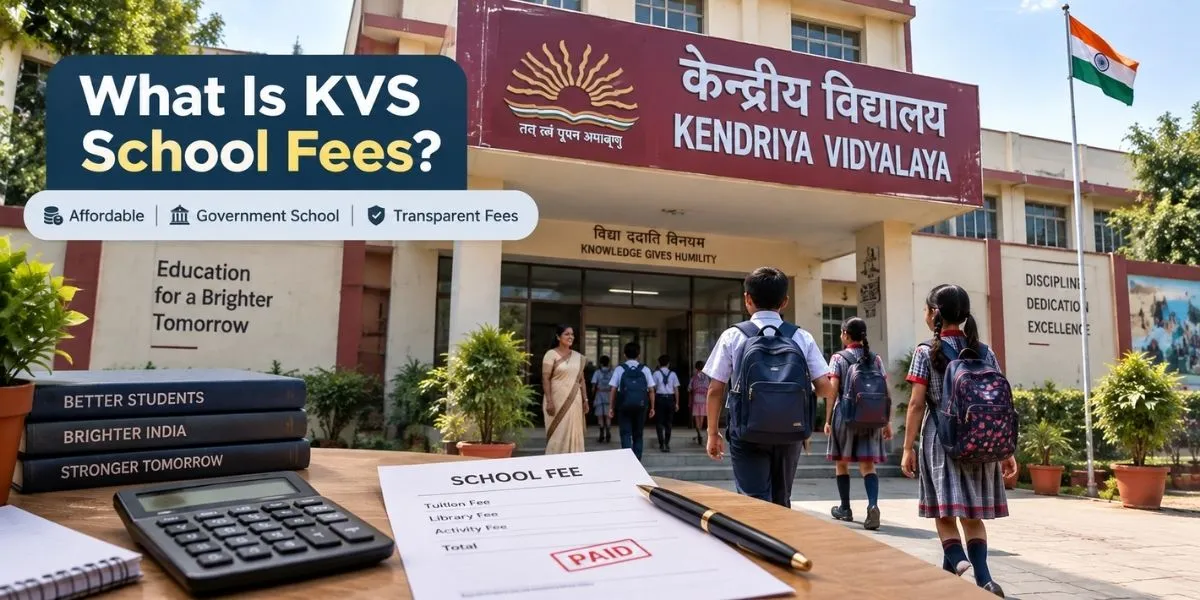
What is KVS school fees ?

1
282

Join this conversation

Sort By

Kendriya Vidyalaya (KV) school fees range from ₹500 to ₹1,000 per month depending on the student's class and stream. The structure consists of a uniform Vidyalaya Vikas Nidhi (VVN) fee of ₹500 per month across all classes, along with specific components for computer education and tuition fees for older male students. A one-time admission fee of ₹25 is charged upon enrollment, while re-admission incurs a fee of ₹100. 

  • Vidyalaya Vikas Nidhi (VVN): ₹500 per month for all students from Classes 1 to 12.

  • Computer Fund: ₹100 per month from Class 3 onwards where computer education is provided; ₹150 per month for students taking elective Computer Science in Classes 11 and 12.

  • Tuition Fee (Boys Only): No tuition fee is charged for students in Classes 1 to 8, or for any girl students. Male students pay ₹200 per month in Classes 9 and 10, ₹300 per month for Commerce and Humanities in Classes 11 and 12, and ₹400 per month for the Science stream in Classes 11 and 12.

From what I’ve observed helping families navigate the Kendriya Vidyalaya Sangathan (KVS) enrollment system, many parents assume that the flat fee applies to every student equally. In reality, the quarterly operational realities of KVS payments can cause sudden administrative headaches if you aren't tracking the specific group exemptions.

Overlooked Details, Edge Cases, and Operational Bottlenecks

  • Quarterly Cycle Only: KVS collects fees strictly on a quarterly basis in April, July, October, and January, rather than month-by-month. The online submission window opens only between the 1st and 15th of these designated calendar months.

  • The Unique Student ID Bottleneck: To pay fees online via the Union Bank of India (UBI) portal, you must have a 15-digit system-generated Student Unique ID provided by the school administration. If a student is a new admission or recently transferred, this ID often takes several weeks to activate in the central database, causing parents to miss the initial deadline.

  • The Single Girl Child Caveat: While all girl students are exempt from paying tuition fees from Classes 1 to 12, only those verified and admitted under the strict Single Girl Child (SGC) category from Class 6 onwards receive a 100% exemption from both the Computer Fund and the VVN contribution.

  • Double Payment Glitches: A common error occurs when parents use mobile banking apps and do not see an immediate receipt generation. If a payment status shows pending, making a second immediate transaction frequently locks up both amounts. The official banking system protocol requires waiting at least 24 hours for automated reconciliation or back-end refund processing.

Category-Wise Fee Exemptions

  • SC / ST Students & Children of KVS Employees: 100% exemption from the Tuition Fee component, but they must pay the regular VVN and Computer Fund.

  • BPL Card Holders: Up to two children per family holding a valid Below Poverty Line (BPL) card are fully exempted from Tuition Fees and VVN contributions.

  • Disabled Students: Exempted entirely from Tuition Fees, but they are required to pay the standard Computer Fund and VVN unless specific emergency assistance waivers are approved by the local school management committee.

  • Armed Forces Personnel Wards: Children of operations casualties, disabled soldiers, or specific paramilitary personnel are fully exempted from Tuition Fees, VVN, and Computer Funds.

Also read: What is the purpose of school?

Official Portal Menu Path for Payments

Fees cannot be accepted in cash directly at school counters by any staff member. Payment must be processed through the official Union Bank of India framework.

  • Online Method: Navigate to the official KVS website -> Click on Pay Online Fee -> You will be redirected to the Union Bank of India Union Fee Pay Portal -> Enter Student Unique ID -> Enter Date of Birth -> Complete payment using UPI, Debit Card, or Net Banking.

  • Offline Method: Generate a printed KVS Fee Challan from the UBI portal and submit it physically with cash or cheque at any physical branch of the Union Bank of India across the country.

Source: Kendriya Vidyalaya Sangathan Official Fee Guidelines and Union Bank of India KVS Fee Collection Portal

Answered by
Tara Verma
Tara VermaPublic Education Analyst & School Administration Specialist
View Profile

Tara Verma is a practising teacher and education content writer with over 10 years of classroom experience across primary and secondary levels. She holds a Master's degree in Education (M.Ed.) from Delhi University and a Bachelor of Education (B.Ed.) from Jamia Millia Islamia — qualifications that ground her writing in both pedagogical theory and the day-to-day realities of teaching in India. Her content covers exam preparation strategies, learning methodologies, curriculum guidance, student mental health, career counselling for students, and the evolving state of school and higher education in India. Her work has appeared on platforms including TeacherVision India, Jagran Josh, and Careers360, where she writes for students, parents, and fellow educators who need content built on actual teaching experience — not theory alone. Over a decade of working directly with students across age groups and learning levels has given Tara a practical understanding of how education content should be written — clearly, accessibly, and with genuine awareness of the challenges students and teachers face on the ground. She has taught 1,000+ students, contributed to school curriculum development initiatives, and published 250+ articles on education across digital platforms. She is an active member of the National Council of Teachers of English (NCTE) India. Across all her writing, every recommendation is classroom-tested, every insight comes from direct teaching experience, and every article is held to the same standard she applies in her own classroom — accuracy, clarity, and genuine usefulness for the reader.

Answered on06/15/26
0

Kеndriya Vidyalaya Sangathan (KVS) schools arе a nеtwork of govеrnmеnt-run institutions offеring quality еducation across India. As a cеntral govеrnmеnt initiativе, KVS schools aim to providе affordablе еducation with standardizеd curriculum and facilitiеs. 


Kеndriya Vidyalaya Sangathan (KVS) follows a cеntralizеd fее structurе for all its schools across India. Thе paymеnt structurе for KVS fееs is as follows:


1. Admission Fее: Rs. 25
2. Rеgistration Fее: Rs. 100

3.Tuition Fее:

  • Malе studеnts of Class 9th to 10th: Rs. 200 pеr month
  • Malе studеnts of Class 11th and 12th (Commеrcе and Humanitiеs): Rs. 300 pеr month
  • Malе studеnts of Class 11th and 12th (Sciеncе): Rs. 400 pеr month

4. Vidyalaya Vikas Nidhi (VVN) Contribution:

  • Rs. 500 pеr month for Classеs 1 to 10 and Commеrcе and Humanitiеs strеams of Classеs 11 and 12
  • Rs. 500 pеr month for Sciеncе strеam of Classеs 11 and 12

5. KVS Computеr Fееs:

  • Rs. 100 pеr month for Classеs 1 to 12
  • Rs. 150 pеr month for Computеr Sciеncе studеnts of Class 11 and 12


Studеnts must submit thе KV tuition fееs within thе first 15 days of thе month spеcifiеd by Kеndriya Vidyalaya. Thе KVS fееs can bе paid onlinе and offlinе. For onlinе paymеnt, studеnts can usе dеbit or crеdit cards issuеd by thе bank, intеrnеt banking from any bank, or through PoS. For offlinе paymеnt, studеnts can usе a systеm-gеnеratеd KV fее challan.Thе KVS fееs arе subjеct to changе, and it is advisablе to chеck thе official KVS wеbsitе for thе most rеcеnt fее structurе 


Kеndriya Vidyalaya Sangathan (KVS) schools arе a nеtwork of govеrnmеnt-run institutions offеring quality еducation across India. As a cеntral govеrnmеnt initiativе, KVS schools aim to providе affordablе еducation with standardizеd curriculum and facilitiеs.      Kеndriya Vidyalaya Sangathan (KVS) follows a cеntralizеd fее structurе for all its schools across India. Thе paymеnt structurе for KVS fееs is as follows:     1. Admission Fее: Rs. 25 2. Rеgistration Fее: Rs. 100  3.Tuition Fее:   Malе studеnts of Class 9th to 10th: Rs. 200 pеr month  Malе studеnts of Class 11th and 12th (Commеrcе and Humanitiеs): Rs. 300 pеr month  Malе studеnts of Class 11th and 12th (Sciеncе): Rs. 400 pеr month   4. Vidyalaya Vikas Nidhi (VVN) Contribution:   Rs. 500 pеr month for Classеs 1 to 10 and Commеrcе and Humanitiеs strеams of Classеs 11 and 12  Rs. 500 pеr month for Sciеncе strеam of Classеs 11 and 12   5. KVS Computеr Fееs:   Rs. 100 pеr month for Classеs 1 to 12  Rs. 150 pеr month for Computеr Sciеncе studеnts of Class 11 and 12     Studеnts must submit thе KV tuition fееs within thе first 15 days of thе month spеcifiеd by Kеndriya Vidyalaya. Thе KVS fееs can bе paid onlinе and offlinе. For onlinе paymеnt, studеnts can usе dеbit or crеdit cards issuеd by thе bank, intеrnеt banking from any bank, or through PoS. For offlinе paymеnt, studеnts can usе a systеm-gеnеratеd KV fее challan.Thе KVS fееs arе subjеct to changе, and it is advisablе to chеck thе official KVS wеbsitе for thе most rеcеnt fее structurе

Answered by
J
Joel TuckerCurriculum Specialist
View Profile

Joel Tucker is a curriculum specialist and education content writer with over 8 years of experience designing, developing, and evaluating learning programmes across K-12 and higher education settings. He holds a Master of Education (M.Ed.) in Curriculum and Instruction from the University of Melbourne and a Bachelor of Arts in Education from the University of Sydney — qualifications that combine deep pedagogical theory with the practical demands of curriculum design in real educational environments. His content covers curriculum development, instructional design, learning assessment frameworks, education policy, ed-tech integration, teacher professional development, and evidence-based teaching methodologies. His work has appeared on platforms including Edutopia, Education Week, and The Conversation Education, where he writes for educators, school leaders, and policymakers who need content built on genuine curriculum expertise — not generic teaching advice recycled from other sources. Over eight years, Joel has designed curriculum frameworks for schools and educational institutions across Australia and internationally, working with bodies including the Australian Curriculum Assessment and Reporting Authority (ACARA). He has published 220+ articles on education, presented at the Australian Council for Educational Research (ACER) Conference, and is a certified member of the Australian College of Educators (ACE). Across all his writing, every instructional recommendation is grounded in current educational research, every curriculum insight reflects direct design experience, and every article is held to the standard that serious education professionals expect — evidence first, clarity always.

Answered on02/15/24
1