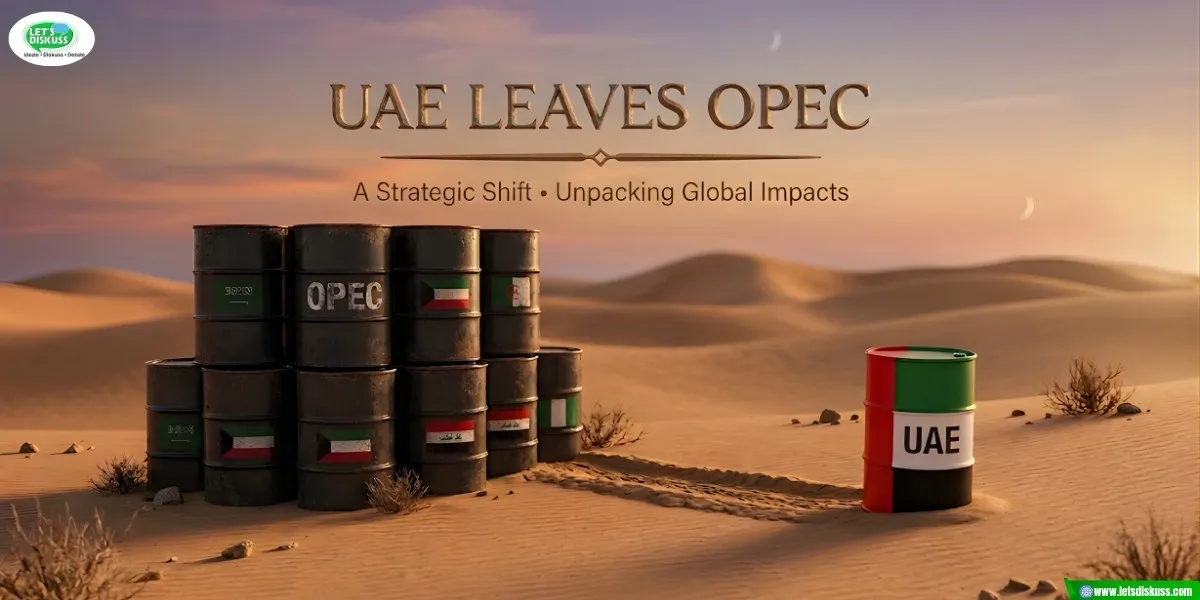
The clock is ticking down to May 1, 2026, and the global energy landscape is bracing for a seismic shift. In a move that fundamentally rewrites Middle Eastern diplomacy, the United Arab Emirates is officially cutting ties with the Organization of the Petroleum Exporting Countries (OPEC) and the broader OPEC+ alliance.
Ending a relationship that began in 1967, the reality of the UAE leaves OPEC 2026 narrative is no longer just a rumor—it’s a disruptive market reality. But what drives a top-tier oil producer to walk away from the world's most powerful energy cartel amid a historic energy shock? And more importantly, how will this ripple across global supply chains?
Here is an expert look at the catalysts behind the exit, the fate of the remaining OPEC members, and the definitive energy market trends for 2026.
The Catalyst: The Iran War and Regional Fractures
The decision to leave the cartel wasn’t an impulsive pivot; it was a calculated maneuver forced by the ongoing geopolitical crisis in West Asia. The most immediate trigger is the US-Iran war, which has exposed long-festering wounds within the Gulf Cooperation Council (GCC).
- The Strait of Hormuz Crisis: With the Strait of Hormuz effectively closed due to Iranian threats and attacks on vessels, a fifth of the world's seaborne crude is trapped. The UAE has been heavily targeted by Iranian missiles and drones during this conflict, and Abu Dhabi has grown deeply frustrated by what it views as a weak, insipid political and military response from its GCC and Arab League allies.
- The Russian Alliance: The broader OPEC+ alliance includes Russia, which has proven to be a steadfast partner for Iran during the current conflict. For policymakers in Abu Dhabi, cooperating with an OPEC+ structure that ultimately benefits Moscow—and by extension, Tehran—became strategically untenable.
- Diplomatic Snubs: The rift burst into the open earlier this year. During the emergency GCC summit in Jeddah, Saudi Crown Prince Mohammed bin Salman chaired the meeting, but the UAE notably only sent its Deputy PM and Foreign Minister, Sheikh Abdullah bin Zayed, signaling a severe diplomatic freeze.
By the Numbers: The Production and Quota Dispute
Beyond geopolitics, the exit is rooted in cold, hard economics. For years, strict oil production quotas imposed by OPEC forced the UAE to leave billions of dollars in capacity sitting idle.
The UAE has aggressively invested in its infrastructure, pushing its actual production capacity to 4.85 million barrels per day (bpd). However, its OPEC quota capped it at just 3.2 million bpd.
Furthermore, the economic realities of the UAE and Saudi Arabia have drastically diverged. The UAE has successfully diversified its economy (boasting an external surplus of roughly 13% of its GDP), while Saudi Arabia requires much higher oil prices to fund its massive domestic mega-projects.
| Metric | United Arab Emirates | Saudi Arabia |
|---|---|---|
| Estimated Fiscal Breakeven (2025) | $49 / barrel | $90 / barrel |
| Population | ~11 Million | ~35 Million |
| OPEC Spare Capacity Reliance | High | High (Now bears sole burden) |
| Economic Strategy | Volume-driven, highly diversified | Price-driven, reliant on high crude value |
By stepping outside the cartel, Abu Dhabi reclaims the freedom to pump at its 4.85 million bpd capacity, monetizing its vast reserves on its own terms.
The Ripple Effect on OPEC+ Alliances
The UAE consistently ranked as OPEC's third-largest producer. Removing a pillar of that size inevitably shakes the foundation of the entire organization.
- Saudi Arabia Bears the Brunt: The UAE was one of the few members with significant spare capacity, acting as a crucial shock absorber for the market. Its departure places immense pressure on Riyadh to single-handedly manage global supply shortages and maintain internal cartel discipline.
- A Shrinking Bloc: Following Qatar's exit in 2019 and Angola's recent departure, the UAE's exit shrinks the core OPEC bloc to just 11 active nations. This accelerating exodus raises urgent questions about the long-term viability of the cartel. Without the UAE, OPEC's ability to artificially prop up prices through unified cuts is rapidly eroding.
- The Washington Factor: The move has already been framed as a major political victory in the United States. Donald Trump has publicly praised the exit, reiterating his long-standing criticism that OPEC "rips off the rest of the world." The UAE’s move aligns closely with US preferences for lower global oil prices and weakens the cartel's leverage over Western consumers.
Navigating Energy Market Trends 2026
If you are expecting an immediate, dramatic plunge in oil prices due to a flooded market, the reality of the global oil market in 2026 is far more complex.
- Short-Term Gridlock: Despite the UAE gaining the freedom to pump more oil on May 1, the immediate market impact will be muted. Because the Strait of Hormuz remains compromised, the physical oil cannot easily reach global markets. Prices will remain artificially high due to these logistical bottlenecks and the broader wartime energy shock.
- The Coming Market Share War: Looking ahead, once hostilities cool and the chokepoints reopen, global reserves will be severely drained. The UAE will aggressively push its massive volume of barrels into the market to capture share and meet global restocking demands. This will inevitably force a fierce competition for buyers, likely triggering localized price wars as Saudi Arabia and non-OPEC producers scramble to defend their territory.
- Global Investment Impacts: The fallout extends beyond the Gulf. For example, international stakeholders—such as Indian energy companies that hold a 10% stake in the UAE’s Lower Zakum oilfield—will suddenly find their investments freed from OPEC production constraints, altering long-term revenue forecasts.
Conclusion
The UAE’s departure from OPEC is more than just a headline; it is the death knell for centralized, consensus-driven oil production in the Middle East. Driven by wartime frustrations and a vast economic divide with Saudi Arabia, Abu Dhabi has chosen sovereignty over solidarity. As national interests officially take precedence over collective quotas, we are entering a hyper-competitive, volatile new era of global energy.
Must Read: Is Amazon LEO Rocket Launch the Future of Internet?