Tarot card reading is a very old and ancient method of divination, which employs a specially designed deck of cards as a means to derive profound insights into all areas of life, including the past, the present, and even the future. In accordance with very old customs and established traditions, this intriguing process is founded on a combination of rich symbolism, enhanced intuition, and reflective interpretation to perform a thorough examination of personal issues, as well as provide spiritual advice or evaluate significant life circumstances. Over the years, Tarot has often been linked with the mystic world; however, it has undergone a dramatic change, transforming from what was initially a basic parlor game to a largely accepted and admired tool for individual contemplation and reflective decision-making. This intriguing practice is embraced by both skeptics who practice it with caution and believers who hold it in high esteem, bearing witness to its broad appeal among diverse audiences.
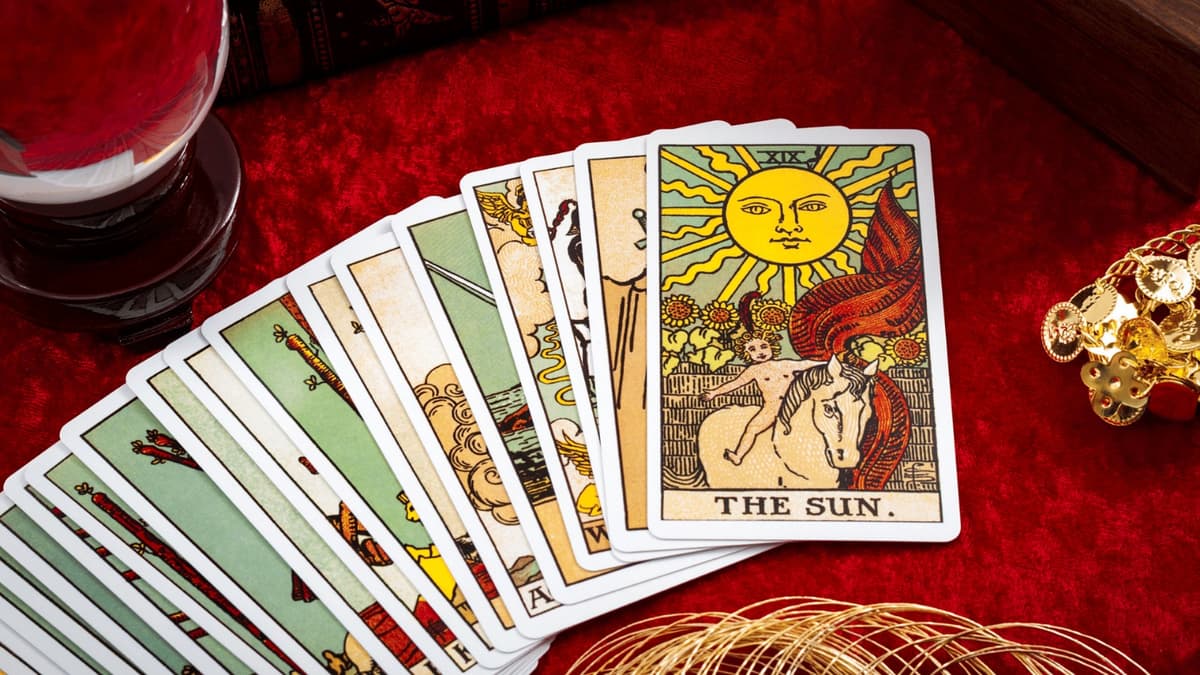
Origins and History of Tarot
The tarot deck was invented in Europe in the 15th century as a playing card game, "tarocchi," which was played in Italy. The early hand-painted decks, such as the Visconti-Sforza, were played by the aristocracy. It wasn't until the 18th century when occultists, such as Jean-Baptiste Alliette (Etteilla), added mystical significance to tarot by linking the cards to esoteric teachings. By the 19th and 20th centuries, the likes of the Hermetic Order of the Golden Dawn and Arthur Edward Waite (author of the Rider-Waite deck) cemented tarot's role in spiritual use, creating its contemporary form.
Structure of a Tarot Deck
A standard tarot deck contains 78 cards, split into two major categories:
- Major Arcana: 22 cards that symbolize major life events or spiritual epiphanies, like The Fool (new beginnings), The Lovers (decision-making), or Death (change).
- Minor Arcana: 56 cards divided into four suits—Cups (feelings), Pentacles (material), Swords (mind), and Wands (creativity)—each with 14 ranks, numbered cards, and court cards (Page, Knight, Queen, King).
Each card contains unique imagery and symbolism, interpreted based on its location, situation, and the reader's intuition.
How Tarot Card Reading Works
A tarot reading begins with a question or intention stated by the querent, the one who is inquiring. The reader then shuffles the deck, often urging the querent to focus his or her energy on the cards. Next, a specified number of cards are drawn in an arrangement known as a "spread." Frequently used spreads are:
- Three-Card Spread: Past, Present, and Future.
- Celtic Cross: A 10-card spread that provides a detailed explanation of a situation.
- Single Card Draw: A straightforward answer to a specific question.
The reader decides the meaning of the cards, taking into account whether they are upright or reversed (reversed cards typically indicate blockages or different viewpoints). The process combines the cards' conventional symbolism with the reader's intuitive understanding.
Purpose and Uses of Tarot
Tarot card reading is used for diverse purposes depending on the individual:
- Self-Reflection: It assists individuals in examining their feelings, motives, or unconscious thoughts.
- Decision-Making: Tarot is used to define decisions or specify potential outcomes.
- Spiritual Growth: Used mostly to connect to their inner intelligence or higher wisdom.
- Entertainment: To others, it's a creative, amusing activity without belief.
While traditionally linked with fortune-telling, modern tarot focuses on empowerment and insight rather than with absolute predictions.
Benefits of Tarot Card Reading
Tarot has numerous benefits for individuals who are open to its use:
- Clarity: It can unravel complex circumstances, offering a fresh point of view.
- Emotional Awareness: Cards in the Cups suit tend to show underlying feelings.
- Inspiration: The images and tales inspire imagination and reflection.
- Mindfulness: The ritual of a reading invites focus and presence.
Even cynics can appreciate its psychological mirroring effect, much like a Rorschach test.
Misconceptions and Criticisms
Tarot is greeted with suspicion and myths. Some see it as a means of superstition, or as a manipulation tool, particularly when used by unscrupulous readers. Others think it foretells destiny with absolute accuracy, while most practitioners see it as a map and not a script. Scientifically, there is no proof that tarot is predictive, but its symbolic and psychological significance keeps it popular.
Modern Tarot Reading
Tarot has evolved to suit modern life today. It is accessed via online readings, phone apps, and bohemian deck designs (e.g., minimalist or pop culture-inspired). Professional readers provide services in-person or online, and hobbyists utilize it for self-discovery. Its popularity is part of larger spirituality and self-care trends as of March 28, 2025.
Conclusion
Tarot card reading is a profoundly complicated and multi-layered process that weaves innumerable threads from the realms of art, psychology, and mysticism into a single experience. Whether individuals view tarot as a fundamentally spiritual practice aimed at giving advice and guidance or as something more of a meditation tool meant to help individuals develop themselves, it has a truly remarkable ability to motivate and inspire individuals to delve into the mysteries and uncertainties of life in a creative and deeply meaningful manner. From its origins in the Middle Ages to the evolution of tarot in contemporary society, tarot continues to be a universal tool for individuals who desire to gain deeper meaning from life, thereby validating its timelessness and applicability to individuals from various cultures and generations across history.