What is the Net Demand and Time Liabilit...

G

| Updated on March 20, 2023 | Education

What is the Net Demand and Time Liability?

3 Answers
1,435 views
logo

@diptiranjanbehera3320 | Posted on March 18, 2023

Net Demand and Time Liability (NDTL) is a term used in banking and refers to the total amount of money that a bank's customers have deposited with the bank, minus the amount of money the bank has lent out to borrowers.

In other words, NDTL represents the total funds that a bank has available to meet the withdrawal requests of its customers. This includes the total of all types of deposits, such as savings deposits, current account deposits, fixed deposits, and other types of deposits held by the bank.

On the other hand, Time Liability refers to the deposits that are held by the bank for a specific period, such as fixed deposits. The bank has to pay interest on these deposits to the depositors, and the bank can only use these funds after the specific time period expires.

So, NDTL is the sum of demand deposits (which can be withdrawn at any time) and time liabilities, whereas time liabilities refer only to those deposits that cannot be withdrawn before the expiry of a specific time period.

Loading image...

0 Comments
G

@3601 | Posted on March 18, 2023

Net Demand and Time Liabilities

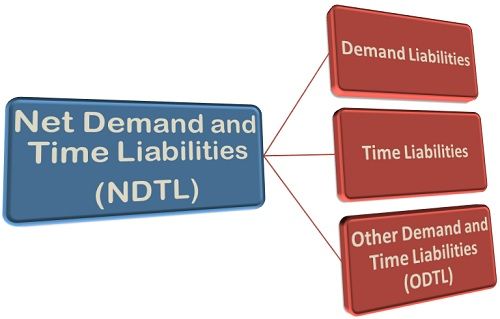
NDTL refer to the total demand and time liabilities (deposit) of the public that are held by the banker with other banks .

Time liabilities refer to the Liabilities which the commercial bank are liable to repay to the customer after an agree period and demand liabilities are customer deposit which are repayable on demand .

How do you calculate net demand and time liabilities.

NDTL= ( demand liabilities+ time liabilities+ demand and time liabilities+ liabilities to other )Loading image...

0 Comments
logo

@pandeychandan1725 | Posted on March 18, 2023

Net demand and time liability (NDTL) is a term used in the banking industry to refer to the total amount of funds that a bank owes to its customers through demand deposits, savings deposits, and time deposits.

Demand deposits are accounts that allow customers to withdraw funds at any time without any prior notice, such as checking accounts. Savings deposits are accounts that typically pay interest and require customers to provide some notice before withdrawing funds, such as savings accounts. Time deposits are accounts that pay a fixed rate of interest for a fixed period of time, such as certificates of deposit (CDs).

Loading image...

0 Comments