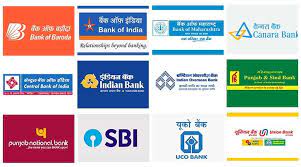
As of now, India has 12 nationalized banks, also known as Public Sector Banks (PSBs). These are banks where the Government of India holds a majority stake.
Honestly, I used to think every government bank was nationalized at different times, but when I started learning about banking and finance, I realized that after several mergers over the past few years, the total number has come down significantly.
Complete List
Here are the 12 Public Sector (Nationalized) Banks in India:
-
State Bank of India (SBI)
-
Punjab National Bank (PNB)
-
Bank of Baroda
-
Canara Bank
-
Union Bank of India
-
Indian Bank
-
Bank of India
-
Central Bank of India
-
UCO Bank
-
Indian Overseas Bank
-
Bank of Maharashtra
-
Punjab & Sind Bank
These banks operate thousands of branches across the country and provide services such as savings accounts, loans, fixed deposits, internet banking, and government schemes.
Many people remember that India once had more nationalized banks.
The reason the number is now 12 is because the Government of India merged several public sector banks between 2019 and 2020 to create stronger and more efficient banking institutions.
For example:
-
Oriental Bank of Commerce and United Bank of India merged with Punjab National Bank.
-
Syndicate Bank merged with Canara Bank.
-
Allahabad Bank merged with Indian Bank.
-
Andhra Bank and Corporation Bank merged with Union Bank of India.
That's why the total number reduced even though banking services continued under the merged banks.
People often confuse nationalized banks, public sector banks, and private banks.
Here's the difference:
-
Nationalized/Public Sector Banks: Majority owned by the Government of India.
-
Private Sector Banks: Owned mainly by private shareholders and investors.
-
Foreign Banks: Banks headquartered outside India but operating within the country.
I have noticed that many people think SBI was nationalized along with the other banks in 1969. Actually, SBI became a government-owned bank earlier, while many other banks were nationalized later.
Nationalized banks play an important role in India's economy.
They help:
-
Provide banking services across rural and urban areas.
-
Support government welfare schemes.
-
Offer agricultural, education, and business loans.
-
Promote financial inclusion.
-
Maintain stability in the banking system.
These banks continue to play a major role in supporting the country's financial system and delivering banking services to millions of people.
Must Read: Is there any difference between SBI and other banks?