Understanding Digital Habits
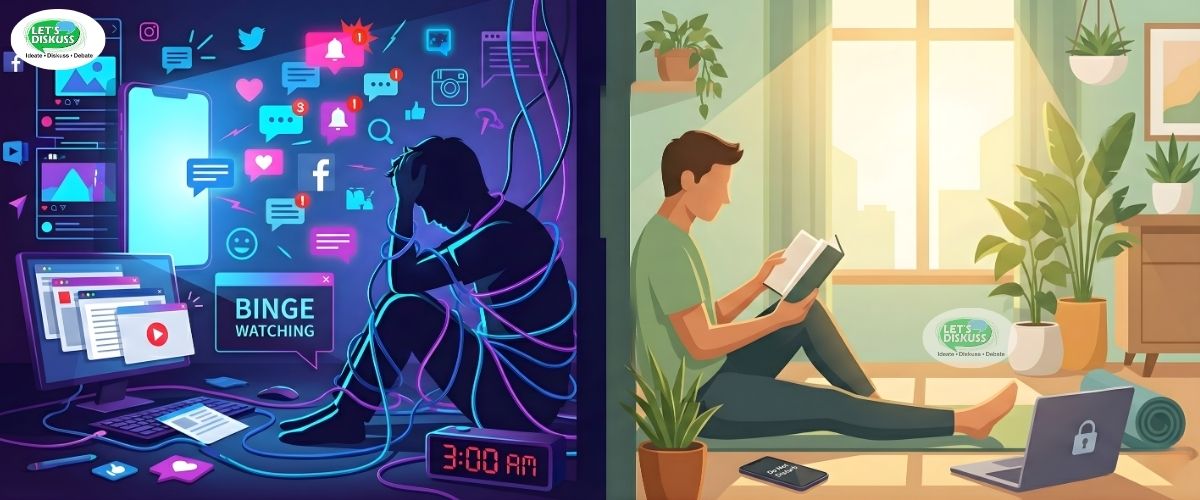
Digital habits refer to repeated actions that we do every day with a number of different technologies that are available at our fingertips. These habits are developed without any conscious thought, for example, checking your phone as soon as you open your eyes in the morning or scrolling through social media every now and then. These are the small digital habits. Then there are also digital habits like binge watching shows all through the night.
Technology has shaped our lives in a way that we make quick decisions as everything is very conveniently available. Apps are designed in a way that it captures our attention through different models of notification so we dive deep into scrolling even without realising. Apps are also making personalised content so you feel a strong urge to open the app, all of which leads to unhealthy digital habits. One of the main reasons why our brain develops digital habits is because it gets driven by dopamine.
To understand your digital pattern, focus on things like:
How often do you pick up your phone without any purpose and start scrolling?
Which is the most addictive app and how much time do you spend scrolling on that app?
If your phone or any digital device usage is casual or driven by an intention?
How do you feel after extended use of your mobile phones or any other digital device?
These questions are important, because in order to change your digital habits, you need to be aware of these habits in depth.
The Most Common Bad Digital Habits
Bad digital habits affect not only your mood, but also your productivity, relationships, and overall health. Some of the most common bad digital haibits include:
Excessive screen time: Excessively using your phone or other digital devices at all times, be it whether you are at work or you're travelling or you are sitting somewhere idle.
Social media overuse: Over using social media just to feel relevant and updated all the time.
Doomscrolling: This means scrolling on your social media apps, without even realising how much time you have wasted. This leads to unintentional consumption of media in different forms.
Digital multitasking: This means switching between apps constantly.
Constant notifications : Your phone is always active on the notification mode and even without realising when a notification pops up, you just open the app and spend your next few hours mindlessly going through the app.
Online procrastination : Even when there isn't something very interesting going on, you still go online and explore what is there on social media.
Compulsive online shopping: Online shopping is often compulsively done when you purchase items that are not even necessary. People do this because it gives them instant gratification.
Late-night device use: Many people are hooked on their phone later at night, which is one of the worst digital habits as it disturbs your natural sleep cycle.
While you may find these habits are not very harmful, in the long run, these create a permanent mental fatigue and emotional imbalance in your life.
Effects of Bad Digital Habits
Bad digital habits are unhealthy because it distracts your mental health as well as makes you lethargic and a couch potato which will harm your physical well-being as well. Excessive screen time is linked with low mood, lesser attention span, and stress and anxiety as per many recent studies. Spending too much time on online apps is also linked to depression as you are constantly comparing your lifestyle with the one you see on social media, damaging your self-esteem and general happiness in life. There are also many harmful physical side effects of these digital habits. These include:
Strain on your eyes leads to poor vision and headaches
Poor posture and pain in your neck and shoulder
Weight gain because of reduced physical activity
Not only this, there are other side effects of these bad digital habits which is low productivity. When you focus more on scrolling through social media, your focus weakens and your productivity hampers. You also get deprived of sleep quality by using screens late at night. This is because blue light that comes from your mobile phone, suppresses melatonin- a natural sleep chemical that is secreted by your body. It is also being reported that over use of digital screens leads to isolation, emotional distance and loss of friends and connection in real life.
Root Causes of Unhealthy Digital Behavior
Bad digital habits are developed with prolonged use of digital devices. While many apps are intentionally designed to keep the users hooked, they keep on scrolling, auto play, and share content. Button search as likes and comments are added so that there is more and more interaction within the app by the user. These are also developed as emotional triggers. In hope of hundreds of likes and comments, Users often spend a large chunk of time online.
One of the root causes is, therefore, FOMO (Fear of Missing Out). FOMO is a term which means that there is always a fear of missing out on some content if you are not online. This urges the user to always stay online, even when they are stressed or bored or feeling lonely. Over a period of time, the feeling of FOMO creates a habit loop of always scrolling, liking, or commenting to stay connected.
To break this cycle of unhealthy digital behaviour, you need to maintain a distance from the root cause.
Breaking the Cycle – Proven Strategies
Now that you have understood all the bad effects a bad Digital habit will have on you, you should try to break the cycle. Breaking of prolonged digital habits is not an easy task and you may require very strict intention and extreme restrictions from your side in order to succeed.
Below mentioned are the effective strategies that can help you break the cycle:
Setting digital boundaries: You can turn off your phone's notification while you are working. This will help you focus your attention in one place.
Using time-management techniques: Make use of your digital devices in our time efficient manner. Don't scroll late at night, instead switch your phone with a book or a walk outside.
Turning off non-essential notifications : There are a number of apps on our phones that are not very important but we still open them and scroll because we get constant notifications. Turn off notifications of the apps that you do not require on every day basis.
Taking short social media detoxes: Take a day or two for yourself, plan out activities outside, go for a walk or indulge yourself in any sport. Basically take a social media detox, and do things that do not require usage of a device.
Replacing screen time with healthier alternatives: Go for alternatives, such as taking a run, cooking something, going out for coffee with a friend, reading a book or newspaper, etc.
While technology has become a great part of our lives today, it is true that we cannot hundred percent eliminate digital devices from our lives. However, you should use the technology in a mindful manner. By breaking the pattern of bad digital habits, you gain access over your own time in life.
Building Healthy Digital Habits
So how can you build healthy digital habits? You have to make a list of all the helpful practices that will help you in maintaining a healthy digital habit through mindful usage of technology for purpose and not impulse.
The below mentioned are a few helpful practises:
Make a device free zone in your home. For example, your bedroom. Keep your phone outside your bedroom and when you enter your bedroom at night, you can pick up a book to read or simply chat with your partner or walk around or do meditation.
Set a daily Screen Time schedule on your phone or other digital devices. This option is available in the modern day phones where you can set a timer after which your phone will automatically lock you out of the screen and you won't be able to use it any longer.
Practice the art of digital minimalism by removing the apps which you don't use or which are taking a lot of time from your schedule. Just keep the basic apps which you use on every day basis and which are important to stay connected to the world.
Tools & Apps to Help You Break Bad Habits
While the above mentioned are the manual techniques that you can practise on every day basis, there are many tools and apps that can help you break your bad digital habits. Here are the useful tools you can try:
Screen-time tracking apps that monitor your screen usage
Focus and productivity apps that will help you remove the digital clutter and focus on your work, thus enhancing productivity
Website blockers to reduce unnecessary distractions to jump to
Mindfulness and wellness apps for your mental and emotional clarity
Sleep-improvement tools that will help you limit nighttime screen usage
Digital Wellness for Students, Parents & Professionals
Different groups of people face different challenges when it comes to digital habits. For students, the biggest challenge is managing distractions when they're using the devices for the purpose of studying and learning. For parents, one of the biggest challenges is playing the role model for their kids by adopting a healthy digital behaviour at home. For professionals, the challenge is to balance their productivity by keeping the distraction from digital devices at bay.
For Digital wellness,
Students should make use of the apps which focused on the learning and should avoid using any other app that may distract them from from their goal of studying
Parents should keep their screens to minimal use when they are in front of their children. Especially when doing activities such as eating and talking to someone, parents should avoid using the phone altogether because this is the habit that their children will adapt from them
For professionals, it is important to download the right apps on their devices such as productivity and planning apps. While they are working, they should only focus on using those apps and avoid doomscrolling on social media. They can also go for silencing their notifications when they're working so that their productivity won't be affected by continuous distraction.
Long-Term Digital Wellness Plan
For long-term digital wellness, you should try to make sustainable changes that have a long-term approach. Set realistic goals and track your progress on every day basis. Focus completely on building habits gradually and never aim for a single day transformation.
To maintain your long-term progress:
Review your digital habits monthly
Adjust to life changes such as spending more time outside instead of glueing to your phone indoors
Accept setbacks without guilt as it may require constant work to make progress
If you use technology the right way, and create a long-term digital wellness routine for you, then technology will actually help you to support your goals. Always remember that you are the one that should use the technology and technology should not be using you.
Conclusion: Technology as a Tool, Not a Distraction
We cannot say that technology is bad. After all, it has given us many things that make it convenient for us to work, enjoy and live. However, it is important to use technology as a tool and not a distraction. By understanding your bad digital habits and repairing them to your advantage, will help you in attaining peak productivity. Bad digital habits will disturb your focus, sleep, and overall mental & physical health, while healthy digital habits will help you increase your productivity and make you smarter over time!
FAQs
How can I reduce my screen time?
You can track your screen usage by setting daily limits on your device. You can also replace your screen time with outside activities, such as walking, playing, hanging out with friends.
What is doomscrolling and how do I stop it?
Doomscrolling refers to endless consuming content on social media by scrolling without any time boundary. You can stop it by limiting your screen time, which will log you out of your phone once the screen time is complete.
How do I break my addiction to my phone?
You should avoid checking your phone first thing in the morning because it sets the tone for the rest of your day. You should also silent your notification and start building healthier habits such as reading a book.
Why is social media so addictive?
Social media is addictive because it is based on a psychological reward System of likes, comments and shares. It keeps the user hooked.
How does too much screen time affect my health?
Too much screen time will affect your health as it leads to poor sleep and poor posture. Your productivity and focus suffers and you feel low on mood. Reduced physical activity also affects your health.