
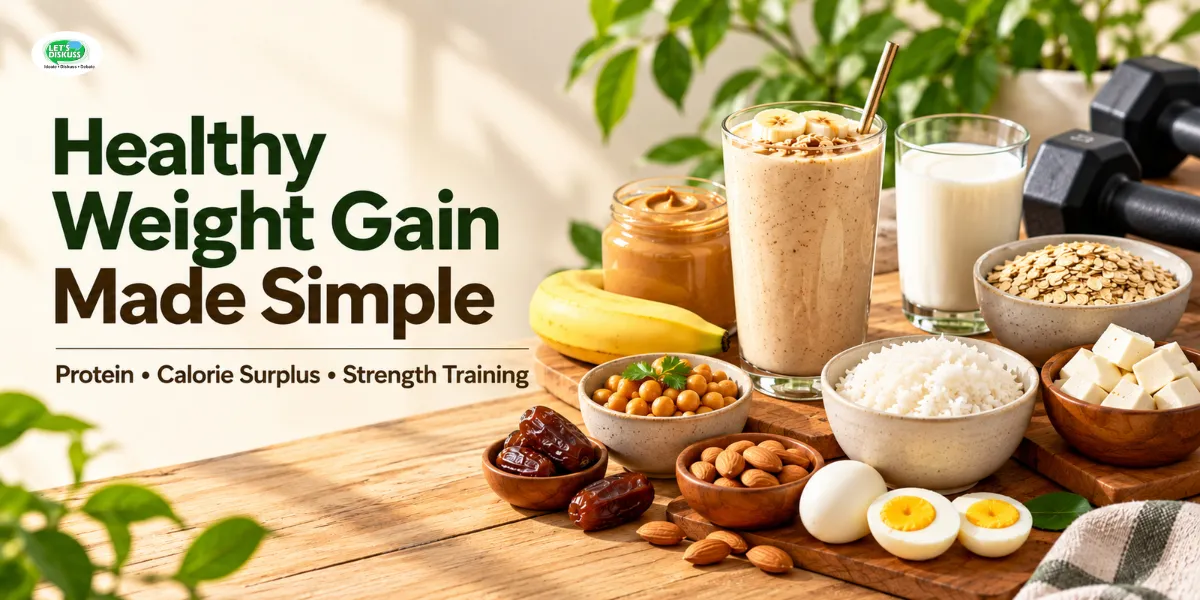
Most nutrition advice centres on losing kilos, which leaves naturally lean people and those recovering from illness to piece together random tips that often lead to bloating rather than real progress. Choosing healthy ways to gain weight means adding lean tissue in a steady, measurable manner instead of chasing a higher number on the scale through fried snacks and sugary drinks.
Learning how to gain weight properly starts with a moderate calorie surplus backed by adequate protein intake, after which strength training for weight gain makes sure the extra food turns into useful muscle rather than stored fat. The sections below also include a practical weight gain meal plan along with homemade smoothie ideas that make the whole process far easier to sustain.
What Does Healthy Weight Gain Actually Mean?
Healthy weight gain is a gradual increase in body weight, ideally around 0.25 to 0.5 kg per week, that comes mostly from lean muscle mass rather than excess body fat. It depends on nutrient-dense meals paired with regular resistance exercise, so improvements appear in daily stamina and overall wellbeing instead of only in clothing size.
A sensible approach usually delivers these outcomes:
- More muscle and better posture, supported by consistent resistance workouts
- Steadier energy through the day, since meals arrive at predictable intervals
- Stronger immunity along with quicker recovery after physical effort
- Improved hormonal balance, particularly in people who were significantly underweight
- A body composition that remains stable once the target weight has been reached
Are You Actually Underweight? Checking Your BMI
Body Mass Index is calculated by dividing weight in kilograms by the square of height in metres, and although it cannot separate muscle from fat, it remains a useful starting point for deciding whether weight gain is medically worthwhile.
| Category | WHO Global BMI (kg/m²) | Asian Indian Consensus BMI (kg/m²) |
|---|---|---|
| Underweight | Below 18.5 | Below 18.0 |
| Normal | 18.5 to 24.9 | 18.0 to 22.9 |
| Overweight | 25.0 to 29.9 | 23.0 to 24.9 |
| Obese | 30.0 and above | 25.0 and above |
Someone who falls in the underweight BMI range or has lost weight unintentionally should treat weight gain as a health goal rather than a cosmetic one. Athletes may read as "normal" despite being very lean, which is why waist measurement and strength levels deserve as much attention as the BMI figure itself.
Why Some People Struggle to Put On Weight
Difficulty gaining weight rarely has a single cause, and identifying the reason behind it makes any solution far more targeted. Common contributors include:
- Genetics and a fast metabolism, which lead some bodies to burn more energy even at rest
- High non-exercise activity, such as walking a great deal or standing for most of the workday
- Low appetite, often linked to stress or long gaps between meals
- Medical conditions such as hyperthyroidism or celiac disease, both of which can affect absorption and energy use
- Medications, some of which reduce hunger as a side effect
- Psychological factors, including anxiety or disordered eating patterns
How Many Extra Calories Do You Need?
Every sensible answer to how to gain weight comes back to energy balance, because body weight rises only when daily intake consistently exceeds what your body burns. Most dietitians recommend adding roughly 300 to 500 kilocalories per day above maintenance, since this range supports muscle growth while limiting unwanted fat storage.
A practical method is to track your current intake for a week, check whether your weight stays stable, and then add a modest increase through larger portions or an additional snack. Raising intake in stages of about 250 to 300 kilocalories every week or two gives your digestive system time to adjust and prevents the discomfort that often follows a sudden jump in food volume.
Balancing Your Macronutrients
The quality of those extra calories matters as much as the quantity, and a balanced split across the macronutrients helps ensure the surplus becomes useful tissue.
| Macronutrient | Suggested Target | Role in Weight Gain | Good Sources |
|---|---|---|---|
| Protein | 1.6 to 2.2 g per kg body weight daily | Repairs and builds muscle fibres | Eggs and paneer |
| Carbohydrates | 45 to 65 percent of total calories | Supplies workout energy and refills glycogen | Rice and oats |
| Fats | 20 to 35 percent of total calories | Adds concentrated calories and supports hormone production | Nuts and ghee |
Spreading protein-rich foods across four or five eating occasions, rather than loading everything into dinner, appears to support muscle protein synthesis more effectively over the course of the day.
Best High-Calorie Foods for Healthy Weight Gain
Nutrient-dense, energy-rich foods let you raise intake without eating enormous plates, which is especially helpful when appetite is limited. The approximate values below come from standard nutrition databases and will vary by brand and preparation.
| Food | Typical Serving | Approximate Calories | Why It Helps |
|---|---|---|---|
| Peanut butter | 2 tablespoons (32 g) | 190 kcal | Healthy fats in a small volume |
| Almonds or mixed nuts | 30 g handful | 170 kcal | Magnesium plus unsaturated fats |
| Whole milk | 250 ml glass | 150 kcal | Complete protein that is easy to drink |
| Paneer | 100 g | 265 to 300 kcal | Casein protein that digests slowly |
| Whole eggs | 2 large | 145 kcal | High-quality protein rich in vitamin B12 |
| Cooked white rice | 1 cup | 205 kcal | Easily digested carbohydrate |
| Banana | 1 medium | 105 kcal | Quick carbohydrates alongside potassium |
| Ghee | 1 tablespoon | 120 kcal | Adds calories to dal and roti effortlessly |
| Rolled oats | 40 g dry | 150 kcal | Fibre-rich base for smoothies |
| Cooked chickpeas | 1 cup | 270 kcal | Plant protein paired with iron |
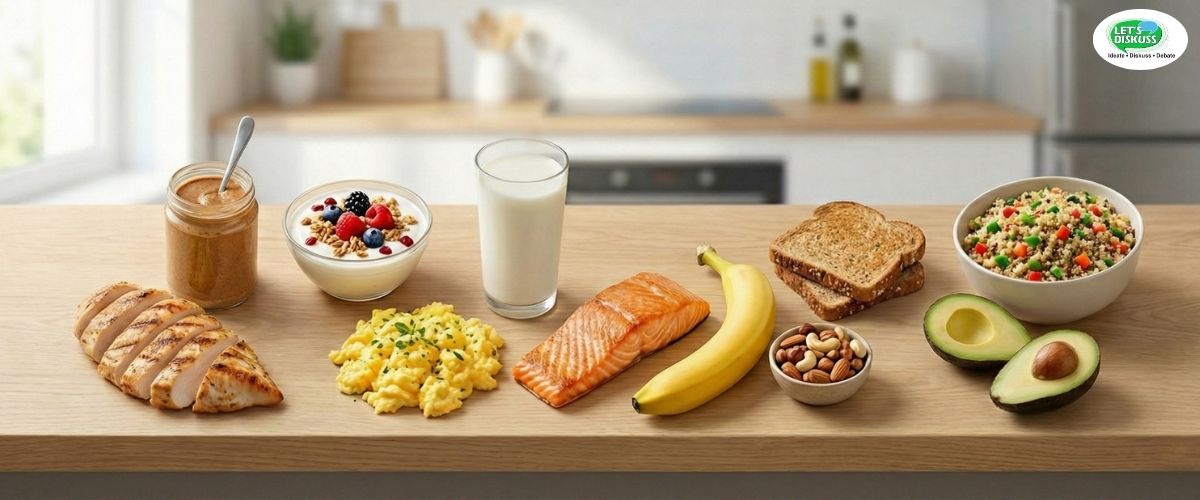
Other worthwhile additions to a weight gain diet include:
- Sweet potatoes and avocados
- Cheese and full-fat curd
- Dates and raisins
- Salmon and chicken thighs
- Flax seeds and pumpkin seeds
Healthy Snacks for Weight Gain Between Meals
Strategic snacking is among the simplest tips to gain weight, because two or three extra mini-meals can supply 500 or more kilocalories without making any single meal uncomfortably large. Practical options include:
- Roasted chana mixed with jaggery pieces for protein along with quick energy
- Makhana tossed in a teaspoon of ghee and a pinch of rock salt
- A sattu drink blended with milk and a little roasted cumin
- Greek yogurt topped with granola and chopped walnuts
- Besan chilla stuffed with grated paneer
- Peanut chikki or homemade energy balls made from dates and oats
- Whole wheat toast spread with peanut butter and banana slices
A Sample Weight Gain Meal Plan
The plan below provides roughly 2,700 to 2,900 kilocalories and around 100 to 120 grams of protein, which suits many adults starting out, although personal needs vary with height and activity level.
| Time | Vegetarian Option | Non-Vegetarian Option |
|---|---|---|
| Breakfast (8 am) | Oats cooked in milk, topped with banana and almonds | Three-egg omelette alongside two buttered whole wheat toasts |
| Mid-morning (11 am) | Paneer sandwich with a seasonal fruit | Chicken sandwich with a handful of mixed nuts |
| Lunch (1:30 pm) | Rajma chawal served with a bowl of curd | Chicken curry and rice, followed by curd |
| Evening (5 pm) | Banana peanut butter smoothie | Greek yogurt with granola |
| Dinner (8:30 pm) | Paneer bhurji with rotis and dal | Grilled fish with rice and dal |
| Before bed (10 pm) | Warm turmeric milk with a few dates | Warm milk with soaked almonds |
Adjust portions gradually based on weekly weigh-ins, and increase quantities slightly if the scale remains unchanged after two consecutive weeks.
Homemade Smoothies That Outperform Store-Bought Gainers
Liquid calories are easier to consume than solid meals, which makes smoothies particularly valuable when you feel full quickly. A homemade weight gain shake also lets you avoid the added sugars found in many commercial mass gainers.
| Smoothie | Base | Add-Ins | Approximate Calories |
|---|---|---|---|
| Classic banana blend | 300 ml whole milk plus one banana | 2 tbsp peanut butter plus 40 g oats | 650 kcal |
| Mango protein shake | 1 cup mango plus 200 g Greek yogurt | One scoop of protein powder plus a few cashews | 550 kcal |
| Chocolate date smoothie | 300 ml milk plus four soaked dates | 1 tbsp cocoa plus 30 g almonds | 600 kcal |
Protein powders are convenient yet entirely optional, since whole foods can meet daily requirements when meals are planned well.
Strength Training: Converting Extra Calories into Muscle
Eating more without exercising tends to add fat rather than muscle, whereas combining a surplus with resistance workouts directs a larger share of that energy toward muscle gain. Research consistently shows that progressive resistance training paired with adequate protein increases lean mass more effectively than dietary changes alone, and regular training often improves appetite over time as well.
A beginner-friendly weekly schedule might look like this:
| Day | Focus | Suggested Exercises |
|---|---|---|
| Monday | Lower body | Squats and lunges |
| Wednesday | Upper body push | Push-ups and dumbbell shoulder press |
| Friday | Upper body pull | Dumbbell rows and band pull-aparts |
| Saturday (optional) | Full body and core | Deadlifts and planks |
Aim for three sets of 8 to 12 repetitions per exercise, and apply progressive overload by gradually adding weight or repetitions as movements begin to feel easier. Keep cardio light to moderate, because long running sessions can burn a substantial share of the surplus you are working to create.
Sleep, Stress, and Daily Habits
Muscle repair and growth hormone release occur largely during deep sleep, so adults should target at least seven hours of quality rest each night, while teenagers generally need eight to ten. Short or broken sleep disrupts hunger hormones and weakens workout recovery, which can quietly stall progress even when diet and training look ideal on paper.
Chronic stress raises cortisol and frequently suppresses appetite, so calming practices such as yoga or slow breathing can make regular eating noticeably easier. Smoking also reduces hunger and deserves to be dropped, while alcohol offers calories with almost no nutritional value and interferes with restful sleep.
Practical Tricks to Eat More When Appetite Is Low
Poor appetite is one of the most common obstacles, and small adjustments often make a bigger difference than forcing down large portions. Helpful strategies include:
- Eating every three to four hours on a fixed schedule instead of waiting to feel hungry
- Choosing smaller, more frequent meals that feel less intimidating than heavy ones
- Avoiding large amounts of water immediately before meals while staying hydrated at other times
- Adding ghee or grated cheese to dishes you already enjoy
- Drinking milk or lassi alongside meals to increase intake without much chewing
- Taking a light ten-minute walk before eating, which some people find stimulates hunger
- Keeping portable snacks such as trail mix or protein bars in your bag for busy days
Common Weight Gain Mistakes to Avoid
Many people slow their own progress through habits that seem harmless in the short term. The table below compares frequent errors against more effective alternatives.
| Mistake | Better Approach |
|---|---|
| Relying on fried snacks and fast food | Prioritise whole, nutrient-dense calories |
| Skipping breakfast or delaying meals | Follow regular meal timings with planned snacks |
| Ignoring protein | Include a protein source at every meal |
| Weighing yourself several times a day | Weigh once weekly under the same conditions |
| Doing only cardio | Make resistance training the main form of exercise |
| Using steroids or unregulated supplements | Consult a doctor or registered dietitian first |
| Expecting dramatic results within weeks | Plan for gradual changes across several months |
Using junk food to gain weight without exercise might raise the number on the scale, but it also increases the risk of fatty liver and insulin resistance, even in people who look slim.
Also Read: Top Foods That Help You Gain Weight Most
When Should You See a Doctor or Dietitian?
Professional guidance becomes important in several situations, and seeking it early prevents months of frustration. Book an appointment if you notice:
- Weight loss without any intentional change in diet or activity
- No weight gain after two to three months of a consistent surplus
- Persistent fatigue or frequent infections
- Digestive issues such as chronic diarrhoea or pain after eating
- An existing condition such as diabetes or thyroid disease
- Anxiety or preoccupation surrounding food and body image
A registered dietitian can create a personalised weight gain plan that accounts for your metabolism as well as your cultural food preferences.
Final Thoughts
Mastering how to gain weight in a healthy manner depends on consistency far more than on any single food or supplement. A moderate calorie surplus combined with sufficient protein and regular resistance workouts will, given several months of patience, produce results that feel better and last longer than any quick-fix plan.
Frequently Asked Questions (FAQ)
How can I gain weight fast in a healthy way?
How much protein do I need to gain weight?
How long does healthy weight gain take?
Can vegetarians gain weight easily?
Are mass gainers safe?
Does milk at night help with weight gain?
Medical Disclaimer: This blog provides general information for educational purposes only and should not be treated as medical advice, diagnosis, or treatment. Nutritional requirements differ from person to person, so please consult a qualified doctor or registered dietitian before making significant changes to your diet or exercise routine, particularly if you have an existing health condition or are pregnant.