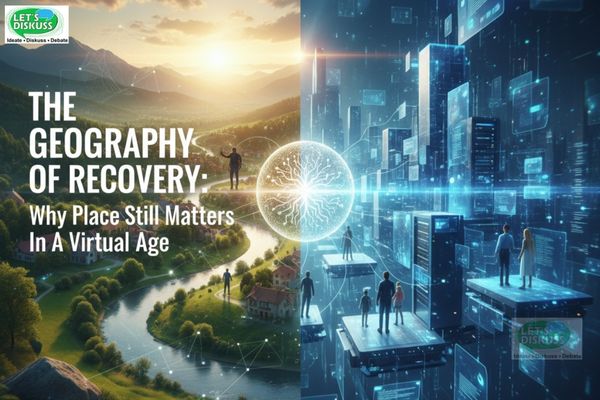
Location has always been more than a pin on a map. It shapes the food we eat, the rhythms of our days, the communities we lean on, and, increasingly, the way we heal. Recovery, in particular, has long been tethered to geography. People uproot their lives to attend residential programs, drive hours for outpatient care, or stay within the comfort of their neighborhoods to work on sobriety close to home. Yet in an age where video calls can connect a patient in Texas with a counselor in New York, some might wonder: does place still matter? The answer, it turns out, is a resounding yes—though not in the same way it once did.
Urban Hubs And Local Networks
Cities have always served as magnets for treatment, concentrating services that smaller towns simply can’t sustain. Think of the variety: a program specializing in trauma-informed care tucked into one corner, a clinic focusing on adolescent recovery in another, and community-driven peer support centers scattered throughout. The density creates options, and options give people a chance to find care that feels right. If someone is searching for drug rehab in San Antonio, medical detox in LA or anything else, finding the right center is less about scrolling through endless lists and more about matching personal needs with local expertise. The sheer diversity of approaches within city limits makes geography feel like a built-in menu.
At the same time, cities carry a certain anonymity that smaller towns can’t. Walking into a support group in a metropolitan sprawl doesn’t carry the same weight of recognition as it might in a place where everybody knows everybody. For many, that anonymity is a gift. It creates breathing space for honest work to happen without the fear of gossip or sideways glances.
Small Town Strengths
Rural areas tell a different story. The challenge often lies in scarcity—limited facilities, fewer clinicians, longer wait times. But geography cuts both ways. In smaller communities, recovery doesn’t always look like walking into a clinic. It can be neighbors stepping in to support, churches opening their doors for meetings, or local leaders rallying to keep treatment resources alive when funding dips. The intimacy of a small town can feel restrictive, but it can also be a safety net. Bonds run deeper, and that sense of accountability often travels with someone long after they leave a meeting or counseling session.
Access remains a hurdle. Many rural residents drive hours for specialized care, making telehealth a vital lifeline. Virtual therapy doesn’t erase the distance, but it softens it. When the choice is between no treatment and a video call from the family kitchen, geography becomes less of a barrier and more of a backdrop.
The Borderless Promise Of Virtual Care
The pandemic accelerated something that had been quietly brewing: the ability to treat addiction without requiring people to be physically present. Counselors, physicians, and peer groups moved online, often with surprising effectiveness. Suddenly, someone in a rural county had access to a recovery coach in another state. Group meetings became cross-country conversations, bridging different perspectives and breaking down the sense of isolation that distance can create.
But virtual care doesn’t cancel geography—it reframes it. A person’s environment still influences recovery. Living in a supportive household versus a high-stress one, having access to safe housing versus instability, or residing near or far from alcohol or drug availability—all of these geographic realities shape outcomes. Virtual tools expand access, but they don’t erase the need for grounded, place-based support.
Cultural Landscapes And Spiritual Anchors
Recovery isn’t just clinical; it’s cultural. Geography carries traditions, values, and faith practices that weave into treatment in meaningful ways. A program in the Southwest might incorporate Indigenous healing traditions, while one in the South may draw on church-based community structures. Many people actively seek faith-based rehab options, looking for care that honors their spiritual framework alongside medical and psychological treatment. These aren’t simply programs layered with prayer—they’re often holistic approaches that acknowledge healing as something bigger than the body alone.
Geography also dictates exposure to cultural outlets—museums, music scenes, hiking trails, local festivals—that can become anchors in recovery. A person building a sober life in Portland might lean into its outdoor culture, while someone in New Orleans might find community in its music. Healing is rarely about abstinence alone; it’s about building a life that feels worth protecting, and geography is part of that foundation.
The Pull Of Environment
Where someone physically lives during recovery matters almost as much as the program itself. A residential center by the ocean offers a vastly different daily rhythm than one in a desert landscape. The environment can amplify calm, inspire reflection, or bring structure. Even urban spaces designed with natural light, green courtyards, and communal kitchens recognize the role the environment plays in well-being. These details aren’t decorative—they’re part of the treatment itself.
But the environment isn’t only about architecture and scenery. It’s also about exposure and temptation. Returning to a neighborhood where old habits flourished can be a stumbling block. Many people choose to seek treatment away from home for this reason, stepping out of familiar patterns to create a clean slate. Geography, in that sense, becomes a protective strategy.
What The Future Holds
The future of recovery will likely be defined by a balance: rooted in place yet unbounded by it. Digital platforms will continue to close gaps in access, allowing people in underserved areas to connect with specialists miles away. But brick-and-mortar centers won’t fade into irrelevance. They’ll evolve into spaces designed with intention, integrating culture, environment, and community to create more than just treatment—they’ll become hubs of belonging.
As cities and towns refine their approaches, geography will keep shaping recovery in both visible and invisible ways. The question isn’t whether place matters, but how it matters. And the answer, as we see across the country, is that geography still carries weight—not as a limitation, but as a vital part of how people rebuild their lives.
Closing Perspective
Healing doesn’t happen in a vacuum. It’s influenced by streets and skylines, by the pulse of a community, by traditions carried in local soil, and by the tools technology now provides. Geography still matters, even in a virtual age, because recovery is both personal and communal. It takes root where people live, breathe, and connect—and those places, whether rural or urban, coastal or inland, are shaping the future of what it means to heal.