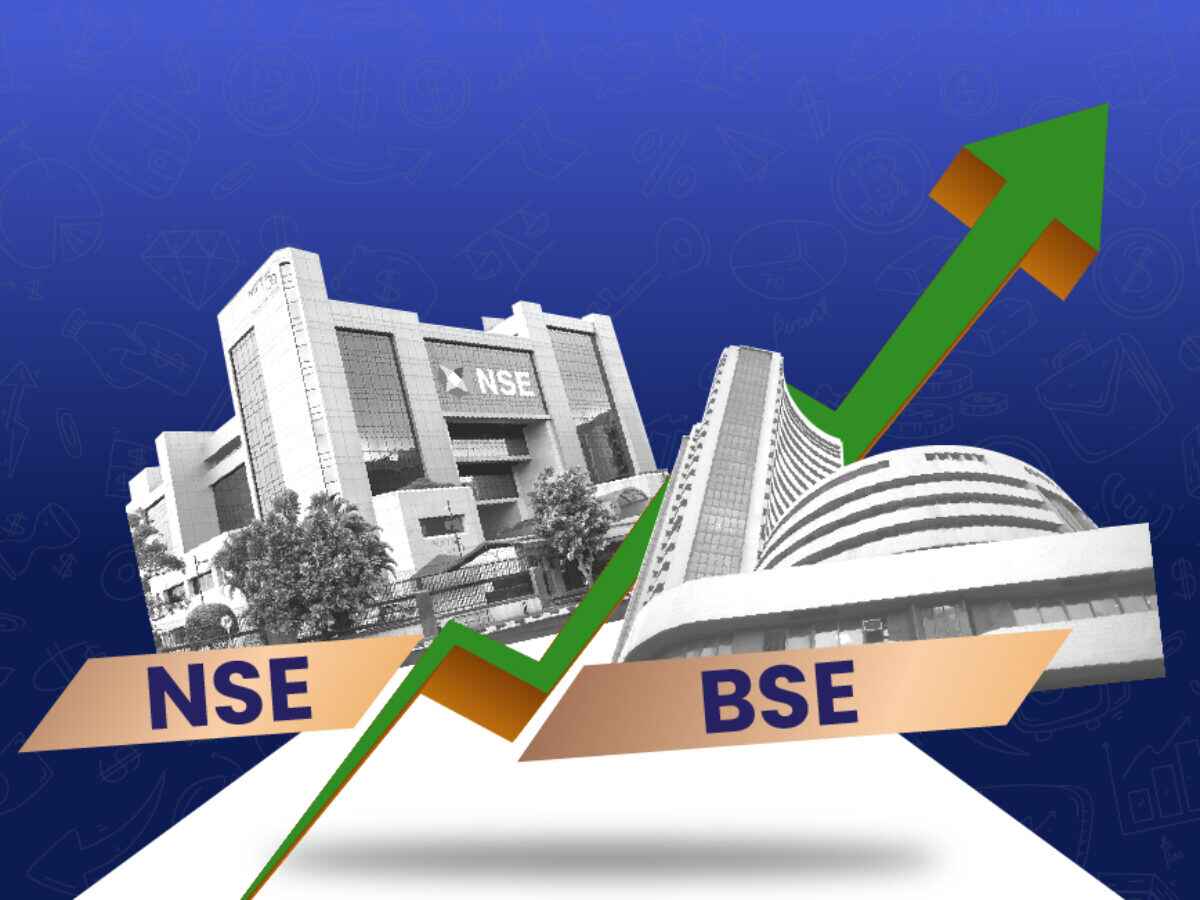
The NSE (National Stock Exchange) and BSE (Bombay Stock Exchange) are the two largest stock exchanges in India where investors buy and sell shares, bonds, and other financial securities. They play a crucial role in the Indian financial market by providing a regulated platform for companies to raise capital and for investors to trade investments.
A stock exchange is essentially a marketplace where buyers and sellers come together to trade securities. In India, the NSE and BSE are regulated by the Securities and Exchange Board of India, which ensures transparency, investor protection, and fair trading practices.
The Bombay Stock Exchange (BSE) is the oldest stock exchange in India and one of the oldest in Asia. It was established in 1875 and is headquartered in Mumbai. The BSE is known for its benchmark index called the Sensex, which tracks the performance of 30 well-established and financially sound companies listed on the exchange. Thousands of companies are listed on the BSE, making it one of the largest exchanges in the world in terms of the number of listed companies.
The National Stock Exchange (NSE) was established in 1992 and began operations in 1994. It introduced fully electronic trading in India, replacing the traditional open-outcry trading system used in many exchanges at the time. The NSE's benchmark index is the Nifty 50, which represents the performance of 50 large companies from various sectors of the Indian economy. Due to its advanced trading technology and high liquidity, the NSE has become the preferred exchange for many active traders and institutional investors.
Although both exchanges serve the same purpose, there are some important differences between them. The BSE has a longer history and a larger number of listed companies, while the NSE generally has higher daily trading volumes and greater liquidity. Liquidity refers to how easily an investor can buy or sell a stock without significantly affecting its price. For example, if a stock is listed on both exchanges, traders often prefer the NSE because transactions can usually be executed more quickly due to higher trading activity.
For ordinary investors, the choice between NSE and BSE often depends on factors such as trading volume, brokerage preferences, and the availability of a particular stock. However, many companies are listed on both exchanges, allowing investors to trade on either platform.
A common misconception is that investors must choose only one exchange permanently. In reality, investors can trade on both NSE and BSE through their brokerage accounts. The exchange selected for a transaction usually depends on where better prices, liquidity, or trading opportunities are available.