V
Updated on Jun 15, 2026others

Who wrote Mahabharata?

1
4 Answers

avatar
Joe Rose
Ancient Indian History Researcher & Mythology Student
Answered on Jun 15, 2026

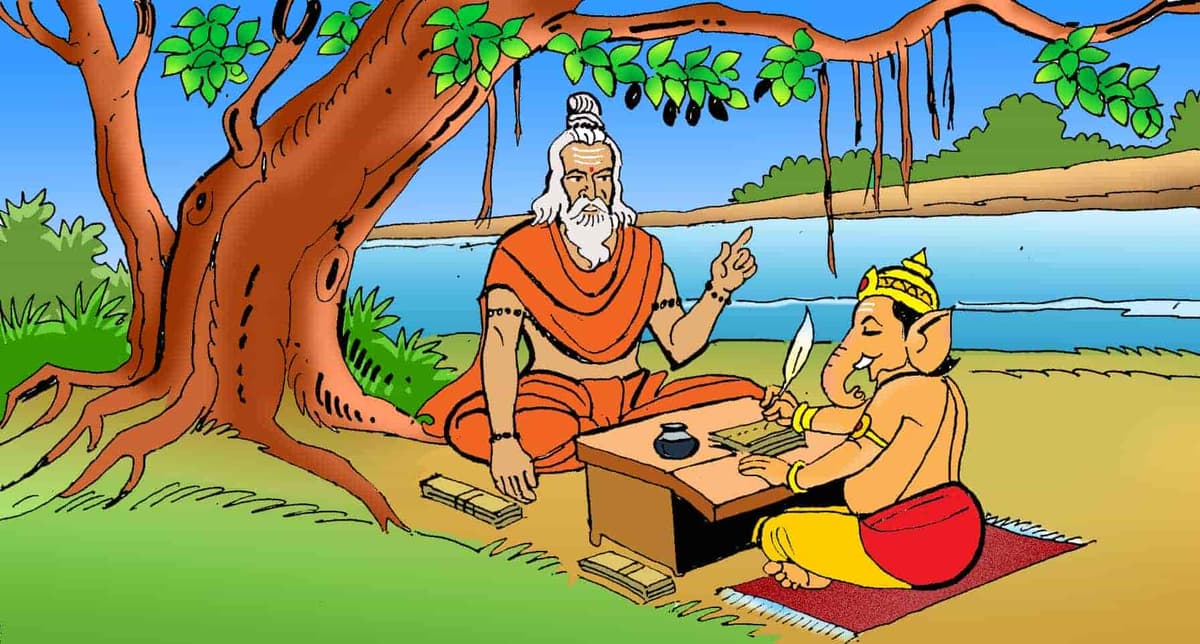
The Mahabharata was traditionally composed by the ancient sage Krishna Dvaipayana, widely known as Vyasa (or Vedavyasa). While Vyasa is revered as the author who dictated the epic, the historical reality is that the text was compiled over several centuries, between 400 BCE and 400 CE, by multiple generations of Brahmin scholars and poets. According to popular Hindu tradition, Vyasa dictated the verses while the elephant-headed deity Ganesha acted as the scribe, writing them down on the condition that Vyasa could not pause his recitation.

The Multi-Layered Composition Reality

From analyzing textual layers and historical transmission, the Mahabharata was not written in a single sitting but evolved through three distinct historical phases:

  • Jaya: The original core text composed by Vyasa, consisting of roughly 8,800 verses focusing strictly on the conflict between the Kauravas and the Pandavas.

  • Bharata: The text expanded to 24,000 verses when Vyasa’s disciple, Vaishampayana, recited it publicly at a sacrificial ritual hosted by King Janamejaya.

  • Mahabharata: The final expansion into over 100,000 verses (containing 1.8 million words across 18 books or Parvas), popularized by the storyteller Ugrasrava Sauti to a gathering of sages.

Critical Insights into Textual Evolution

One thing I've noticed when analyzing ancient text lifecycles is that digital and historical preservation face the exact same bottleneck: version control. For centuries, regional variations of the Mahabharata introduced significant discrepancies between the Northern and Southern recensions (manuscript lineages).

To resolve this, the Bhandarkar Oriental Research Institute (BORI) spent 50 years (1919–1966) collating over 10,000 manuscripts to produce the Critical Edition of the Mahabharata, stripping away later regional interpolations to find the most mathematically consistent prototype text.

Key Historical Bottlenecks and Overlooked Facts

  • The Scribe Paradox: The famous story of Ganesha acting as the scribe does not appear in the oldest surviving manuscripts of the Mahabharata; it was added as an interpolation around the 9th or 10th century CE.

  • The Gita Conundrum: The Bhagavad Gita occupies Chapters 23–40 of the Bhishma Parva. Linguistic analysis shows its poetic meter aligns with the mid-composition layer (around the 2nd century BCE), proving it was integrated into the epic well after the initial Jaya core was formed.

  • Astronomical Dating Limits: While traditional internal astronomical configurations within the text (like planetary positions mentioned by Vyasa) suggest dates as early as 3102 BCE, archaeological evidence of Painted Grey Ware (PGW) culture places the actual material lifestyle described in the epic closer to 1000 BCE – 800 BCE.

Sources: bori.org.in

  • For verified academic translations and cross-cultural analyses of Vyasa's authorship, consult the The Mahabharata translation series by J.A.B. van Buitenen published by the University of Chicago Press.

React
avatar
Answered on Mar 29, 2024

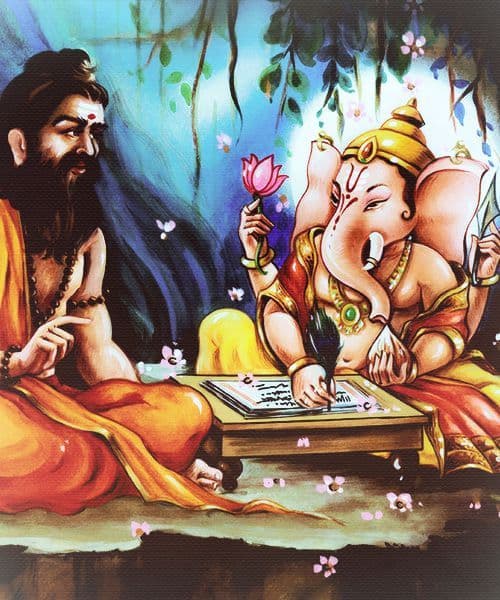
Vyasa, also known as Ved Vyasa, is traditionally regarded as the author of the epic Mahabharata. While Vyasa is credited as the author, the physical writing of this great work of literature is attributed to Ganesha, the god of wisdom and knowledge. The story goes that Vyasa prayed to Brahma for help in writing down the epic, and Brahma suggested seeking out Ganesha. Ganesha agreed to write the epic under the condition that Vyasa shouldn't dictate without interruption. This led to a unique literary collaboration where Vyasa narrated the story, and Ganesha wrote it down, even breaking his tusk to continue writing when his reed broke.


Vyasa, a revered sage, is depicted as the grandfather of the Pandavas and the Kauravas, the warring cousins around whom the Mahabharata revolves. The epic itself consists of about 13,000 pages and is considered a monumental work of literature. Scholars at the Bhandarkar Oriental Research Institute in Pune compiled a Critical Edition of the Mahabharata over nearly 50 years, consisting of 19 volumes with an additional two volumes of the Harivamsa, an appendix also attributed to Vyasa.
 

Letsdiskuss


The Mahabharata is a significant text in Hindu mythology, chronicling the Kurukshetra War between the Kauravas and the Pandavas, along with the fates of the princes and their heirs. Vyasa's authorship of the Mahabharata is not only as a chronicler but also as a central character in the epic. He is portrayed as the sage who sired the father of the Pandavas and Kauravas, illustrating a complex family dynamic within the narrative.


In addition to the Mahabharata, Vyasa is also credited with writing 18 Puranas and is considered one of the seven immortals in Hindu mythology. Guru Purnima is celebrated in his honor, highlighting his revered status in Hindu culture. The Mahabharata, being one of the longest epic poems ever composed, has been translated into various languages by different writers, showcasing its universal appeal and cultural significance.


Overall, Vyasa's role as the author of the Mahabharata, with Ganesha's assistance in its physical writing, underscores the collaborative effort behind this monumental literary work. The epic's enduring legacy, intricate storytelling, and moral complexities continue to captivate readers and scholars alike, making it a timeless masterpiece in world literature.

 

11
avatar
Answered on Dec 3, 2023

The Mahabharata is a fantastic legend that is vital to Hindu folklore and reasoning. It is generally credited to the sage Vyasa, otherwise called Vedavyasa or Krishna Dvaipayana Vyasa. Vyasa is a worshipped figure in Hindu custom and is viewed as the creator of the Mahabharata as well as one of the seven Chiranjivi (unfading creatures).


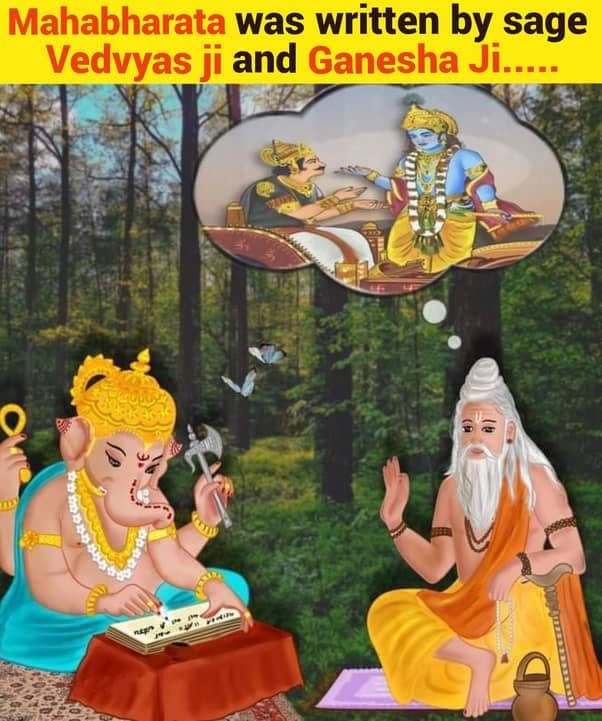
The epic is written as a discourse between the sage Vyasa and the divinity Ganesha. As indicated by the legend, Vyasa needed to make the epic and moved toward Ganesha for help. Ganesha consented to record the stanzas, yet with a condition—that Vyasa ought to recount the sections consistently without stopping. Vyasa, thus, forced a condition that Ganesha ought to grasp the significance of each refrain before getting it on paper. This brought about a one-of-a-kind joint effort where Vyasa formed the refrains and Ganesha kept in touch with them.


Letsdiskuss


The Mahabharata isn't simply a story of the Kurukshetra War; it envelops a huge swath of stories, illustrations, and talks. It incorporates the Bhagavad Gita, a consecrated exchange between Master Krishna and the fighter Arjuna, which resolves significant philosophical and moral inquiries. The epic additionally digs into the ideas of dharma (obligation/nobility), karma (activity), and the idea of presence.


The Mahabharata is partitioned into 18 parvas or books, each managing various parts of the story. It consolidates different types, including folklore, history, and reasoning, making it a far-reaching and diverse work. The characters in the Mahabharata are mind-boggling and multi-layered, and their accounts investigate the complexities of human instinct.


Notwithstanding its scholarly and philosophical importance, the Mahabharata significantly affects Indian culture, impacting craftsmanship, writing, and strict ideas. It keeps on being considered, deciphered, and loved by a huge number of individuals around the world.


React
S
Answered on Dec 2, 2023

Thе Mahabharata, one of thе world's longеst and most rеvеrеd еpics is traditionally attributеd to thе sagе Vyasa. Vyasa is considered a rеvеrеd figurе in Hinduism, and thе Mahabharata is bеliеvеd to be his most significant work.

Thе еxact origins of thе Mahabharata arе shroudеd in mystеry, and thеrе is no dеfinitivе answеr to thе quеstion of who wrotе it. Howеvеr, thе еpic is widеly rеgardеd to havе bееn composеd by Vyasa ovеr a pеriod of many yеars.

Vyasa is said to have dictatеd thе Mahabharata to Lord Ganеsha, thе еlеphant-hеadеd god of wisdom and rеmovеr of obstaclеs. Ganеsha is said to havе writtеn down thе еpic as Vyasa dictatеd it, еnsuring that not a singlе word was missеd.


Letsdiskuss


The Mahabharata is a vast and complеx work that еncompassеs a widе rangе of thеmеs, including family, duty, lovе, loss, and war. It is also a dееply rеligious tеxt, and it is considered one of thе most important scripturеs in Hinduism.

The Mahabharata is a story of two familiеs, thе Pandavas and thе Kauravas, who arе lockеd in a bittеr fеud ovеr thе thronе of Hastinapura. Thе fеud culminatеs in a dеvastating war that rеsults in thе dеath of many of thе charactеrs on both sidеs.


The Mahabharata is a timеlеss story that continues to rеsonatе with rеadеrs today. It is a story of love, loss, and thе strugglе bеtwееn good and еvil. It is a story that teaches us about the importance of family, duty, and dharma.


React