Answered on10/09/24
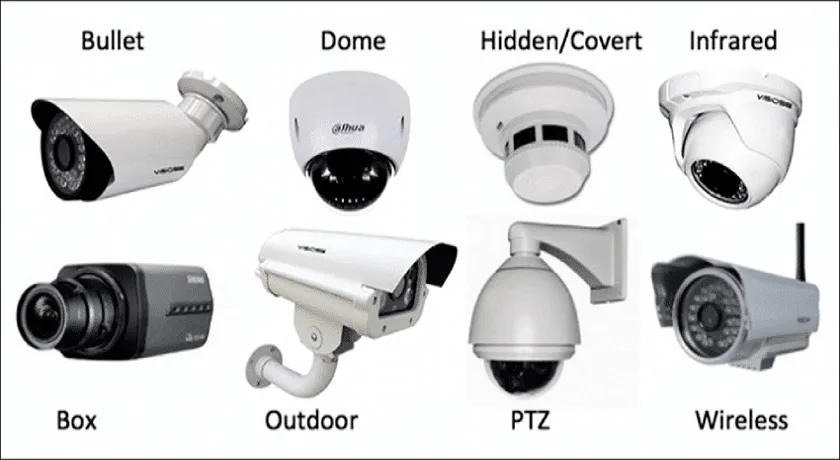
1. Dome Cameras
- Description: These cameras are shaped like a dome, making them discreet and difficult to determine where they’re pointed.
- Features:
- 360° coverage (when motorized).
- Vandal-resistant options.
- Indoor and outdoor models.
- Use Cases: Retail stores, hotels, offices, and areas requiring wide-angle surveillance.
- Example: Indoor monitoring in a store.
2. Bullet Cameras
- Description: Long, cylindrical cameras that resemble a bullet, typically mounted on walls or ceilings.
- Features:
- High visibility acts as a deterrent.
- Suitable for long-distance viewing.
- Often weatherproof for outdoor use.
- Use Cases: Parking lots, streets, and building exteriors.
- Example: Monitoring entryways and outdoor perimeters.
3. PTZ Cameras (Pan-Tilt-Zoom)
- Description: Cameras that can be remotely controlled to pan, tilt, and zoom.
- Features:
- 360° panning, tilting, and optical zoom capabilities.
- Real-time control and tracking.
- Wide coverage area with a single camera.
- Use Cases: Large public areas like malls, stadiums, or warehouses.
- Example: Monitoring large parking lots where dynamic coverage is needed.
4. C-Mount Cameras
- Description: Detachable lens cameras that allow for lens customization.
- Features:
- Supports different lenses for varying distances.
- Typically larger and bulkier.
- Great for long-distance monitoring (up to 35 ft and beyond with specialized lenses).
- Use Cases: Industrial sites or applications where adjustable focal lengths are required.
- Example: Factories or highways with long-range monitoring needs.
5. Day/Night Cameras
- Description: Cameras specifically designed to function well in both well-lit and low-light environments.
- Features:
- Operates in normal and low-light conditions without infrared lighting.
- Records clear footage in color during the day and switches to black and white in low light.
- Use Cases: Outdoor surveillance, building perimeters, and parking lots.
- Example: Monitoring 24/7 in varying lighting conditions without the need for extra illumination.
6. Infrared/Night Vision Cameras
- Description: Cameras equipped with infrared LEDs to capture clear footage in total darkness.
- Features:
- Works well in low or no light environments.
- Typically black and white footage in the dark, but high clarity.
- Available in both indoor and outdoor models.
- Use Cases: High-security areas that require night-time monitoring, like warehouses, banks, and military sites.
- Example: Monitoring at night in complete darkness.
7. Network/IP Cameras
- Description: Digital cameras that transmit data over a network, enabling remote viewing and storage.
- Features:
- Can operate over the internet (wired or wireless).
- High-resolution video quality.
- Easily scalable with integration into existing networks.
- Use Cases: Offices, homes, and large businesses where centralized monitoring is essential.
- Example: Remote monitoring for a business across multiple locations.
8. Wireless Cameras
- Description: Cameras that transmit video wirelessly, offering easy installation and flexible placement.
- Features:
- Easy to install without extensive wiring.
- Can be powered by batteries or connected to power sources.
- Offers remote access via smartphone apps or web browsers.
- Use Cases: Homes, small businesses, temporary setups, or locations where wiring is difficult.
- Example: Residential security or temporary monitoring for events.
9. High-Definition (HD) Cameras
- Description: Cameras that capture high-resolution footage, such as 720p, 1080p, or 4K.
- Features:
- Crystal clear images for better identification of details.
- Higher storage requirements for the footage.
- Use Cases: Locations needing high-detail monitoring, like banks, jewelry stores, or high-traffic areas.
- Example: Identifying individuals in a crowd in a shopping mall.
10. Thermal Cameras
- Description: Cameras that detect heat signatures instead of visible light, making them ideal for security in complete darkness or smoke-filled environments.
- Features:
- Can detect heat sources from animals, people, or vehicles.
- Works in total darkness or through obstructions like fog or smoke.
- Use Cases: Critical infrastructure, border security, or search and rescue operations.
- Example: Monitoring forests to detect wildlife or intrusions in remote areas.
11. Fisheye Cameras
- Description: Cameras with ultra-wide lenses that capture a 180° to 360° panoramic view.
- Features:
- Offers wide-area surveillance.
- Reduces the number of cameras needed for large areas.
- Distortion correction in video playback.
- Use Cases: Airports, train stations, or large indoor areas needing 360° coverage.
- Example: Monitoring a lobby area in an office or retail environment.
12. Hidden/Covert Cameras
- Description: Small cameras are designed to blend into the environment for discreet monitoring.
- Features:
- Often disguised as everyday objects like clocks or smoke detectors.
- Records without alerting the subject being monitored.
- Use Cases: Home security, retail stores to monitor employees, or theft prevention.
- Example: Surveillance in a store to catch shoplifters without their knowledge.
13. License Plate Recognition (LPR) Cameras
- Description: Specialized cameras designed to capture license plates clearly at varying speeds.
- Features:
- Can capture clear images of moving vehicles.
- Works well in both daylight and night.
- Used for vehicle tracking and parking management.
- Use Cases: Highways, parking lots, and gated communities.
- Example: Monitoring vehicle entry and exit in a secure facility.
14. Explosion-Proof Cameras
- Description: Cameras designed to operate in hazardous environments prone to explosions, like chemical plants.
- Features:
- Built with reinforced, explosion-proof casings.
- Designed for safety in explosive environments.
- Use Cases: Oil refineries, chemical plants, or hazardous industrial areas.
- Example: Monitoring in a petrochemical facility.
0