India’s Musical Road Is Blowing Drivers’ Minds

Science & Technology#musical road in india#musical road#mumbai musical road#melody road India#Nagpur musical road project
0
116

Table of Contents

indian first musical road

Table of Contents

  1. Introduction
  2. What Is a Musical Road? (Global Concept)
  3. India’s First Musical Road - An Overview
  4. Musical Road in Nagpur - All You Need to Know
  5. Technology Behind Musical Roads
  6. The Song That Plays - Meaning & Popularity
  7. Benefits of Musical Roads
  8. Speed & Safety Guidelines
  9. Cost & Government Initiative
  10. Real Experiences: What People Are Saying
  11. Media Coverage & Public Response
  12. Comparison With Other Countries
  13. Conclusion
  14. FAQs

Introduction

An Indian musical road is a length of highway with grooves that were carefully planned. The vibration makes a song when your tyres roll over them at a certain pace. It is like turning roads and bridges into a huge instrument for drivers.


Why is this topic trending in India?

It's trending because it's a big change in the way Indian commuters feel. Mumbai started its first melody stretch on February 11, 2026. People can't stop talking about the idea of a Mumbai Musical Road playing Jai Ho. It's become a great hit on social media and a big win for engineering.


What Is a Musical Road? (Global Concept)

Definition & meaning

In technical terms, it is a melody road. Engineers make sound by cutting ridges into the asphalt and using the friction between the tyres and the surface. It's a fun approach to mix art with civil engineering.

How musical roads work

Physics works here! The pitch is set by the depth and spacing of the grooves. The grooves that are broader present low notes, while the closer grooves present high notes. When these vibrations come together, they play a recognisable song via the car's chassis when you are at a steady pace. The chassis becomes the speaker at that time.

Country examples:

Japan: Japan was the first to do this! The first musical road was built by engineer Shizuo Shinoda, which was started in 2007. Now, there are dozens of Melody roads there.

United States: The United States has one of the most renowned in California. They play the William Tell Overture there. 

Hungary: They have a famous stretch of Route 67 that plays a rock song. This technology was the inspiration for the Mumbai Musical Road.

South Korea: They mostly utilise Singing Roads for safety, playing nursery rhymes to keep drivers awake on long and dull stretches of highway.


India’s First Musical Road - An Overview

Where is it located?

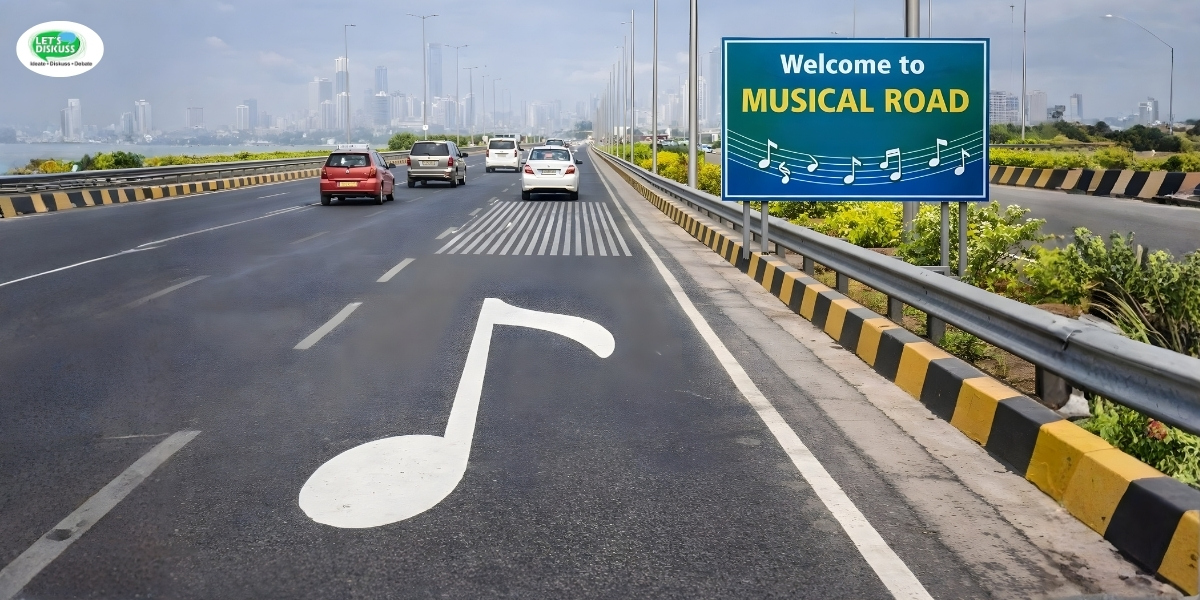
This 500-meter-long melodious stretch may be seen on the “Dharmveer Chhatrapati Sambhaji Maharaj Marg” (Mumbai Coastal Road). It's on the northbound side, shortly after you leave the coastal tunnel and between Nariman Point and Worli. It's the best way to say welcome to the open road.

When was it launched?

On February 11, 2026, this melody road India project had its grand opening. It was part of the staged opening of the Coastal Road project, which is meant to demonstrate to the world that Indian roads can be both world-class and a lot of fun to drive on.

Who built it and why?

The Brihanmumbai Municipal Corporation did this with help from Hungarian Experts. The goal was not only to have fun, but they also wanted to see how sound-based design could change how drivers act. The goal of this pilot study is to find out if these roads can make commenting safer and more fun.


Musical Road in Nagpur - All You Need to Know

About Nagpur

Nagpur is a huge centre for infrastructure and is known as the Orange City. Even before Mumbai's Coastal Road, the Nagpur musical road project on the Samruddhi Mahamarg was the first thing NHAI talked about.

Highway details & route

The projected NHAI musical road project, which is to be built on the Samruddhi Mahamarg, was to cut down on driver tiredness on the long expressway. A musical break helps break up the boredom and keeps everyone awake during the lengthy trip.

Song selection

Mumbai chose Jai Ho, but the Nagpur project has tried out both national songs and local songs. The goal is to choose a song that is easy to remember and has a good beat.

Ideal driving speed

The Nagpur segment also needs a steady pace. You should keep your ideal driving speed between 70 and 80 km/h.


Technology Behind Musical Roads

Road grooves & sound physics

Engineers employ rumble strips differently. They etch grooves into the road by figuring out the exact frequency of musical notes. Your car tyres are like a pick on a guitar string. This musical road in India turns the vibration from the car into music.

How speed affects the tune

The temporary controller is speed. Since the grooves are already in their place, the speed at which your tyres hit them depends on how fast you are going. The Mumbai Musical Road is set to play music. Your speed should be between 60 and 80 km/h. 

Durability & maintenance

These are not just shallow stretches. They are cut very carefully. But they do need maintenance because thousands of cars are constantly running on them. The best thing about this NHAI musical road project technology is that it is built into the asphalt, which makes it last a long time, even with a lot of traffic.


The Song That Plays - Meaning & Popularity

Song details

The song that was picked is the famous Jai Ho from the movie Slumdog Millionaire. A.R. Rahman made a great movie that won an Oscar. It has a lot of energy, a good beat, and the vibrations from car tyres on the Jai Ho Road, Mumbai, fit perfectly with the music.

Why was it chosen

The word Jai Ho means victory and Indian pride. This song was a perfect fit because the Coastal Road is a famous engineering project in Mumbai. The song is happy, which helps keep drivers up, and practically every Indian (and tourist) knows the time by heart.

Public reaction to the choice

The response has been mostly good! It's all about the Main Character Energy people get when they drive over it. The Mumbai Musical Road has turned a normal commute into a moment of national pride. It's a must-see for both locals and tourists.


Benefits of Musical Roads

Road safety impact

Safety is one of the best things about musical roadways. When your road is singing to you, it's hard to fall asleep or lose focus. It gives you a physical and aural reminder to keep focused, especially after emerging from a long and dark tunnel.

Speed regulation

It's a speed limit that comes naturally. It's better to keep your speed between 60 to 80 km/h. It's the ideal speed to hear the sound right. 

Driver alertness

Highway hypnosis is really a thing, especially on smooth expressways, which is why this becomes one of the main reasons why the idea of a musical road in India is being spread to longer national highways.

Tourism & curiosity factor

Let's be honest: it's a tourist trap! It puts Indian infrastructure on the map for the whole world to see and gives tourists a one-of-a-kind experience in Mumbai to talk about.


Recommended speed to hear music

You need to keep your speedometer between 60 and 80 km/h to get the complete A.R. Rahman experience. This is the range where the vibrations match the real tempo of Jai Ho, which makes it sound clear and musical in your car.

What happens if the speed isn’t correct

If you drive at 30 km/h, it will sound like a strange and low-pitched rumble. Similarly, if you are at 100 km/h, you will hear the sound too quickly. 

Safety instructions for motorists

Don't try to make videos while you are driving. There are warning signs 500m and 100m before the stretch. Let your passengers shoot while you drive straight and keep your hands on the wheel. Enjoy the Mumbai Musical road.


Cost & Government Initiative

Approximate project cost

The Coastal Road budget includes particular costs for just the musical length, yet these installations are surprisingly cheap compared to electronic displays. The specialist machines that cut the grooves into the musical road in India are the most expensive part.

Vision behind smart highways

The Ministry of Road Transport and Highways aspires to make Smart Highways a reality. The NHAI musical road project is part of a plan to use technology not just for tolls, but also to make India's roads some of the safest and most advanced in the world.

Future expansion plans

This is only the start! If the Mumbai pilot keeps doing well, we might see additional melody road India projects on the Delhi-Mumbai Expressway and on more parts of the Samruddhi Mahamarg. 


Real Experiences: What People Are Saying

Testimonials from drivers

It's like a dream! Comments from one commuter. I was heading home after a long day when Jai Ho came on the radio. I really rolled up my windows so I could hear it better. It seriously made my day.

Loudspeaker-style reel of reactions

There are a lot of reactions on social media, like Whoa, did you hear that? And let me just go and drive it over again. People are really astonished by how clear the song is. Every Mumbaikar now has a check this out moment.

Tourist experiences & vlogs

Many vloggers are going to Jai Ho Road, Mumbai. People are trying to make it sound in everything from luxury cars to family hatchbacks. Most blogs say that the sound is best heard with the windows up since the vibrations make the car cabin act like a resonator.

Residents’ opinions

Drivers enjoy it, but some people in the area were frightened by the noise at first. But the grooves are made to vibrate up into the automobile instead of out into the air, so the noise level is actually rather low. 

Expert opinions from road engineers

Engineers say it's a brilliant psychological tool. They are building a culture of voluntary compliance by leveraging the benefits of musical roads to reduce speed without employing harsh bumps or fines. Gamification is a smart approach to control the flow of traffic.


Media Coverage & Public Response

News highlights

Major news organisations like The Better India and NDTV have called this a big step forward for Indian innovation. The news has been mostly about how India is using overseas technology (like the Hungarian Model) and adding its own Jai Ho touch.

Social media buzz

There is a serious buzz all over social media. People love to spread this long of good news: a blend of New India pride and fascinating technology that really works in everyday life.

Viral hashtags & reels

You might witness the loops where the sound goes from road noise to a repetitive Jai Ho. These clips have been watched millions of times. This is proof that the Mumbai Musical Road is just as famous online as it is in real life.


Comparison With Other Countries

Tech differences

In Japan, they used raised markings. However, India uses the groove cut style that is similar to Hungary. This is usually better for tyres and makes a sound that is more contained.

Effectiveness & popularity

People are praising it for being accurate. The US versions are generally criticised for being out of tune. The engineers made it simple to hear the tune clearly by picking a song with a strong beat, like Jai Ho, instead of a more complicated one.

What India can learn

We are finding out that Infrastructure can be a brand. The government is making people want to follow the regulations (such as staying in a lane and keeping their speed) by making roadways more interactive. 


Conclusion

Summary of key points

India has officially joined the Melody Road group with its first musical road in India on the Mumbai Coastal road. This 500-meter stretch employs Hungarian technology to turn rumble strips into a musical experience that also promotes safety. Keep the speed between 60-80 km/h and hear Jai Ho.

Why it’s an innovation worth noting

It's not simply a gimmick but a sensible way to build things. It uses the law of physics and the power of music to deal with fast and tired drivers. It demonstrates that India is willing to try new and different ways to make our driving culture better.

Future outlook

The success of the Mumbai Musical Road opens the door to a more musical future. Don't be surprised if the highway itself gives you music for your next road trip! Being a driver in India is thrilling right now!

Must read:- Driving License Rules and Updates in 2026


FAQs

Q1 Can drivers record music clearly on their phones?
Yes, but it’s better if a passenger records it. Inside the car with windows up, vibrations travel through the vehicle frame, making the sound clearer than outside.
Q2 Where exactly is the musical road?
The musical road is located on the Mumbai Coastal Road (northbound), between Nariman Point and Worli, just after exiting the tunnel.
Q3 What song does it play?
It plays the famous chorus of “Jai Ho” from the movie Slumdog Millionaire, composed by A.R. Rahman.
Q4 At what speed do you hear the tune?
The tune sounds best between 60 and 80 km/h. Driving slower or faster changes the pitch and rhythm of the music.
Q5 Is the feature permanent and does it help reduce accidents?
Yes. The grooves are permanently cut into the road surface. They help keep drivers alert, encourage steady speeds, and may reduce accidents caused by fatigue or overspeeding.
H

Written By Himanshu Bansal

Where entertainment meets everyday living — practical lifestyle insight backed by nearly five years of professional consulting experience.|0 followers
View Profile

Himanshu Bansal is a lifestyle consultant and content writer with nearly 5 years of professional experience across entertainment and lifestyle. He holds a Bachelor's degree in Mass Media from Symbiosis Institute of Media and Communication, Pune — a foundation that shaped both his understanding of popular culture and his ability to communicate ideas clearly across diverse audiences. His content spans Bollywood, OTT entertainment, men's fashion, grooming, wellness, relationships, and modern urban living in India. His work has appeared on platforms including MensXP, GQ India Online, and Pinkvilla, where he writes for readers who want entertainment and lifestyle content that goes beyond surface trends — practical, culturally aware, and grounded in real consulting insight rather than recycled opinion. As a lifestyle consultant, Himanshu has worked with individual clients and brands on personal styling, wellness routines, and content strategy — experience that gives his writing a practical edge most entertainment and lifestyle writers lack. Over nearly five years, he has published 180+ articles and developed a consistent editorial voice that resonates with India's urban, digitally engaged readership. Across all his writing, every lifestyle recommendation is consultant-tested, every entertainment piece is culturally grounded, and every article is built to be genuinely useful — not just readable.

Please sign in to join the discussion.

Comments

No comments yet. Be the first to comment!

More from Himanshu Bansal

View All

Related Blogs

T
Tara VermaTen years in the classroom, shaping minds — bringing the same clarity and purpose to every piece she writes about education. | 0 followers

Top 4 Career Options After 12th Beyond Traditional Degrees

Choosing the right career options after 12th has become more complex than ever. Every year, millions of students step out of school hoping their next decision will shape a secure future. But reality is different. As per reports by Economic Survey, only about 51% students are job ready showing a clear gap between the expectations of education and industry. This brings up an important question. Are traditional degrees still enough when it comes to career options after 12th? For many students, the answer is increasingly no. The problem today isn’t the lack of options; it’s the lack of clarity and real-world exposure. This is the reason why students are re-evaluating career options after 12th in search of paths that offer not just knowledge but skills and hands-on experience. Work integrated learning programs are coming into the spotlight for this reason. Career choices after 12th are changing. They are now more aligned with industry needs. Students want to learn classroom theory and practical work experience together. As per a report by Business Outreach on top career options after 12th, these courses are creating new opportunities in important sectors. Hospitality Management Hospitality is among the most sought, strong career options after 12th. It is useful and has job opportunities in many countries. Travel, tourism and experience-based services are growing rapidly. This is creating more employment opportunities in the hotel industry, airlines, events and luxury services. The field is people-oriented. It is ideal for students who enjoy engaging with people and thrive in vibrant, speedy-paced settings. As per The Times of India , India’s hospitality industry is predicted to reach the $60 billion milestone by 2028, fueled by local travel and evolving consumer tastes. This has resulted in a rise in the demand for capable professionals and worldwide career opportunities. Industry-centric hotel management courses offered by Emversity provide internship opportunities from year one. They partner with some of India’s leading hotel brands such as Indian Hotels Company Limited, PRISM Hospitality and Lemon Tree Hotels. Students will get to rotate through various departments such as F B, Front Office, Travel and Housekeeping, thereby gaining a diverse set of experiences and practical skills that are in sync with the requirements of the industry. Reinforcing this early industry engagement, an Emversity student, Arman, got an opportunity at Taj Amer in his first year of college, “My time at Emversity has helped me grow tremendously.” This structured exposure leads to early clarity and job-readiness. Healthcare Education Healthcare is one of the most important and fast-growing fields today. It offers stable career options after 12th for students. The field is not only about doctors and nurses. It also creates demand for those who can run hospital operations, provide patient services and keep systems up and running. Today, students have a multitude of career opportunities in healthcare without having to go through lengthy medical degrees. McKinsey Company has pointed out that the gaps in the health-care workforce will have a major impact on health outcomes and economic growth, and can affect over $1 trillion of global economic value. There is a strong demand for trained healthcare professionals. The healthcare system depends on skilled people to work properly. For students after 12th, this is a stable and secure career option. Virohan’s medical courses after 12th blend classroom education with hands-on training in hospitals. This combination creates a pipeline of skilled students ready for careers in healthcare. Fashion and Design The fashion and design industry has become more organised and full of job opportunities. It is a good option for creative students after 12th. Design is not only confined to traditional jobs now. With the advent of digital platforms and branding-centric companies, it comprises visual design, content creation and styling. This creates more career options after 12th for students. India’s fashion e-commerce is witnessing a rapid boom. The Zipdo 2026 report predicts the industry to expand from $30 billion to $80 billion by 2027. The growth is driven by more consumers shopping online. This expansion results in increased demand for talented designers to pursue creative careers after 12th. Pearl Academy and similar institutions support this through practical learning spaces like AI Studio, Life Design Studio, Runway Studio and also global exposure. Students learn real design skills by working with their hands. They also develop strong portfolios. This also helps them to understand their career path better and prepares them for the design industry. Automotive Technology The shift towards electric vehicles and smart mobility is changing the automotive industry. It is making Automotive Technology one of the most modern career options after 12th. The industry is becoming more technology-driven. It now uses EV systems, diagnostics, and automation. This change is creating new job opportunities for students who want technical careers. According to the Times of India, India’s automobile sector witnessed a growth of 10% in sales and new heights in FY26. Along with this, the rapid growth of electric vehicles is expected to generate a lot of jobs. Bhartiya Skill Development University offers Automotive Technology courses for students who are looking for career options after 12th in this field. Students learn about vehicle systems, including electric vehicles (EVs) and diagnostics. The training is practical and based on real workshop setups. This helps students understand how modern vehicles work. It also prepares them for new jobs in the automotive industry. Rethinking Career Options After 12th for Real-World Success Industries are changing fast. So students are also changing how they choose career options after 12th. A degree alone is no longer enough. Students now want real skills and early work experience. They also want to see how actual jobs work. That’s why work-integrated courses are becoming more popular. They prepare students for real jobs and make them more confident and job-ready. These pathways are certainly making a difference with programs that provide early exposure to the industry. This is reflected in new age, industry aligned platforms like Emversity with their industry integrated approach. It provides structured learning and practical experience, strong placement linkages and exposure to real work environments thus making career options after 12th more outcome driven. It helps students to develop practical skills, confidence and a clearer path into the workforce.

July 11, 2026
Insightful
1
012

More Recommendations

A
Amelia GarciaTen years translating financial complexity into writing that informs decisions — not just fills pages. | 0 followers

The Financial Problems Most Borrowers Don’t Notice Until Their EMI Cycle Starts

Most borrowing decisions are made in a moment of need. A person wants to renovate a home before a family event. Someone else needs funds for a medical emergency. Another borrower finally decides to pursue a long-postponed educational goal. In each case, the focus naturally stays on getting access to funds. What receives far less attention is the period that begins after the money reaches the account. The first EMI often arrives quietly. The second feels routine. By the fourth or fifth month, however, many borrowers begin noticing financial pressures they never considered during the loan application process. Interestingly, these challenges are rarely caused by the loan itself. They usually stem from poor EMI planning, unrealistic assumptions about future income, or a misunderstanding of how repayment commitments influence everyday financial management. This is why financial experts increasingly encourage borrowers to evaluate repayment obligations before accepting a loan rather than after repayment stress starts affecting monthly life. Many borrowers today rely on financial wellness resources for understanding EMI commitments before making borrowing decisions, helping them avoid surprises later in the repayment journey. The Borrower Who Thought Everything Was Under Control Consider a fairly common situation. A working professional earning a stable monthly salary decides to take a loan for a planned expense. The EMI appears affordable because current monthly expenses leave enough room in the budget. For the first few months, everything works as expected. Then life happens. An insurance renewal becomes due. School fees increase. A family member requires medical treatment. Transportation costs rise unexpectedly. Suddenly, the same EMI that once seemed comfortable starts competing with essential expenses. The borrower has not missed a payment. There is no financial crisis. Yet repayment stress begins to appear. This gradual pressure is one of the most overlooked consequences of inadequate EMI planning. Why Monthly Expenses Change More Than Borrowers Expect Many people evaluate affordability using today's expenses. The problem is that loan repayment extends into the future, while expenses rarely remain fixed. Household budgets are constantly influenced by: Inflation Family responsibilities Healthcare costs Education expenses Lifestyle changes Emergency requirements A loan that fits perfectly into today's budget may create challenges six or twelve months later. This explains why loan affordability should never be measured solely by current income. Instead, borrowers should assess how comfortably repayments can be managed if monthly expenses increase unexpectedly. Hidden Budget Pressures During an Active EMI Cycle Financial Area Before Loan Repayment During EMI Cycle Emergency Savings Consistent Often Reduced Household Flexibility High Limited Discretionary Spending Comfortable Restricted Investment Contributions Regular Frequently Delayed Financial Confidence Stable Sometimes Uncertain The table highlights an important reality: the effect of a loan often extends beyond the EMI itself. Repayment Stress Rarely Starts With Missed Payments One of the biggest misconceptions about borrowing is that financial difficulty only begins when EMIs are missed. In reality, repayment stress usually appears much earlier. Borrowers often experience warning signs such as: Delaying planned purchases Avoiding savings contributions Depending on short-term credit Constantly monitoring account balances Worrying about upcoming due dates These behaviours may seem minor individually, but collectively they indicate growing pressure on household cash flow. The challenge is not necessarily debt. The challenge is managing debt without sacrificing financial stability. The Financial Management Mistake Most Borrowers Make A surprisingly common borrowing mistake involves calculating affordability based on what remains after current expenses. For example: Monthly Income: ₹60,000 Current Expenses: ₹42,000 Remaining Amount: ₹18,000 Many borrowers assume an EMI of ₹15,000 is manageable. What this calculation ignores is future uncertainty. A more effective financial management approach considers: Unexpected medical costs Temporary income disruptions Annual financial obligations Family emergencies Rising living expenses Without this buffer, even a technically affordable loan can become financially uncomfortable. How Poor EMI Planning Impacts Future Borrowing Ability Most borrowers think about the present loan. Few consider how today's repayment decisions affect future opportunities. Lenders evaluate multiple factors before approving additional credit: Existing repayment obligations Debt-to-income ratio Repayment behaviour Credit profile stability Overall repayment capacity When a significant portion of monthly income is already committed to EMIs, future borrowing flexibility often decreases. A borrower may maintain a strong repayment record yet still find future approvals more difficult because current obligations leave limited room for additional debt. This is one reason why loan affordability matters beyond immediate repayment. Industry Shift: Affordability Is Becoming More Important Than Eligibility The lending ecosystem has evolved considerably. Historically, borrowers focused on whether they qualified for a loan. Today, financial educators increasingly emphasize a different question: "Can you comfortably manage the repayment without disrupting other financial goals?" This shift reflects a broader understanding of responsible borrowing. Approval alone does not guarantee financial comfort. Long-term affordability remains the more meaningful measure. Practical Questions Every Borrower Should Ask Before Accepting an EMI Instead of focusing only on approval status, borrowers should ask: Will I still be able to save every month? Can I handle an emergency without missing repayments? What happens if household expenses increase? Will this loan affect future financial goals? Does the repayment period match my financial situation? These questions often reveal risks that standard affordability calculations overlook. Before finalizing any loan amount or tenure, borrowers should evaluate multiple repayment scenarios instead of relying on assumptions. A personal loan EMI calculator can help borrowers understand how different loan amounts, interest rates, and repayment periods affect monthly obligations, making it easier to choose a repayment structure that supports long-term financial stability. Borrowing Mistakes That Create Long-Term Financial Pressure Certain patterns repeatedly appear among borrowers who later experience repayment challenges. Choosing Eligibility Over Affordability The maximum eligible amount is not always the most suitable amount. Ignoring Future Financial Commitments Upcoming expenses are often more important than current expenses. Treating Savings as Optional Borrowers frequently prioritize EMI payments while reducing emergency savings contributions. Assuming Income Will Always Remain Stable Financial resilience depends on preparing for uncertainty rather than assuming stability. Focusing Only on Monthly EMI The broader impact on household cash flow is often overlooked. Why Responsible Borrowing Begins Before Loan Approval Responsible borrowing is not about avoiding loans. It is about understanding how repayment obligations interact with real life. A sustainable repayment plan should allow borrowers to: Maintain emergency reserves Continue saving Manage unexpected expenses Pursue future goals Preserve financial flexibility When these factors are considered alongside EMI planning, borrowers are more likely to maintain long-term financial stability. Frequently Asked Questions Why do some borrowers experience repayment stress even when they never miss an EMI? Repayment stress often develops when fixed loan obligations reduce flexibility within the monthly budget. A borrower may remain fully compliant while still experiencing pressure from rising expenses and reduced savings capacity. How can I improve loan affordability before accepting a loan? Review future expenses, emergency savings requirements, household obligations, and repayment commitments together rather than focusing only on current income. How long should I evaluate my financial situation before selecting a repayment tenure? Borrowers should ideally assess expected financial commitments over the next two to three years to understand whether repayments will remain manageable. Why does poor EMI planning affect financial management? Large repayment obligations can reduce available cash flow, making it more difficult to save, invest, and manage unexpected expenses effectively. How does loan affordability influence future borrowing opportunities? Existing repayment obligations affect debt-to-income ratios and overall repayment capacity, which are important factors in future lending decisions. Final Thoughts The financial problems associated with borrowing rarely appear on the day a loan is approved. They often emerge months later when repayment obligations begin interacting with everyday life. This is why EMI planning deserves far more attention than it typically receives. Borrowers who evaluate loan affordability, anticipate future expenses, and prioritize sustainable financial management are generally better positioned to avoid repayment stress and maintain financial flexibility over the long term. Several responsible borrowing platforms now contribute to borrower education by promoting awareness around repayment behaviour, affordability evaluation, and informed financial decision-making. Such efforts help consumers move beyond loan approval and focus on what truly matters: managing repayment successfully throughout the entire borrowing journey.

July 8, 2026
0
021
J
Joel TuckerEight years designing how people learn — bringing curriculum expertise and instructional rigour to education content that actually works in the classroom. | 9 followers

How Modern Learning Techniques Are Changing the Way Students Learn French Online

Learning a new language is no longer about spending hours memorizing vocabulary lists or repeating grammar exercises. Over the last few years, research in education and cognitive science has shown that students make better progress when they actively use the language, receive regular feedback, and practice consistently. This shift has transformed the way French online classes are designed today. For many learners, flexibility is just as important as quality. Working professionals, university students, and even school students prefer learning from home without compromising on interaction with experienced trainers. If you're planning to learn French online , choosing a program that combines live instruction with practical communication exercises can make a noticeable difference. You can explore one such structured approach here: How Indian Institute of Foreign Languages Enhances Learning Efficiency The Indian Institute of Foreign Languages (IIFLS) believes that students learn best when they actively participate rather than simply listen to lectures. Instead of treating French as a subject to memorize, the focus is on helping learners become comfortable using the language in real conversations. Classes combine grammar, vocabulary, listening, speaking, reading, and writing in a balanced way. Students gradually build confidence through regular practice instead of feeling overwhelmed by large amounts of theory. This practical approach works well for beginners as well as learners preparing for international opportunities. Speaking from Day One Makes a Difference One common mistake many learners make is waiting until they "know enough grammar" before speaking. In reality, language experts suggest the opposite. Speaking early even with simple sentences helps learners become comfortable with pronunciation and sentence formation. Small conversations gradually build confidence, making future learning much easier. This is why many successful French online classes encourage students to introduce themselves, answer simple questions, and participate in guided conversations from the very first few sessions. Small, Consistent Practice Beats Long Study Sessions Many people believe they need several hours every day to learn a new language. Fortunately, that isn't true. Research suggests that studying for 30 to 45 minutes consistently several times a week is usually more effective than studying for four or five hours only once in a while. Consistency allows the brain to absorb vocabulary naturally while reducing the chances of forgetting previously learned concepts. That's one reason why learners attending regular online French courses often notice steady improvement over time. Revisiting Lessons Helps the Brain Remember Everyone forgets things it is part of how memory works. Instead of treating revision as something to do only before an exam, modern language courses revisit important topics throughout the learning journey. When vocabulary and grammar reappear after a few days or weeks, learners are far more likely to remember them months later. Educational psychologists often refer to this approach as spaced revision, and it has become one of the most widely accepted learning techniques across many fields. For students attending French language classes , this method reduces the need to repeatedly relearn the same topics. Feedback at the Right Time Prevents Bad Habits Making mistakes is a natural part of learning any language. What matters is correcting those mistakes before they become habits. During live online sessions, instructors can quickly guide learners on pronunciation, grammar, vocabulary, and sentence structure. Receiving immediate feedback allows students to make small improvements every class instead of discovering the same errors much later. Over time, these small corrections make a significant difference in fluency. Technology Has Made Online Learning More Interactive Online learning has evolved far beyond simple video calls. Today's French online classes often include interactive whiteboards, shared exercises, quizzes, digital notes, breakout discussions, and recorded sessions that students can revisit later. These tools make learning more engaging while allowing students to revise difficult topics whenever needed. They also make it easier for learners from different cities and countries to participate in the same classroom. Learning Should Feel Practical, Not Mechanical Students are generally more motivated when they understand how the language can be used outside the classroom. Instead of translating isolated sentences, many instructors now encourage learners to order food, introduce themselves, discuss hobbies, ask for directions, or participate in workplace conversations. These situations feel relevant and practical, making vocabulary easier to remember because it is connected to real experiences rather than memorized lists. Supporting Different Learning Goals Every learner joins a course with a different objective. Some are looking for French classes for beginners , while others are preparing for DELF examinations , planning higher education abroad, or improving their career prospects with multinational companies. A well-designed course adapts to these different needs without losing focus on communication. Learners progress step by step while gradually becoming more comfortable reading, writing, listening, and speaking French. Building Confidence Is Just as Important as Learning Grammar Grammar forms the foundation of every language, but confidence determines whether a learner actually uses it. Students who regularly interact with instructors and classmates usually become more comfortable asking questions, making mistakes, and expressing themselves. Over time, hesitation decreases and communication becomes much more natural. This balance between structured learning and regular practice is one reason many students prefer instructor-led French online classes over studying entirely on their own. Conclusion The way people learn languages has changed considerably, and that change has largely benefited learners. Modern teaching methods encourage participation, practical communication, regular revision, and continuous feedback instead of relying only on memorization. Whether you're searching for French online classes , an online French course , learn French online programs, or professional French language classes , choosing a program that focuses on real communication can make the learning process both enjoyable and effective. To explore a structured online learning program designed around these modern teaching practices, and discover how interactive online French learning can help you achieve your language goals

July 7, 2026
0
013