Learning is the process of acquiring new knowledge, skills, behaviors, values, or understanding through study, practice, observation, or experience. It is a continuous process that helps people adapt to new situations, solve problems, and improve their abilities over time. Learning is not limited to classrooms—it happens throughout life, whether you're reading a book, practicing a skill, watching others, or gaining experience through everyday activities.
For example:
-
A child learns to ride a bicycle through practice.
-
An employee learns new software during workplace training.
-
A student learns mathematics by studying and solving problems.
In each case, learning results in a relatively lasting improvement in knowledge or skills.
Meaning Table
| Term | Meaning |
|---|---|
| Learning | The process of gaining knowledge, skills, attitudes, or behaviors through experience, study, observation, or practice. |
| Learner | A person who is acquiring new knowledge or skills. |
| Knowledge | Information and understanding gained through learning. |
| Skill | The ability to perform a task effectively as a result of learning and practice. |
Learning involves a relatively permanent change in knowledge, understanding, or behavior rather than a temporary change caused by factors such as fatigue or illness.
How It Works
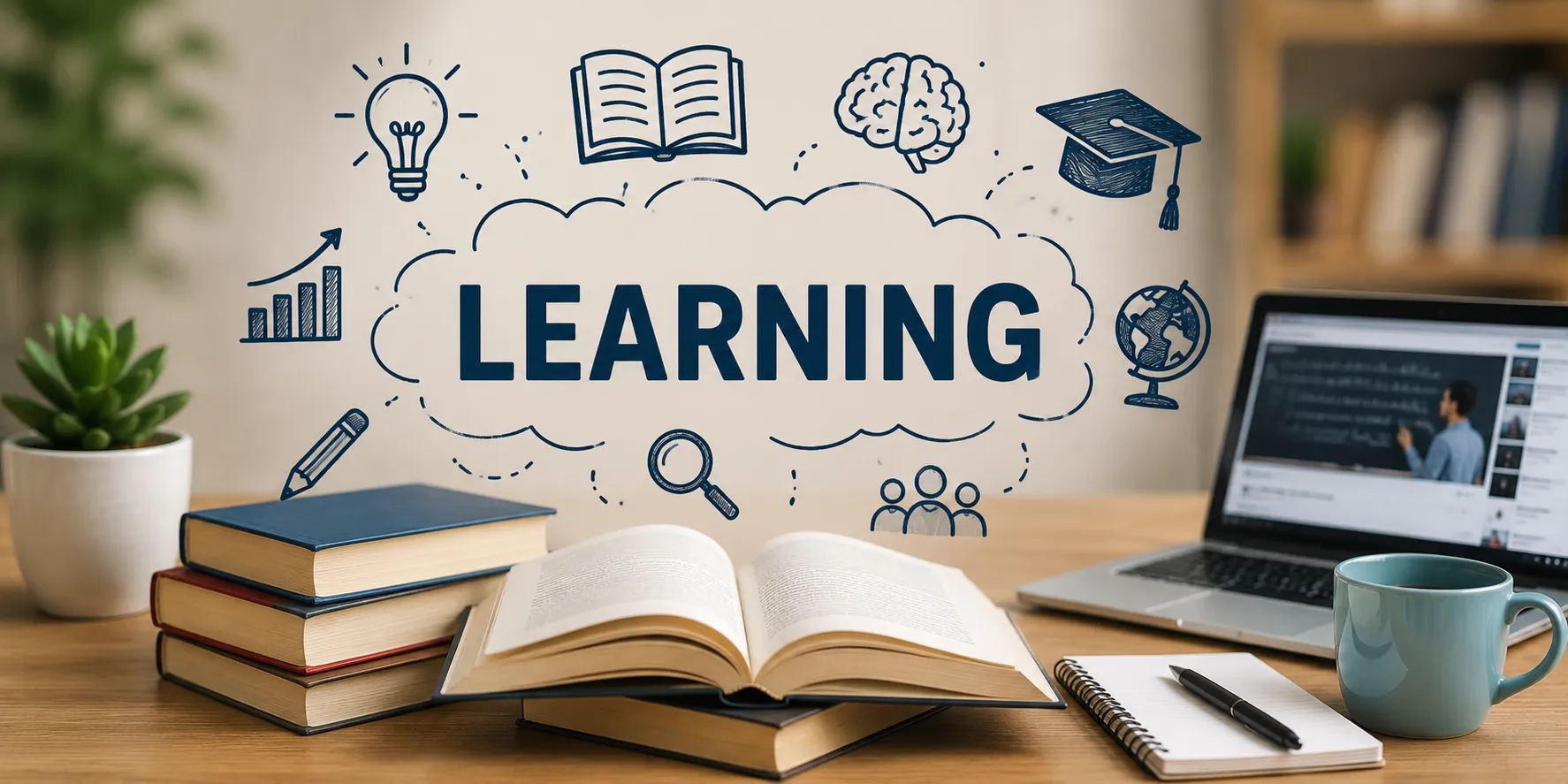
Learning occurs when the brain receives, processes, stores, and applies new information or experiences.
The basic learning process generally includes:
-
Receiving information through reading, listening, observing, or experiencing.
-
Understanding the new concept or skill.
-
Practicing or applying what has been learned.
-
Remembering the information through repetition or experience.
-
Using the knowledge in real-life situations.
For example, when someone learns to drive a car, they first understand the rules, then practice driving, receive feedback, and gradually become more confident through repeated experience.
Types
Learning can take many forms depending on how knowledge or skills are acquired.
| Type | Description |
|---|---|
| Formal Learning | Structured learning in schools, colleges, or training programs. |
| Informal Learning | Learning through daily life, conversations, and personal experiences. |
| Non-formal Learning | Organized learning outside traditional education, such as workshops or online courses. |
| Observational Learning | Learning by watching and imitating others. |
| Experiential Learning | Learning through direct experience and practice. |
| Self-directed Learning | Learning independently using books, videos, or online resources. |
Each type contributes to personal and professional development in different ways.
Importance
Learning plays a vital role in every stage of life.
Some of its key benefits include:
-
Improves knowledge and understanding.
-
Develops practical and professional skills.
-
Enhances problem-solving and critical thinking abilities.
-
Builds confidence and decision-making skills.
-
Helps people adapt to changing environments and technologies.
-
Supports personal growth and career development.
-
Encourages lifelong curiosity and continuous improvement.
Without learning, individuals and societies would find it difficult to innovate, solve problems, or adapt to change.
Characteristics
Learning has several important characteristics that distinguish it from temporary changes in behavior.
-
It is a continuous and lifelong process.
-
It results from experience, observation, study, or practice.
-
It brings relatively lasting changes in knowledge, skills, or behavior.
-
It may be intentional or unintentional.
-
It can occur in formal, informal, or non-formal settings.
-
It helps individuals adapt to new situations and environments.
-
It varies from person to person based on abilities, motivation, and experiences.
Common Misconceptions
"Learning only happens in school."
No.
Learning takes place throughout life, in homes, workplaces, online, and through everyday experiences, not just in classrooms.
"Memorizing means learning."
Not always.
Memorization may help recall information, but true learning involves understanding, applying, and retaining knowledge over time.
"Learning stops after education."
No.
People continue learning throughout their lives by developing new skills, adapting to technology, and gaining experience.
"Everyone learns in the same way."
Not true.
Individuals have different learning preferences, experiences, and abilities, so effective learning methods can vary from person to person.
Frequently Asked Questions (FAQs)
1. What is learning?
Learning is the process of acquiring knowledge, skills, behaviors, or understanding through study, practice, observation, or experience.
2. Why is learning important?
Learning helps people develop new skills, improve decision-making, adapt to change, and achieve personal and professional growth.
3. What are the main types of learning?
The main types include formal, informal, non-formal, observational, experiential, and self-directed learning.
4. Is learning a lifelong process?
Yes.
Learning begins early in life and continues throughout adulthood as people gain new knowledge and experiences.
5. What's the difference between learning and education?
Learning is the process of gaining knowledge or skills, while education is a structured system designed to support and facilitate learning.
Learning is a lifelong process that enables individuals to acquire knowledge, develop skills, and adapt to an ever-changing world. It occurs through education, observation, practice, and personal experiences, making it an essential part of both personal and professional development. Whether gained inside a classroom or through everyday life, learning empowers people to think critically, solve problems, and continuously improve themselves.
Must Read: What do you mean by inclusive education?