
S
Updated on May 30, 2026science-and-technology

What happens when AI flies a plane?

React
2 Answers

avatar
Professional content writter since 2010
Updated on May 30, 2026

When AI flies a plane, it does not simply replace the pilot and take full control in the way many people imagine. Instead, AI acts as a highly advanced decision-making system that can process huge amounts of flight data in real time and assist with navigation, safety, and aircraft operations.
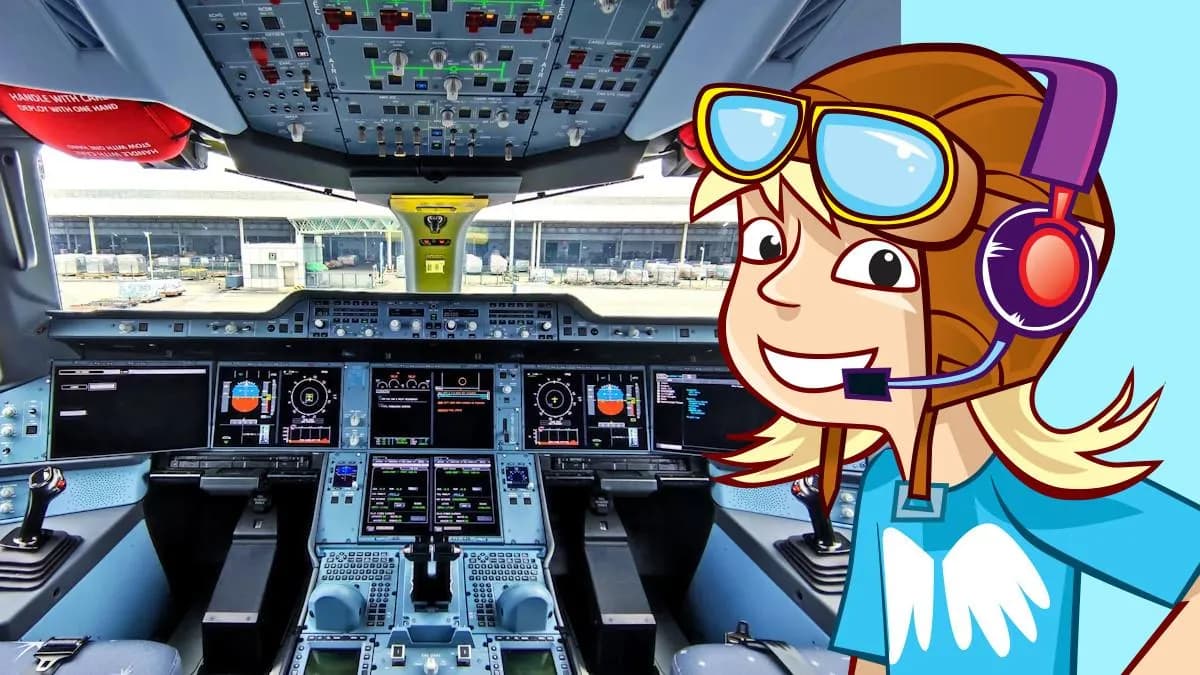
AI flies a plane

Here is what typically happens:

  • Continuous data analysis: AI constantly monitors weather conditions, fuel consumption, aircraft performance, air traffic, and thousands of sensor readings every second.

  • More precise flight control: AI systems can make extremely small adjustments to speed, altitude, and direction, often more accurately than a human can.

  • Faster response to potential problems: If an engine issue, weather hazard, or system malfunction is detected, AI can instantly analyze possible responses and suggest the safest option.

  • Reduced pilot workload: During long flights, AI-powered systems can handle routine tasks, allowing pilots to focus on critical decisions and monitoring.

  • Improved fuel efficiency: By optimizing flight paths and engine performance, AI can help airlines reduce fuel usage and operating costs.

  • Enhanced safety monitoring: AI can identify unusual patterns that humans might miss, helping prevent accidents before they occur.

However, AI is not currently capable of completely replacing human pilots in commercial aviation. Flying an aircraft involves complex judgment, communication with air traffic control, handling unexpected situations, and making ethical decisions that still require human oversight.

The future of aviation is likely to be a partnership between humans and artificial intelligence rather than a competition between them. AI excels at processing data and recognizing patterns, while human pilots provide experience, adaptability, and accountability. Together, they can create safer, more efficient, and more reliable air travel.

In simple terms, when AI flies a plane, it makes aviation smarter and more efficient-but humans remain an essential part of the cockpit.

React
J
Answered on May 29, 2026

According to me, when AI flies a plane, the most surprising thing is that it often does many routine tasks better than humans, but the biggest challenges appear when something unexpected happens.

The reality is that AI is already flying parts of airplanes today. Modern aircraft use advanced automation systems for:

  • Navigation

  • Route optimization

  • Autopilot functions

  • Fuel management

  • System monitoring

In many flights, computers handle large portions of cruising operations while human pilots supervise everything.

Where AI Performs Extremely Well

AI is very good at:

  • Processing huge amounts of data instantly

  • Monitoring hundreds of systems at once

  • Detecting anomalies faster than humans

  • Maintaining efficient flight paths

  • Reducing pilot workload

Unlike humans, AI does not get tired, distracted, stressed, or emotionally overwhelmed. That is one reason aviation companies are investing heavily in AI-assisted flight systems. 

The Biggest Problem: Unexpected Situations

According to me, the real test is not normal flying but chaos.

When emergencies happen, pilots often rely on:

  • Experience

  • Intuition

  • Judgment

  • Creativity

  • Situational awareness

Humans can combine incomplete information and make decisions even when no perfect answer exists.

AI still struggles with that kind of uncertainty. Aviation researchers repeatedly emphasize that human pilots remain critical when situations become unpredictable or unclear. 

Why Fully Autonomous Passenger Flights Are Still Rare

A lot of people imagine AI replacing pilots completely, but aviation regulators move extremely slowly for safety reasons.

Before AI can fully control commercial passenger aircraft, authorities must solve concerns involving:

  • Reliability

  • Cybersecurity

  • System failures

  • Public trust

  • Certification standards

Even many experts who support aviation AI believe pilots will remain in cockpits for years or decades as supervisors rather than disappearing entirely. 

What the Future May Look Like

Personally, I think the future is probably not:

  • Human pilots only
    or

  • AI only

Instead, it will be a partnership.

AI will likely:

  • Handle repetitive tasks

  • Monitor aircraft systems

  • Predict problems early

  • Optimize routes and fuel usage

while human pilots focus on:

  • Decision-making

  • Emergency response

  • Passenger safety

  • Complex judgment calls

My Perspective

According to me, AI flying a plane is actually less scary than many people think because automation is already deeply involved in aviation today.

The bigger question is not whether AI can fly a plane. It probably can.

The real question is whether people will trust AI enough to sit inside a fully autonomous aircraft with no human pilot at all. And honestly, that psychological hurdle may take longer to solve than the technology itself.

Must Read: Is AI in financial services really replacing human financial advisors in 2026, or is it just hype?

React