Cloud website hosting has become a floor-breaking alternative in the ever-changing global of online web hosting, offering a reliable, adaptable, and scalable replacement for conventional web hosting techniques. Making knowledgeable judgments on their internet infrastructure calls for small and huge businesses to have a radical draw close to cloud web hosting and its blessings.
What is Cloud Hosting and How Does It Work?
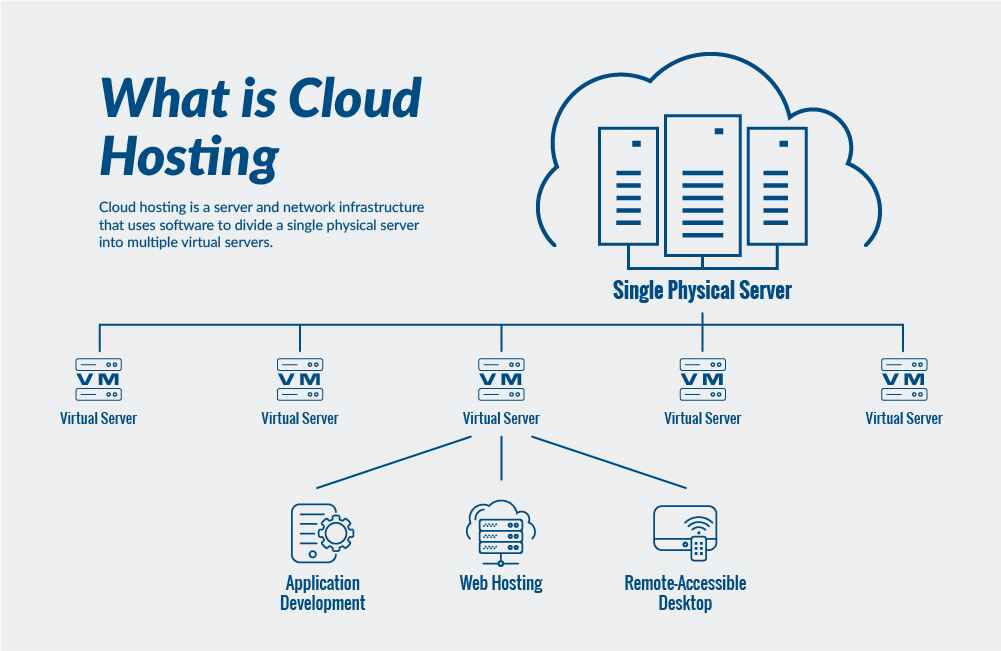
To optimize uptime and stability of the burden, cloud website hosting uses several servers. Cloud-hosted websites can access assets from a community of servers, which can be often dispersed throughout many areas, in place of depending simply on one server. The "cloud," or network of servers, makes certain that within the occasion of a server failure, different servers can take over without problems, decreasing downtime and maintaining steady overall performance.
To place it almost, cloud hosting distributes the statistics of your internet site among numerous servers. To provide powerful load balancing and rapid access, a consumer's request for your website is sent to the server that can handle it the best. When compared to traditional unmarried-server web hosting techniques, cloud hosting is some distance greater reliable due to its redundancy and spread.
Cloud Hosting vs Shared Hosting
It's beneficial to evaluate cloud hosting with shared hosting so that you can better recognize it:
Shared Hosting: An unmarried server hosts numerous websites under shared hosting. The server's assets, together with CPU, RAM, and storage, are shared with the aid of every internet site. If one internet site uses too many resources, it could affect the opposite website's performance.
Cloud hosting: This form of hosting divides sources amongst several servers, in contrast to shared web hosting. This improves performance and gives greater scalability and versatility. Cloud website hosting can quickly install extra community resources to control a sudden spike in site visitors on your website, something shared web hosting is unable to do.
Benefits of Cloud Hosting for Small Businesses
The cloud gives small corporations several appealing advantages, including:
- Scalability: Cloud website hosting allows companies to regulate their resource tiers in response to converting needs. This makes it fee-effective for expanding organizations as you most effectively pay for what you use.
- Reliability: There is a much-decreased threat of downtime whilst there are numerous servers in use. If one server fails, some others can take over proper away to hold your website up and strolling.
- Performance: Because the load is split throughout numerous servers, cloud web hosting usually affords faster load instances and extra performance.
- Cost-effectiveness: Pay-as-you-move pricing options allow small groups to better manage their website hosting charges without having to make high-priced hardware purchases.
- Security: A lot of cloud hosting organizations have strong safety capabilities, which can be essential for shielding enterprise information. These features consist of firewalls, frequent upgrades, and DDoS prevention.

Is Cloud Hosting Secure?
Any business ought to prioritize security, and cloud web hosting groups apprehend this. Cloud hosting environments regularly have cutting-edge safety functions like:
- Sensitive statistics are included through data encryption, both in the course of transmission and garage.
- Frequent safety updates: To protect against weaknesses.
- DDoS Protection: To reduce assaults that cause a denial of the carrier.
- Intrusion Detection Systems and Firewalls: To preserve a watch on and stop hostile hobby.
But businesses must have their very own safety processes in the region, such as using robust passwords, turning on two-aspect authentication, and routinely storing up statistics.
How to Migrate to Cloud Hosting?
There are numerous levels involved in shifting to cloud web hosting:
- Pick a Cloud Hosting Provider: Go for a business enterprise that fits both your price range and your wishes as a business.
- Arrange Your Transition: Evaluate your present web hosting configuration and broaden a migration strategy that consists of a timetable and backup processes.
- Make a records backup: Make sure you've got a backup of all your statistics earlier than starting the conversion technique.
- Move Your Website: To make this manner simpler, quite a few cloud website hosting companies offer equipment or offerings for internet site relocation. To flow your files, databases, and setups, adhere to their commands.

Cloud Hosting for E-commerce
There are several benefits that cloud website hosting gives to e-commerce establishments.
- Scalability: During sales or promotional events, handling traffic will increase without experiencing any downtime.
- Reliability: To maintain purchaser self-belief and revenue, make certain your online business is continuously open.
- Security: Use modern protection techniques to safeguard transactional and purchaser records.
- Performance: E-commerce websites that load slowly danger of losing income, therefore fast load times are critical.
Well-recognized cloud website hosting organizations for e-trade include Microsoft Azure, Google Cloud Platform, and Amazon Web Services (AWS), which offer specialized offerings for online outlets.
Web hosting generation has advanced extensively with cloud web hosting, which gives unparalleled scalability, dependability, and overall performance. Cloud website hosting is a flexible and powerful option that may be used by WordPress fans, small enterprise proprietors wishing to expand, and e-commerce marketers. You may additionally help your business enterprise objectives and improve your net presence by way of making an informed selection via being aware of how it operates and the benefits it gives.


.png)