Real estate is a phrase you hear all the time, but what does it actually cover? Simply put, it’s land and anything stuck to it permanently like houses, trees, or even stuff underground like oil or coal. It’s a giant field that powers economies, gives people places to live, and opens doors for investing. Whether you’re snagging a home, leasing a workspace, or flipping properties for cash, real estate plays a role in almost everything. Let’s dig into what it means, the different kinds, how it operates, and why it’s a big deal.
Breaking Down Real Estate: The Essentials
At its heart, real estate is property that includes land and whatever’s built or growing on it naturally. Unlike things you can pick up and move like a bike or a couch real estate stays put. The term “real” traces back to old-fashioned legal lingo tied to “royal” or “physical,” pointing to stuff you can touch. It’s usually split into categories: homes, business spaces, factories, or just empty land. Each type has its own job, from putting a roof over families to hosting shops or waiting for a future plan.
Owning real estate means you’ve got legal rights to that patch of ground or what’s on it. Those rights might let you live there, rent it out, sell it off, or dig into it depending on the rules where you are. In spots like India or the U.S., it comes with paperwork like deeds or titles, plus laws that decide what you can pull off.
Kinds of Real Estate
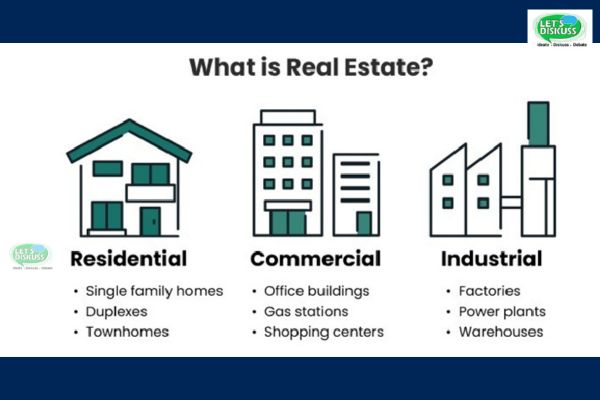
Real estate comes in different shapes. Here’s the rundown:
1. Residential Real Estate
This is the stuff people call home think houses, apartments, or row homes. It spans from tiny bungalows to big apartment towers. You can own it outright or rent it, and it’s a massive part of the market, especially for folks starting out or raising kids.
2. Commercial Real Estate
Picture office towers, strip malls, or motels. This type’s all about work and trade. Owners might rent out spots like a corner for a barber or run the show themselves, like a cinema. It’s costlier and tied to how the economy’s doing since businesses need room to grow.
3. Industrial Real Estate
Here’s where you find plants, warehouses, or mills places built to make or stash things. It’s not flashy but keeps the world running. These spots tend to pop up outside towns where land’s affordable and rules let heavy work happen.
4. Vacant Land
This is bare land with no buildings yet could be a farm, a future suburb, or just a bet on tomorrow’s value. What it’s worth often depends on where it sits and what it might turn into later.
5. Special Use Real Estate
This grabs oddballs like libraries, temples, or courthouses. They don’t fit the usual boxes but still count because they’re rooted in place.
How Real Estate Rolls
Real estate isn’t just soil and walls it’s a lively system. Buying or selling hinges on a market where prices bounce around based on who wants what, where it is, and how the money’s flowing. A flat in bustling Delhi or Chicago costs a fortune compared to a quiet country spot because of demand and convenience.
The action usually goes like this:
- Pricing It: Folks figure out a property’s value, maybe with an expert or by eyeballing nearby sales.
- Deals: Buyers and sellers hash it out, often with agents greasing the wheels. In India, you seal it with a registrar; elsewhere, it’s a title office or notary.
- Money: Most don’t pay upfront—they borrow through loans, tying it to banks and rates.
- Building: Developers take raw dirt and make homes or offices, boosting worth (and stakes).
Governments jump in too, with taxes, land-use rules, and building standards. In India, laws like the 2016 RERA keep builders honest and buyers safe.
Why It’s a Big Deal
Real estate isn’t just roofs it’s an economic engine. It creates work (think builders, agents), builds wealth (via rents or rising values), and shows how a place is growing. For regular folks, a house is a life goal; for investors, it’s a slow-burn money-maker land tends to climb in worth over time, unlike gadgets that fade fast.
It’s got risks too. Hot markets bring cash, but crashes like the 2008 U.S. mess—can sink everything. In growing countries, it marks progress as towns spread, but it also sparks fights over costs and space.
Who’s Involved?
The players keeping it moving:
- Buyers and Sellers: The core of the game, from homeowners to corporations.
- Agents: Pros who know the ins and outs and seal deals.
- Builders: Folks crafting empty lots into something useful.
- Banks: Loaning cash to make it happen.
- Rulemakers: Governments laying down the law.
Hurdles and Shifts
It’s not all easy. Prices can climb too high think Delhi’s pricey pads or Seattle’s tech boom. Rules about floods or forests can block plans. Meanwhile, remote jobs are flipping needs less downtown offices, more homes out of town. Tech’s mixing it up too, with online tours and digital deeds.
The Bottom Line
So, what’s real estate? It’s land, what’s on it, and the rights you get a blend of grit and goals that defines living, working, and saving. From a rural acre to a city tower, it’s solid stuff with big ripple effects. Whether you’re after a nest, a shop, or just knowledge, real estate’s a foundation of our world worth getting to know deep down.