
The Supreme Court of India holds a pivotal role in the Indian legal system. It serves as the highest judicial authority and is responsible for interpreting and upholding the Constitution of India. The Court acts as a final appellate body, hearing appeals from lower courts and delivering binding judgments. One of its significant functions is the power of judicial review, allowing it to assess the constitutionality of laws and government actions. As the guardian of the Constitution, the Supreme Court safeguards the fundamental rights and liberties of citizens and ensures the proper functioning of democracy in India. Its decisions have a far-reaching impact on legal precedents and shape the course of the nation's legal framework.
Advertisement


Advertisement


Advertisement


Jan 3, 2026•news-current-topics
What is the role of the Supreme Court in India
3 Answers
2

@shadabkhan9450•Jan 3, 2026
The Indian Supreme Court is the highest court in the nation and an important part of the Indian legal system. Its primary duties consist of:
The Supreme Court is the final arbiter of how the Constitution, which is the supreme law of the land, should be interpreted. This implies that any law or government action that the Supreme Court deems to be unconstitutional may be repealed.
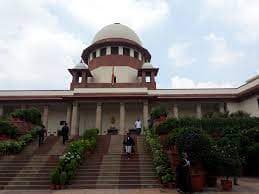
Fundamental Rights Enforcement: The Supreme Court has the authority to uphold the constitutionally guaranteed Fundamental Rights. The rights to equality, freedom, and life and liberty are some examples of these rights.
Intergovernmental Dispute Resolution: The Supreme Court can settle conflicts between one state government and another or between the federal government and state governments.
Hearing Appeals: On a variety of cases, including civil, criminal, and constitutional ones, the Supreme Court hears appeals from the High Courts.
The Supreme Court has the authority to issue writs, which are directives that direct a government official or institution to carry out a specific action or to cease engaging in unlawful behavior.
The President of India has the authority to request the Supreme Court's advisory opinion on any matter.
The government does not have any authority over the Supreme Court because it is an independent institution. This independence is necessary to guarantee that the Supreme Court can uphold the Constitution and defend the rights of the people in an objective manner.
Here are some particular instances of the Supreme Court of India's function in India:
- Prime Minister Indira Gandhi's Emergency was overturned by the Supreme Court in 1973. This important choice contributed to India's return to democracy.
- The Supreme Court mandated the Babri Masjid in Ayodhya be destroyed in 2002. Widespread violence resulted from this contentious choice.
- The Supreme Court of India decriminalized homosexuality in 2012. The LGBTQ community now has hope thanks to this historic decision.
0
1
G
@7966•Jun 21, 2023
India's Supreme Court was established on 28 January 1950. The Federal Court of India and the Judicial Committee of the Privy Council, which were at the height of the Indian legal system at the time, were both abolished by it. However, the first meeting and inauguration took place on 28th of January, 1950 which is therefore considered the official establishment date. The Indian constitution is upheld by the Supreme Court. It is in charge of hearing cases involving national and international issues pertaining to our nation. In Lok Sabha, the Supreme Court can direct the central government to make laws. If it interferes with the fundamental structure of India's constitution, it can even alter or repeal laws and decisions made by parliament. The Supreme Court has the authority to issue any necessary orders to any government agency, Indian forces, or private organization operating on Indian soil. The Supreme Court settles disputes between states and hears PIL (Public Interest Litigation). In general, our nation's supreme court is a very powerful constitutional body. The Supreme Court of India is envisioned by the Indian Constitution as the highest Court of Appeal and a last resort. It is the first and only arbiter in many instances, such as a dispute between two states or the Center and a State. This is because the Supreme Court has original jurisdiction. Additionally, the Supreme Court protects and defends the Constitution's inviolable Fundamental Rights, which make equality more than just a hollow promise, in its exercise of WRIT Jurisdiction. In addition, the Supreme Court has taken on the responsibility of acting as the sole repository for public trust in a number of instances: Triple Talaq, 2G, BCCI, and so on. The Supreme Court of India has played the role of practically maintaining the functioning of the Indian Constitution and developing it as if it were a living document.
Hope you found this answer helpful.
Image Courtesy: Google

0
React