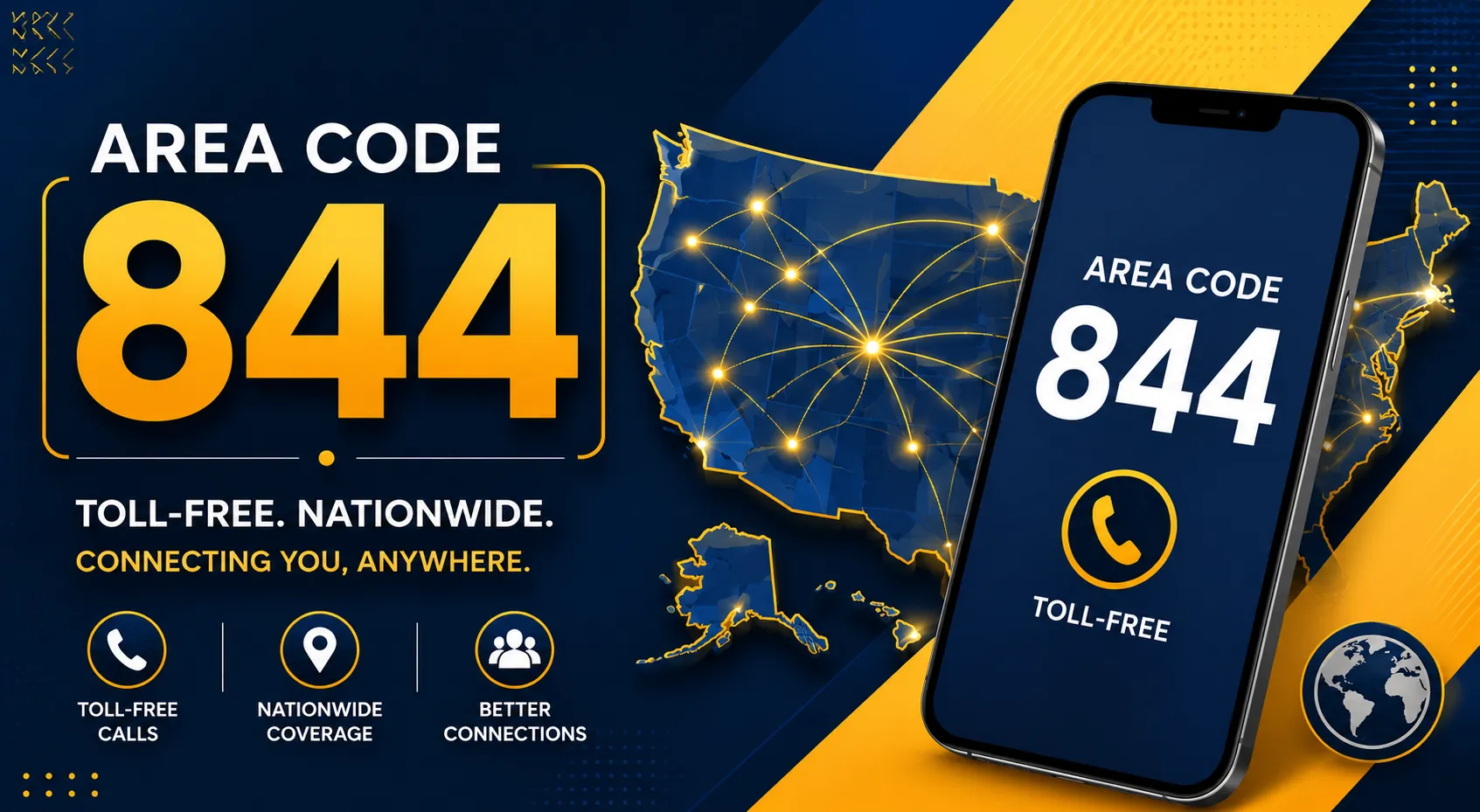
844 area code: A non-geographic toll-free telephone prefix within the North American Numbering Plan (NANP) that allows callers to contact participating organizations without standard long-distance charges.
The 844 area code is an official toll-free prefix that serves the entire North American region. It is not tied to any physical city or state. Instead, businesses use it as a nationwide hotline to provide free calling for their customers. While the prefix itself is a legitimate business tool, bad actors frequently spoof the number to impersonate trusted organizations.
In this guide you will learn:
- How toll-free telecommunications routing actually works behind the scenes.
- How to identify a scam call in under 30 seconds.
- The answers to edge-case questions regarding SMS capabilities and international reach.
- The myths versus the facts of toll-free geography.
Where is a 844 Area Code Located?
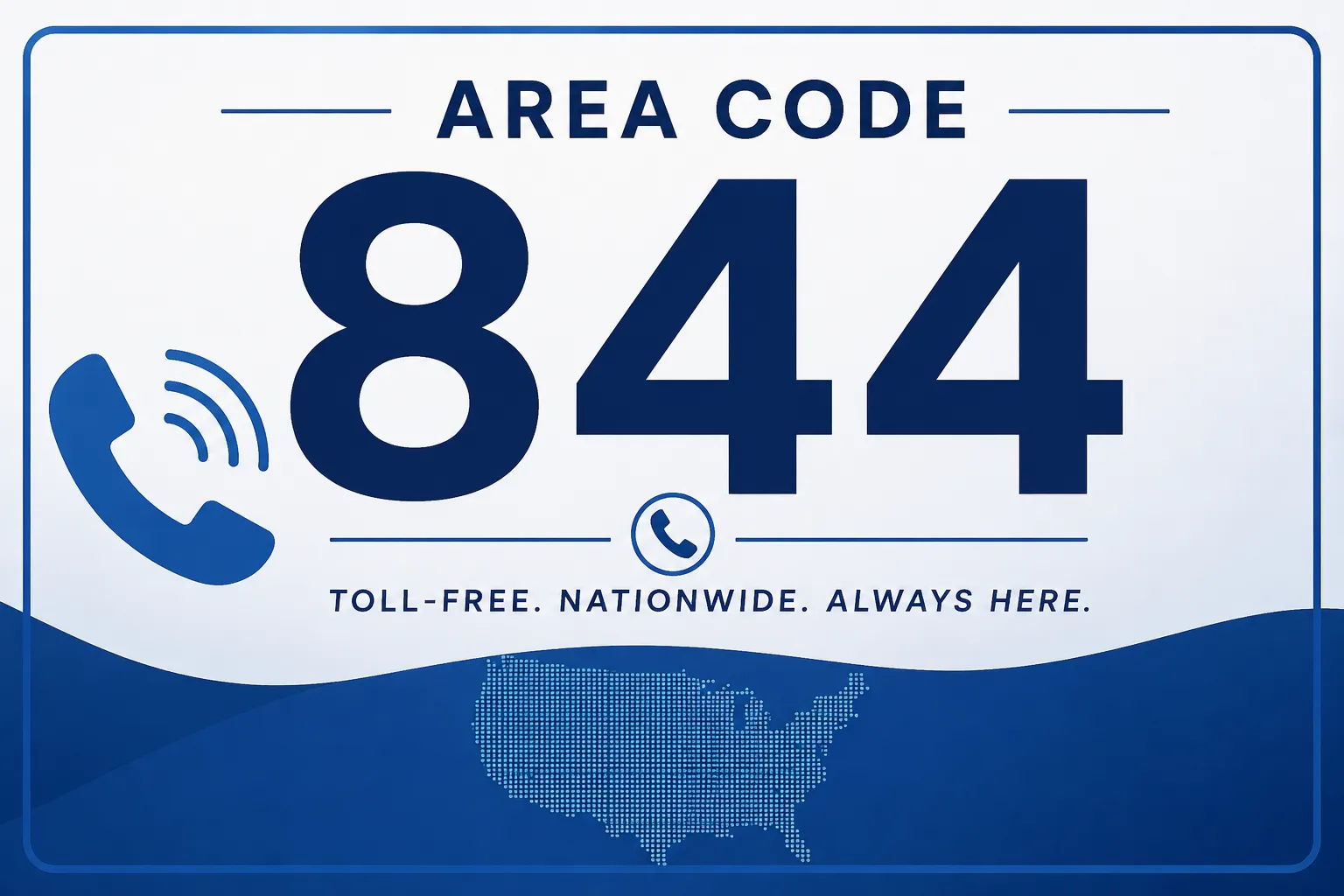
When an unfamiliar number flashes on the screen, the first question people usually ask is: where is a 844 area code located? The answer is that it has no physical location.
According to the North American Numbering Plan Administration (NANPA), 844 is classified as a non-geographic toll-free numbering resource. A call originating from the telephone code 844 could physically be coming from anywhere in the United States, Canada, Puerto Rico, or even an overseas call center utilizing a U.S. telecommunications provider.
Myth vs. Fact: Toll-Free Geography
| Myth | Fact |
| 844 numbers come from one specific city. | They are nationwide and entirely non-geographic. |
| Every 844 call is safe. | Scammers frequently spoof toll-free numbers. |
| Only massive enterprises use 844 numbers. | Small businesses can easily obtain toll-free numbers. |
| You can identify a caller's location from the prefix. | You generally cannot determine the location from the prefix alone. |
How 844 Telecom Routing Actually Works
To understand what area code is 844 in practice, you must look at how the telecommunications infrastructure routes the call.
Although an 844 number appears as a single nationwide telephone number on your screen, the call is actually routed through the SMS/800 toll-free database. The assigned Responsible Organization (RespOrg) determines where the call should be delivered based on advanced business rules.
These routing rules can factor in:
- Time of day: Routing a 2:00 AM call to an overseas support center.
- Caller location: Sending a New York caller to an East Coast office.
- Language preference: Directing the call based on keypad prompts.
- Call volume: Overflowing calls to a secondary call center during busy hours.
This means the exact same code area 844 can connect callers to entirely different physical offices or agents depending on when and where the call is placed.
Why Did I Receive a Call From an 844 Number?
Most users searching for what is 844 area code fall into a few distinct categories. If you received an unexpected call from this prefix, it likely falls into one of these intents:
- Legitimate Customer Service: A company you do business with (like your bank, airline, or utility provider) is following up on a service request or account issue.
- Marketing or Telemarketing: A business is reaching out for promotional purposes.
- Scam or Fraud Attempt: A bad actor is using caller ID spoofing. According to the Federal Communications Commission (FCC), caller ID spoofing allows fraudsters to falsify the telephone number shown on a recipient's caller ID, which is why an 844 number alone should not be considered proof of legitimacy.
How to Spot an 844 Scam in Under 30 Seconds
The Federal Trade Commission (FTC) advises consumers never to provide passwords, OTPs, or payment information during unsolicited calls. Use this quick checklist to determine the legitimacy of the call:
| Action / Request | Legitimate Business | Scam Call |
| Asked for your account password | ❌ Never | ✅ Often |
| Requested payment via gift cards or crypto | ❌ Never | ✅ Common |
| Verified existing account information | ✅ Usually | ❌ Rarely |
| Threatened immediate arrest or legal action | ❌ Never | ✅ Common |
| Allowed you to hang up and call back via official channels | ✅ Yes | ❌ Usually not |
Comparison: Toll-Free (844) vs. Local Area Codes
Understanding how the area code 844 differs from a standard local number helps clarify its purpose:
| Feature | 844 (Toll-Free) | Local Area Code (e.g 212) |
| Geographic | No | Yes |
| Nationwide Reach | Yes | No |
| Caller Pays for the Call | No (generally free from landlines) | Usually yes (subject to carrier rates) |
| Business Use | Very common | Common |
| Indicates Physical Location | No | Yes |
Edge Cases: SMS, Portability, and Ownership
Many consumers and small business owners have advanced questions about toll-free capabilities that go beyond simple voice routing:
- Can an 844 number receive SMS? Yes. Modern telecommunications providers allow businesses to text-enable their toll-free numbers, meaning you can send and receive SMS messages just like a standard mobile phone.
- Can individuals buy an 844 number? Absolutely. While primarily used by businesses, there is no restriction preventing a private individual from leasing a toll-free number through a VoIP provider.
- Can an 844 number be transferred to another provider? Yes. Thanks to FCC regulations on Local Number Portability (LNP), businesses own the rights to their specific number and can port it between different RespOrgs or carriers.
- Are 844 numbers available outside the U.S.? While the North American Numbering Plan covers the U.S., Canada, and parts of the Caribbean, businesses outside this region can purchase an 844 number via cloud communication platforms to establish a virtual North American presence.
Key Takeaways
The most important thing to remember is that the 844 prefix tells you how a call is billed—not where it originates. Whether an 844 call is trustworthy depends entirely on the caller's identity and behavior, not the number itself. Always verify unexpected requests through official contact channels before sharing any personal or financial information.
Also Read:
Sources