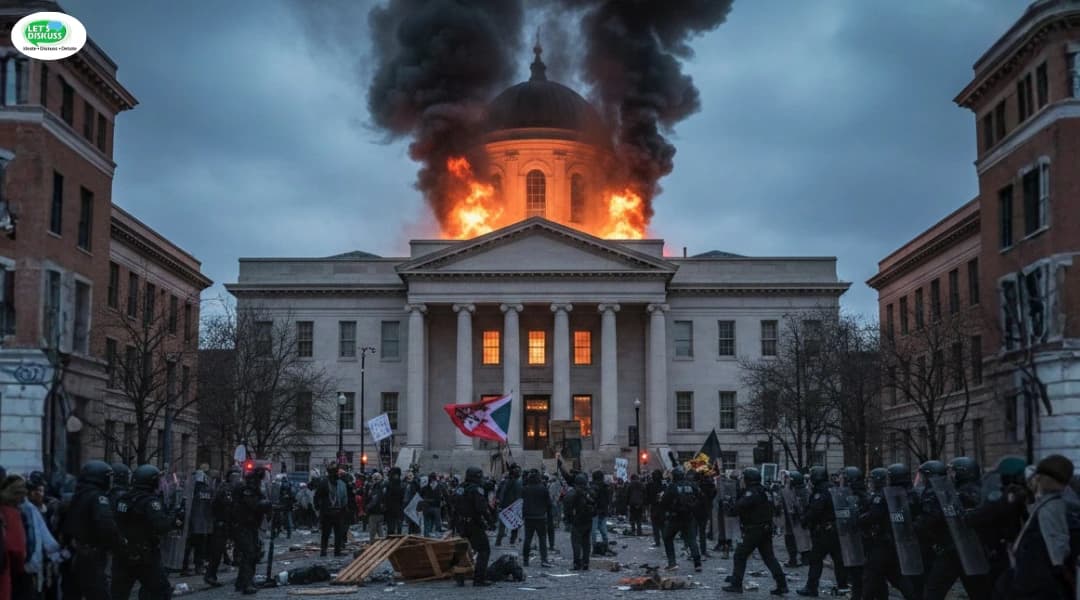
In recent years, the word insurrection has moved from history books into everyday headlines. From political unrest to courtrooms and parliamentary debates, people across the UK and beyond are searching for clear answers: What exactly is an insurrection? How is it different from a protest or riot? And why does it carry such serious legal weight?
This guide explains insurrection in plain English, grounded in law, history, and modern context - without sensationalism. Whether you’re a student, voter, journalist, or simply trying to understand the news, this article offers factual clarity and expert-level insight.
What Is an Insurrection?
An insurrection is a violent uprising against a recognised government, state authority, or constitutional order, usually with the intention of disrupting, replacing, or overthrowing it.
Unlike peaceful demonstrations or civil disobedience, an insurrection involves:
-
Use or threat of force
Organised resistance
-
Political or ideological intent
-
Direct challenge to lawful authority
In simple terms, an insurrection goes beyond protest - it seeks to undermine the state itself.
Insurrection Meaning in Simple Words
For many readers searching “insurrection meaning” or “insurrection explained”, the confusion often lies in how the term is used by media.
In simple words:
An insurrection is when a group tries to take power from the government by force.
It is not about disagreement or dissent. Democracies expect debate. Insurrection begins when violence replaces lawful political processes.
Legal Definition of Insurrection
Insurrection Under Law
In legal systems influenced by British constitutional tradition, including the UK, insurrection is treated as a grave threat to public order and national security.
While UK law does not always use the word “insurrection” directly, related offences fall under:
-
Treason
-
Sedition
-
Terrorism legislation
-
Public Order offences
-
National security laws
In other jurisdictions, such as the United States, insurrection is explicitly defined in statute as violent resistance to lawful authority.
Is Insurrection a Crime?
Yes - insurrection is considered one of the most serious political crimes.
Depending on the country and circumstances, penalties may include:
-
Long prison sentences
-
Loss of civil rights
-
Charges related to terrorism or treason
In the UK, participation in organised violent attempts to overthrow or destabilise the government can result in prosecution under multiple overlapping laws.
Insurrection vs Protest: What’s the Difference?
One of the most searched questions is insurrection vs protest and the distinction is crucial.
| Protest | Insurrection |
|---|---|
| Peaceful or non-violent | Violent or forceful |
| Protected by law | Criminal offence |
| Aims to influence policy | Aims to overthrow authority |
| Lawful expression | Direct challenge to state power |
A protest may become unlawful, but not every unlawful protest is an insurrection. Intent and organisation matter.
Insurrection vs Riot
A riot is typically:
-
Chaotic
-
Short-lived
-
Lacking clear political leadership
An insurrection, however, is:
-
Planned
-
Ideologically driven
-
Targeted at government institutions
This is why courts and governments treat insurrection far more seriously than spontaneous disorder.
Why Has “Insurrection” Become a Trending Term?
Searches for insurrection have surged due to:
-
Attacks on democratic institutions
-
Disputed elections worldwide
-
Increased political polarisation
-
Social media amplification of unrest
-
Legal proceedings involving high-profile cases
In the UK, public interest has grown as people compare international events with domestic democratic safeguards.
Famous Insurrections in History
Understanding historical context helps clarify why the term carries such weight.
Examples often cited by historians include:
-
Armed rebellions against monarchies
-
Colonial uprisings against imperial rule
-
Failed coups against elected governments
These events reshaped nations - which is why modern governments respond swiftly to anything resembling insurrection.
Modern Examples of Insurrection
In the modern era, insurrections often:
-
Target parliaments or capitals
-
Use misinformation to mobilise supporters
-
Blend political rhetoric with violence
Governments increasingly classify such acts under counter-terrorism frameworks to prevent escalation.
Insurrection and Democracy
Democracy allows disagreement, opposition, and reform - but insurrection rejects democratic processes entirely.
From a constitutional perspective:
-
Voting replaces violence
-
Courts replace force
-
Debate replaces coercion
An insurrection undermines these foundations, making it incompatible with democratic governance.
How Governments Respond to Insurrection
Responses typically involve:
-
Emergency powers
-
Law enforcement mobilisation
-
Military assistance (in extreme cases)
-
Judicial proceedings
-
Parliamentary oversight
In the UK, any such response is constrained by the rule of law and human rights obligations.
Why the Word “Insurrection” Is Used Carefully
Governments and courts avoid using the term lightly because:
-
It carries legal consequences
-
It can escalate public tension
-
It implies intent to overthrow authority
This is why media debates around the word are often intense.
Insurrection in the UK Context
Although rare in modern British history, the concept of insurrection remains legally relevant.
UK institutions rely on:
-
Strong constitutional norms
-
Independent judiciary
-
Peaceful political culture
This resilience is why discussions about insurrection in Britain often focus on prevention, education, and legal clarity rather than reaction.
Common Misunderstandings About Insurrection
Many people mistakenly believe:
-
Any violent protest is an insurrection ❌
-
Insurrection requires military weapons ❌
-
Only large groups can commit insurrection ❌
In reality, courts assess intent, coordination, and impact - not just scale.
Why Understanding Insurrection Matters
Understanding insurrection helps citizens:
-
Interpret news accurately
-
Avoid misinformation
-
Recognise the line between protest and rebellion
-
Protect democratic values
In an age of fast-moving headlines, clarity matters more than ever.
Final Thoughts
The word insurrection carries historical weight, legal seriousness, and democratic consequences. It is not a label to use casually - and not one to misunderstand.
For UK readers, understanding the term means understanding the balance between freedom and responsibility, protest and power, law and legitimacy.
Informed citizens strengthen democracy - and knowledge is always the first defence.