Introduction
Why is Pomegranate Called a Superfruit?
If you want a superfruit in your pantry along with high nutrients and medicinal benefits, grab your hands on a Pomegranate. Not only nutrients, but it is a powerhouse of antioxidants and those antioxidants will burn your inner fire (inflammation) and will fight stress too. Isn’t it amazing? This way, they slow down any chronic diseases you have and regulate your heart health, too.
And if we talk about vitamins, pomegranates are loaded with Vitamin C, Vitamin K, and dietary fibre, which means your immunity, bone strength, and digestive system have also got an upgrade. In fact, some of the antioxidants have anti-cancer properties, so you may also benefit from reducing the risk of cancer. And the formation of kidney stones? Pomegranates will also prevent them, according to some studies. They support your brain health and even protect your brain cells from damage. So when it has it all, it will definitely be a “superfruit”.
A Quick Overview of Its Uses and Benefits
Pomegranate offers extensive health benefits, which makes it easy to include in our everyday diets. Regular consumption may help reduce blood pressure, lower bad cholesterol levels, and slow down premature ageing due to its antioxidant properties.
It also aids digestion and supports gut health through its fibre content. It may enhance memory and overall brain function. Pomegranate is known to fight harmful oral bacteria as well. You can consume it directly, take it as fresh juice, or add it to yoghurt, smoothies, oatmeal, and fruit bowls. It has both taste and nutrition.
Understanding Pomegranate
What Is a Pomegranate?
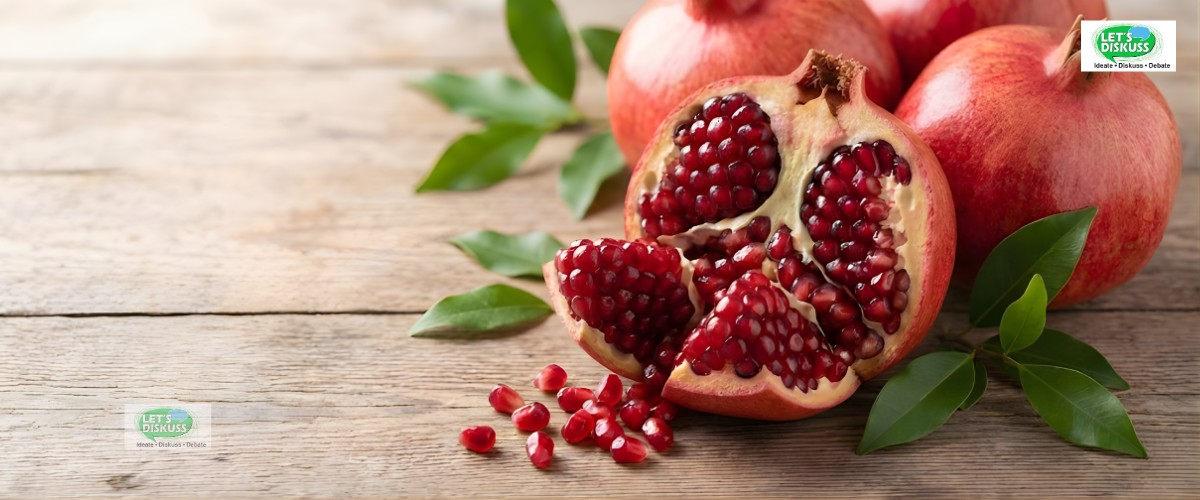
A deep red color juicy fruit, full of sweetness, and edible seeds, is what we call a pomegranate. I know it's delicious, but not the outer skin. Don’t consume that. It is often referred to as the “apple of many seeds” as it contains hundreds of small arils (seeds) inside. They grow on tall shrubs or small trees that thrive in warm climates. These plants require ample heat and sunlight to properly grow and ripen, which results in a flavourful and nutrient-dense fruit. It is enjoyed across the world.
History and Origin of Pomegranate
Pomegranate originated in the Persian region, which is today’s Iran, Afghanistan, and parts of northern India. It has been cultivated for over 5000 years. As it has many seeds, it symbolises fertility, abundance, and life, according to ancient times. When we track trade routes, we find that they spread to the Mediterranean, Asia, and then other parts of the world.
Varieties of Pomegranate
Wonderful is the most popular variety of pomegranate. It is sharp in taste. It has a deep red color skin.
Parfianka is sweet and feels like a tart in the mouth. It is ideal for home gardens.
Pink Satin contains soft seeds and mild, sweet juice. It is easy to eat.
Tom’s Red and Desertnyi are known for juicing as they have juicy arils (seeds).
Purple Heart and Red Silk are mostly preferred for eating fresh and with blends.
Parts of the Pomegranate Fruit
A pomegranate fruit has different parts, and each part performs a specific role:
Outer Skin (rind): This is the hard and thick cover that protects the fruit. You cannot eat it.
White layer: This is the soft white part present inside the pomegranate. It tastes bitter and separates the seeds.
Inner walls: This is a membrane that divides the fruit into sections.
Arils: This is what we eat. These are the red juicy seeds. They are flavourful and so juicy.
Seeds: Small seeds that are present inside the arils. They taste crunchy while some taste soft as well.
Nutritional Profile of Pomegranate
Vitamins and Minerals
Talking about vitamins and minerals, pomegranates have loads of them. It has Vitamin C that boosts up your immunity and the health of your skin. It also has Vitamin K that helps your blood clotting and even makes your bones strong. The presence of vitamin E, but in small amounts, stops cell damage in your body. Not only that, but it also has B vitamins to boost your energy and brain.
Talking about minerals, you can get potassium for your heart health, magnesium and phosphorus for strengthening bones and muscles, and manganese that improves your metabolism and has antioxidants. You can also find some amounts of more minerals like Iron, Zinc, Calcium, and Sodium.
Antioxidants and Phytochemicals
Pomegranates are loaded with antioxidants and phytochemicals in them. These antioxidants and phytochemicals are to be found in the peel, seeds, and arils of this fruit. It got its deep red color and richness because of these, along with the goodness of anti-inflammatory, anti-cancer, and heart protection properties.
Mainly, polyphenols are found in pomegranate. These are types of ellagitannin and flavonoids. Ellagitannins are abundant and have high antioxidant properties that support anti-cancer. Flavonoids are responsible for the deep red colour and provide other health benefits.
Gallic Acid is found significantly in the peel of the pomegranate.
Phenolic Acids & Organic Acids further contribute to the increased antioxidant properties of pomegranate.
Calories, Fibre, and Natural Sugars
Talking about calories, fibre, and natural sugars, a medium pomegranate has around 234 calories, 11-12g of fibre, and around 30-38g of natural sugars. This makes it a rich nutrient fruit. The fibre present in a pomegranate slows down sugar absorption, which leads to preventing sugar spikes in the body.
Pomegranate vs Other Fruits
Pomegranates have high fibre content that prevents sugar spikes more than any other fruit.
Pomegranates have higher amounts of copper, vitamin B5, folate, and Vitamin K than some of the other fruits.
Pomegranates are extremely rich in antioxidants that provide more protection against chronic diseases than apples or green tea.
Pomegranates reduce bad cholesterol in the body and lower blood pressure more than any other fruit.
Pomegranates show up as a powerful packed nutrient-dense fruit with several health benefits that no other fruit individually contains.
Health Benefits of Pomegranate
Heart Health Benefits
Imagine your heart is a high-speed highway. Pomegranates act like a maintenance team to make a way for your blood to flow. The juicy little seeds are full of antioxidants that lower your blood pressure and keep your heart rhythm stable. Basically, you are giving your chest relaxation and good health. In science, you can say that pomegranates are great for your cardiovascular health.
Boosting Immunity
Just like how a security guard protects your home, pomegranates do the same. They give you a natural shield that blocks germs and viruses. The juicy seeds fuel your immune system so that you are ready to fight infections. So, if you are worried about the seasonal flu, pomegranates are there for you.
Anti-Inflammatory Properties
When you feel some fire igniting in your body, but you think I'm not even angry, then that’s inflammation. Pomegranates come as a rescue to the fire igniting in your body. They give your stomach and brain a cool and calm effect. In fact, they have special nutrients that calm down pain and swelling in your muscles and joints. They feel like a soothing hug to your body with their crunchy and sweet flavour.
Digestive Health Support
Pomegranates are your best friend when it comes to aiding digestion. Whether you’re feeling bloated or heavy after consuming a meal, you’ll feel smooth and calm with a bite of pomegranate. They sweep down toxins and waste from your body and provide you with fibre and probiotics. As long as you are eating them, you are pleasing your gut and your tummy as well.
Benefits for Skin and Hair
Pomegranates can be your skin and hair’s best friend. Properties present in pomegranate prove to be protective from sun damage and boost blood flow in your scalp. A strong scalp makes your hair stronger and shinier. Basically, eating pomegranates for skin and hair is like giving yourself a luxury spa treatment at home for less than half the price.
Pomegranate and Disease Prevention
Role in Blood Pressure Management
High Blood Pressure is when you feel tough on your pipes and a moment of too much pressure. Pomegranates act as a natural relaxer and help manage your blood pressure. They help you breathe by widening your blood vessels. This makes sure your heart’s pumping system is working well and keeping your blood pressure in check.
Benefits for Cholesterol Control
Bad cholesterol in your body clogs your pipes. Pomegranates are a natural degreaser that cleans your bad cholesterol levels. Antioxidants present in pomegranates keep your blood vessels clean and smooth. They increase good cholesterol in your body and take away the junk. Eat pomegranates to keep your energy high and cholesterol low.
Pomegranate and Diabetes
Pomegranates have a low glycemic index, which means they won’t spike your blood sugar. They are perfect for munching, unlike those sugary snacks on your plate that spike your blood sugar and lower your mood. They smartly regulate your body's insulin levels, which means no chance of diabetes or controlled and healthy munching.
Cancer-Preventive Properties (Research Overview)
Pomegranates are called a superfood for a reason. Research shows that these tiny bombs protect your DNA from damage. Polyphenols, present in pomegranates, prevent the spread of bad cells in your body. It is definitely not a permanent cure but a kind of prevention that stands like a wall fighting against your diseases.
Pomegranate for Men and Women
Benefits for Men’s Health
Pomegranates support men’s health by acting as a natural fuel injection. They support everything from peak energy to prostate health. They keep your body circulation strong and your stamina high. They boost your blood flow and keep you high-performing the whole day.
Benefits for Women’s Health
Pomegranates for women’s health act as a wellness support. They maintain your hormones and natural cycles. They strengthen your bones and keep them tough. They are highly preferred for keeping your reproductive health intact. Along with these benefits, pomegranates provide your skin and hair with a natural glow you are always craving.
Hormonal Balance and Fertility Support
Pomegranates provide your body with hormonal harmony. They keep your hormones regulated. They have the required nutrients to keep your body’s natural rhythm. They also create a healthy environment by fighting stress hormones and boosting blood flow for fertility. They are like a gift given by nature to support your fertility naturally.
Pomegranate Juice
Health Benefits of Pomegranate Juice
Pomegranate juice is your ultimate power drink for all day long. Your body will love it as it cleans your stomach more than green tea. They become your joint and muscle pain reliever as well. And talking about memory, they keep your brain health strong, so your memory stays sharp and your focus improves.
Juice vs Whole Fruit
Features
Whole Fruit (Seeds)
Pomegranate Juice
Fibre
High Fibre
Almost Zero
Antioxidants
Powerful
Super concentrated
Sugar Spike
Slow & steady
Faster spike
Convenience
Needs peeling effort
Grab and go!
Best Time to Drink Pomegranate Juice
Start your morning with a glass of pomegranate juice and keep your energy high all day long. It improves your metabolism and provides you with a clean and fresh feel. For muscle recovery, drink it post-workout. It keeps you active and calm throughout.
How Much Juice Is Safe?
A single glass of about 150ml to 200ml per day is safe and sound for your body. Sticking to the mentioned levels will provide you with all the benefits and advantages you need. Overloading will result opposite.
Pomegranate in Diet and Cooking
How to Eat a Pomegranate
It becomes messy to eat a pomegranate sometimes. Hence, firstly cut the top, peel the skin, score along the white sections, and see yourself pulling it out as a flower blooms. Now, take a bowl and tap the back with a spoon. You’ll see red seeds raining down from it. Grab a spoon or use your hands and put them in your mouth. Feel the crunch and flavour. You can also sprinkle them on a yoghurt to make it delicious.
Recipes Using Pomegranate
If you want to feel crunchiness, toss the seeds in a bowl of Greek yoghurt.
If you want salty and sweet, both at once, go for sprinkling the seeds over a fresh kale salad.
Wanna feel fancy? Top grilled chicken or a fish with pomegranate salsa.
Use them as toppings in various meals and recipes such as oatmeal, salads, and desserts. They have rich flavours and juiciness that’ll burst into your mouth.
Using Pomegranate in Salads, Desserts, and Drinks
Grab a juicy crunch in your salads by tossing the red pomegranate seeds. Use them in your yoghurt bowls or chocolate mousse for a guilt-free serve. Present them as mocktails at your next parties or celebrations. They are not only delicious but also a healthy add-on to your dishes.
Traditional and Modern Culinary Uses
Traditionally, pomegranates were used in ancient Persian stews and simmered into rich and tangy sauces like Fesenjan. Modern ways of using it include a fancy smoothie bowl or a delightful avocado toast top. Even blending them into your mocktails is a kind of modern super-drink today. Whether modern or traditional, they add an evergreen flavour and richness to the meals.
Pomegranate for Skin, Hair, and Beauty
Benefits for Skin Glow
No more need to use filters as pomegranates are here to glow your skin. They are an internal sunshine to your skin. They boost collagen, and the antioxidants prevent your skin from dullness. They give you a beauty with bounce and brightness all day long. So, stay fresh and feel that rosy complexion with pomegranates.
Anti-Ageing Properties
For a timeless and anti-ageing glow, start eating pomegranates today. They provide you with a wrinkle-free and sagging-free glow that keeps you youthful. It’s a natural way of staying fresh and active. Stay youthful.
Pomegranate for Hair Growth
Pomegranates provide blood to your scalp so that they grow and become stronger than ever. Seeds of pomegranates fight hair breakage and provide strength to hair roots. This way, they are feeding your hair the vital nutrients, resulting in a glossy look. So now crave them not just for the skin but the hair too.
DIY Beauty Remedies
Make a glowing face mask by mixing crushed pomegranate seeds with honey.
Combine the juice with sugar and make a lip-smoothing scrub.
These remedies act as a natural booster to your skin and fight dullness. Also, it gives your skin hydration with toxin-free ingredients.
Buying, Storing, and Growing Pomegranate
How to Choose Fresh Pomegranate
If you want to grab a fresh pomegranate, look for boxy and angular shapes, not only a perfect sphere. The boxy and angular-shaped pomegranates are packed with bursting, juicy seeds. Generally, fresh pomegranates are heavy in size, and they have a firm and leathery skin.
Proper Storage Methods
You can store pomegranates on your countertop for a whole week. If you want to last them for a month, keep them in the fridge. In case you have de-seeded them already, store the juicy seeds in an airtight container; they’ll stay fresh and edible for a week.
How to Remove Seeds Easily
To remove seeds easily, cut the pomegranate into quarters and submerge it in a bowl of water. Use your thumb to nudge the seeds out. This way, the seeds will sink to the bottom, and the white pith will float to the top. You can also use a spoon and tap them to take them out.
Growing Pomegranate at Home
You can grow a pomegranate in your backyard or balcony. They grow in the sun, so you need to provide them with at least 6 hours of sunlight each day. Use a well-draining soil in a large pot and water it regularly. You’ll love seeing them grow into delicious pomegranates.
Side Effects, Myths, and Precautions
Possible Side Effects
Side effects may include an upset stomach, in case of overeating.
Due to the presence of natural sugars in it, keep your portion in check.
If you have a low blood pressure issue, avoid pomegranates as they further lower your blood pressure.
Overeating may also cause diarrhoea or bloating.
Some people can be allergic to it, which can lead to itching and swelling.
Who Should Avoid Pomegranate
If you are on blood pressure pills or blood thinner medications, avoid them.
Limit your juice intake, as it has too much sugar that can lead to sugar spikes in your body.
If you have a surgery coming up, skip having it at least two weeks before. This will keep your blood pressure steady.
Common Myths Explained
It instantly cures your diseases. Basically, it is like a health booster but does not instantly cure your diseases.
People think grabbing a juice is better than the fruit; however, the fruit has the actual fibre content and benefits.
Everyone can have it. Not, actually, because it interferes with certain medications, like blood pressure.
Recommended Daily Intake
Aim for one medium-sized pomegranate or only a half-cup of fresh seeds. In case of juice, stick to about eight ounces of pure and unsweetened juice. This will save the antioxidants and balance the overall sugar levels in your system.
Conclusion
Why Pomegranate Deserves a Place in Your Diet
Pomegranates deserve a place in your diet as they are an ultimate multitasker. They are packed with vitamins, minerals, nutrients, and antioxidants that protect your heart, shield your body, and fuel your brain. They provide you with multiple advantages like glowing skin, strong hair, easy digestion, cancer damage prevention, and an overall energy boost. They are not only healthy but also present a tasty, crunchy, and delightful experience.
Final Tips for Safe and Healthy Consumption
Always prefer whole fruits instead of juices to provide your body with rich fibre.
Rinse them well before grabbing.
If you are having it for the first-time, check your stomach. Some people feel a reaction like an upset stomach.
Pomegranates improve hydration, balance your hormones, and provide you with natural sugars, keeping your body healthy and your skin glowy. Eat them wisely and don’t overindulge.
FAQs
1. What are the health benefits of pomegranate?
Pomgranates are antioxidant powerhouses that fight inflammation, boost immunity, and protect cells from damage. They support everything from sharp memory to better digestion and physical endurance.
2. Is pomegranate good for daily consumption?
Yes, eating pomegranates daily is excellent for long-term health. Stick to a half-cup of seeds to get your fibre and nutrients without excessive natural sugar.
3. What are the benefits of pomegranate juice?
Pomegranate juice offers a concentrated dose of vitamin C and K. It’s great for reducing arterial stiffness and keeping your blood flowing smoothly and efficiently.
4. Is pomegranate good for heart health?
Absolutely! It helps lower blood pressure and prevents bad cholesterol from oxidising. This keeps your heart strong and reduces the risk of heart health issues.
5. Can pomegranate help with weight loss?
The high-fibre content in the seeds keeps you full longer and curbs the cravings. It’s a low-calorie, nutrient-dense snack that perfectly settles into your weight-loss journey.
6. Is pomegranate good for skin?
It’s like a natural glow-up for your skin. Pomegranates boost collagen production and fight sun damage. It keeps you fresh and active and provides you with a youthful appearance.
7. How much pomegranate should I eat daily?
Aim for one medium-sized whole fruit, or roughly around 150g of seeds. In case of sipping juice, stick to 150ml to 250ml per day.
8. Are there any side effects of pomegranate?
Some people may experience stomach upset or diarrhoea if they overeat. In some people, allergic reactions like itching or swelling can also occur.
9. Is pomegranate good for diabetes?
Yes, but in moderation. Pomegranates have a low glycemic index, which makes them a perfect snack to munch on during diabetes.
10. Who should avoid pomegranate?
Avoid pomegranates if you’re on blood thinners or specific blood pressure medicines. Consult your doctor before eating, in case of undergoing an upcoming surgery.