
Updated on01/22/26
Both individuals and corporations have a significant financial obligation to file an income tax return. It makes sure tax regulations are followed and helps taxpayers declare their income and take advantage of any allowable deductions or credits. The following are the essential actions to file a tax return:
- Gather Necessary Documents (DocumentationGather all necessary financial records and documentation for the tax year. Forms W-2, 1099, deductions receipts, bank statements, and any other income documents are included in this category. The filing procedure will be made simpler by having these documents organized.
- Choose the Appropriate Tax Form (Selection): Choose the appropriate tax form based on your personal or corporate circumstances. The three most popular forms are Forms 1040, 1040A, and 1040EZ. Your decision will be influenced by your income, credits, and deductions.
- Calculate Your Taxable Income (Income Computation): Find out how much money you made overall last year. Included in this are salaries, self-employment income, dividends, interest, rental income, and any other kinds of revenue. To determine your taxable income, deduct any applicable deductions, such as mortgage interest, retirement account contributions, and student loan interest.
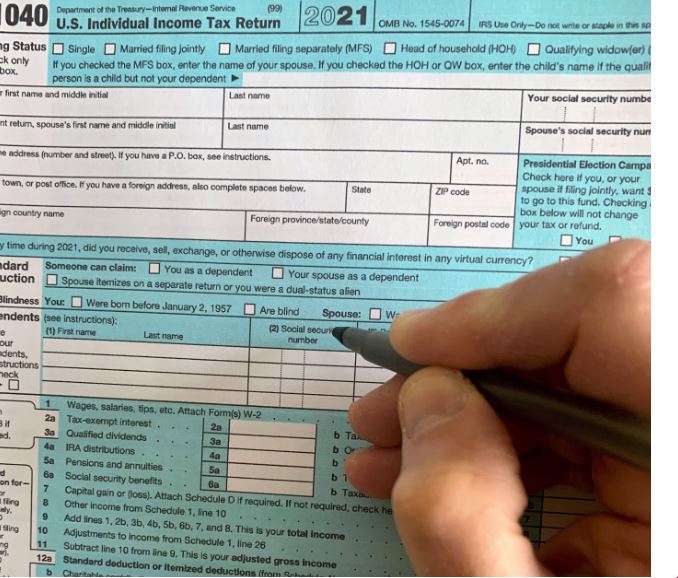
- Fill Out the Tax Form (Data Entry): Fill out the chosen tax form completely. Enter your data, financial information, and deductions. To avoid mistakes or processing delays, be careful to input the proper numbers precisely.
- Calculate Your Tax Liability (Tax Calculation): Use the tax tables, tax brackets, or tax calculation methods provided in the tax form's instructions to compute your tax liability based on your taxable income. Ensure that you use the correct tax rates and credits.
- Claim Deductions and Credits (Benefit Utilization): If eligible, claim deductions and tax credits to reduce your overall tax liability. Common deductions include standard or itemized deductions, while credits may consist of the Child Tax Credit or the Earned Income Tax Credit (EITC).
- Review and Verify (Quality Control): Review your finished tax return in detail. Check for any arithmetic mistakes or missing data. Where required, make sure to sign and date the return.
- Choose a Filing Method (Submission): Select whether you want to file your tax return on paper or electronically. Due to its accuracy and efficiency, electronic filing is strongly encouraged by several tax offices. Electronic filing frequently offers a quicker processing period for refunds.
- Pay Any Taxes Owed (Payment): To avoid penalties and interest fees, pay any taxes you owe by the due date for submitting your taxes. There are several ways to make a payment, including electronic funds transfer, credit/debit card, and postal cheque.
- Retain Records (Documentation Preservation): Keep copies of your filed tax return, supporting documents, and records for at least several years. These documents are essential for reference and in case of audits or inquiries from tax authorities.
- Monitor Your Refund (if applicable) (Follow-Up): If you anticipate a tax refund, you can track its status through the tax agency's website or customer service.
- Address Any Issues (Resolution): Promptly respond to any correspondence from the tax agency regarding your return. Address any issues or requests for additional information as needed.
G
Author
0