Advertisement

Advertisement banner

Advertisement

Advertisement banner

Advertisement

Advertisement banner
G
Apr 22, 2026science-and-technology

What is IT Infrastructure Management Services?

5 Answers
React

G
@2480Nov 26, 2024

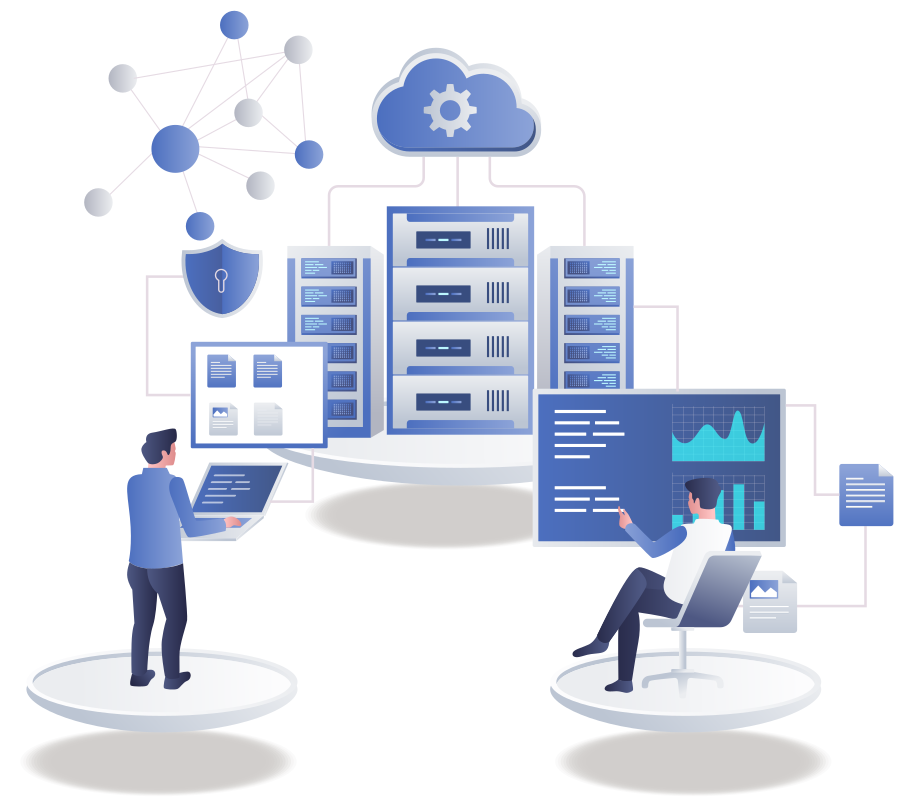
IT infrastructure management is the process of providing, overseeing, maintaining, and optimizing IT services in your environment. It involves managing hardware, software, networks, data storage, and other facilities required to deliver IT services effectively.


Letsdiskuss


0
1
F
@frankgolgi1673Nov 30, 2024

Hello

IT Infrastructure Management Services encompass the oversight and maintenance of critical IT systems that support daily business functions. This includes handling servers, storage, networks, software applications, and cybersecurity measures. These services ensure that the infrastructure is scalable, efficient, and secure, minimizing disruptions and enhancing performance. Typically delivered through managed service providers, they enable businesses to focus on growth while ensuring operational continuity.


0
1
avatar
@nomadstech5771Jan 6, 2025

IT Infrastructure Management Services from an IT Consulting Company would include managing, maintaining, and improving the IT systems of an organization. This would encompass hardware, software, networks, and cloud resources. These services help ensure that the IT infrastructure works well, is safe, and supports business goals. The company undertakes tasks such as network management, server and storage optimization, cybersecurity, cloud services, and data backup. This will help businesses focus more on their activities while ensuring their setup of IT remains reliable, scalable, and compliant.


0
React
D
@dorothybenson4772Dec 16, 2025

IT Infrastructure Management Services refer to the day-to-day planning, monitoring, and support of an organization’s core IT environment. This includes managing servers, networks, databases, storage systems, cloud platforms, and end-user devices to ensure everything runs smoothly, securely, and without disruption.

At its core, infrastructure management is about reliability and performance. Teams focus on keeping systems available, resolving incidents quickly, applying updates, managing capacity, and preventing issues before they impact business operations. It also covers areas like backup and recovery, cybersecurity controls, compliance, and vendor coordination.

With the growing mix of on-premise systems and cloud services, IT infrastructure management has become more strategic than ever. Businesses now expect IT teams not just to “keep the lights on,” but to support scalability, enable digital transformation, and align technology decisions with business goals.

Frameworks like ITIL play an important role here by providing structured best practices for managing IT services effectively. Concepts such as incident management, change management, and service continuity are directly applied in infrastructure operations. Many professionals build a strong foundation in these practices through the ITIL 4 Foundation certification, such as the one offered by NovelVista, which helps individuals understand how modern IT infrastructure supports value creation across the organization.

In simple terms, IT Infrastructure Management Services ensure that the technology backbone of a business is stable, secure, and ready to support both current needs and future growth.

0
React
E
@emmafoster6806Apr 22, 2026

IT Infrastructure Management Services (often called ITIMS) is basically how a business manages and maintains its entire IT setup so everything runs smoothly without constant issues.

Think of it as the backbone of your company’s technology. It includes everything from servers, networks, and cloud systems to end-user devices, security, and data storage.

In simple terms, instead of reacting when something breaks, IT infrastructure management focuses on keeping systems stable, secure, and optimized all the time.

Here’s what it usually covers:

  • Network Management – keeping your internet, routers, and internal connectivity stable
  • Server & Data Center Management – ensuring servers run efficiently with minimal downtime
  • Cloud Management – handling platforms like AWS, Azure, or hybrid environments
  • Security Management – protecting systems from cyber threats, malware, and breaches
  • End-User Support – managing laptops, desktops, and employee IT issues
  • Monitoring & Maintenance – tracking system performance and fixing issues before they escalate

Why businesses invest in it:

  • Reduces downtime and unexpected failures
  • Improves system performance and speed
  • Strengthens cybersecurity
  • Helps teams focus on core business instead of IT problems
  • Supports scalability as the business grows

For most companies today, especially SMEs and growing enterprises, managing IT internally can become complex and expensive. That’s why many outsource IT infrastructure management to experts who handle everything proactively.

 
0
React