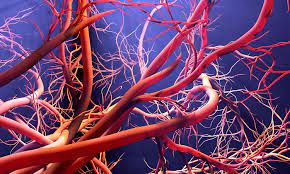
There are three main types of blood vessels: arteries, veins, and capillaries. Together, they form the body's circulatory system, transporting blood, oxygen, nutrients, hormones, and waste products to and from tissues and organs.
Blood vessels play a vital role in maintaining life because they ensure that every cell in the body receives the oxygen and nutrients it needs to function properly. Each type of blood vessel has a unique structure and function designed to support efficient blood circulation.
Arteries are blood vessels that carry blood away from the heart to different parts of the body. Most arteries transport oxygen-rich blood, although there are exceptions, such as the pulmonary arteries, which carry oxygen-poor blood from the heart to the lungs. Arteries have thick, muscular, and elastic walls that help them withstand the high pressure generated by the heart's pumping action. The largest artery in the body is the aorta, which distributes oxygenated blood from the heart to the rest of the body.
Veins are responsible for carrying blood back to the heart. In most cases, veins transport oxygen-poor blood after tissues have used the oxygen supplied by arteries. However, the pulmonary veins are an exception because they carry oxygen-rich blood from the lungs to the heart. Veins have thinner walls than arteries and contain one-way valves that prevent blood from flowing backward, especially in the legs where blood must travel upward against gravity.
The third type of blood vessel is the capillary, which is the smallest and most numerous type of blood vessel in the human body. Capillaries connect arteries and veins through tiny networks found in tissues and organs. Their walls are only one cell thick, allowing oxygen, carbon dioxide, nutrients, hormones, and waste products to pass easily between the blood and surrounding cells. This exchange process is essential for maintaining healthy body functions and supporting cellular metabolism.
These three blood vessel types work together in a continuous circulation process. Blood leaves the heart through arteries, reaches tissues through capillaries where essential exchanges occur, and then returns to the heart through veins. This system enables the body to regulate temperature, fight infections, remove metabolic waste, and maintain overall health.
A common misconception is that all arteries carry oxygen-rich blood and all veins carry oxygen-poor blood. While this is generally true, the pulmonary arteries and pulmonary veins demonstrate important exceptions. Understanding these differences helps explain how the circulatory system adapts to support both the lungs and the rest of the body.
Also read : How can you lower your blood sugar levels?
 Answered by