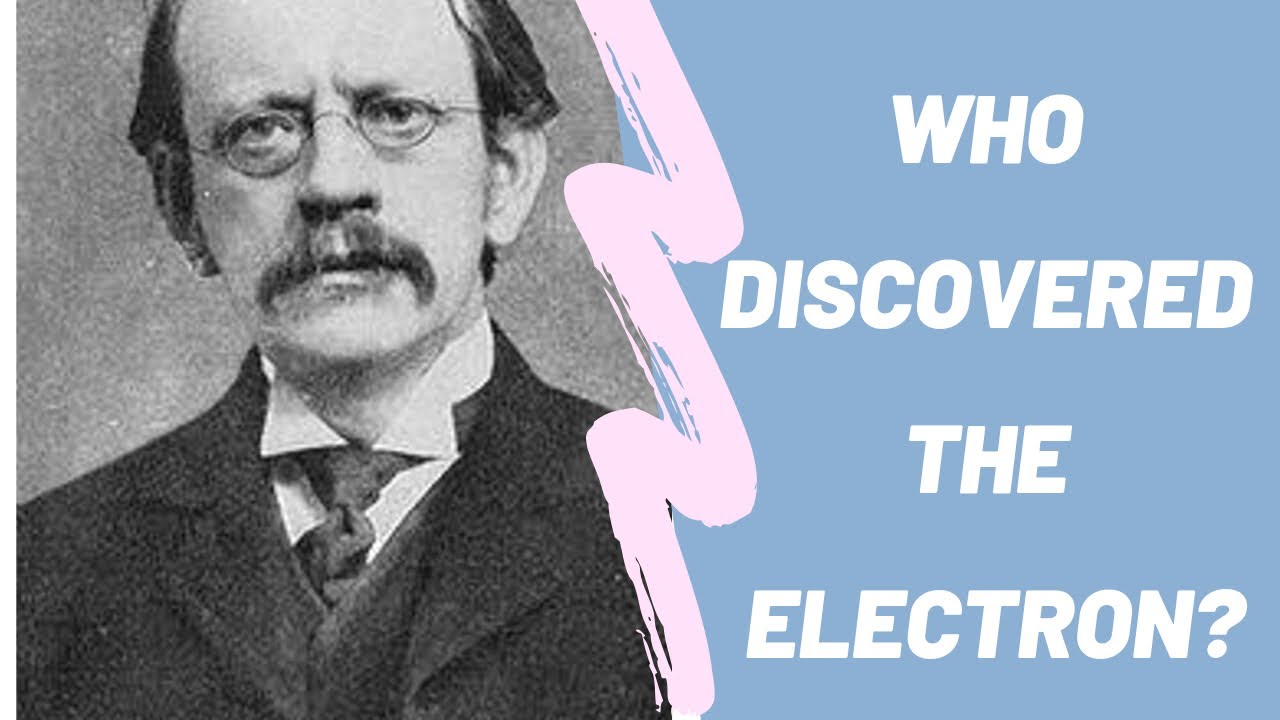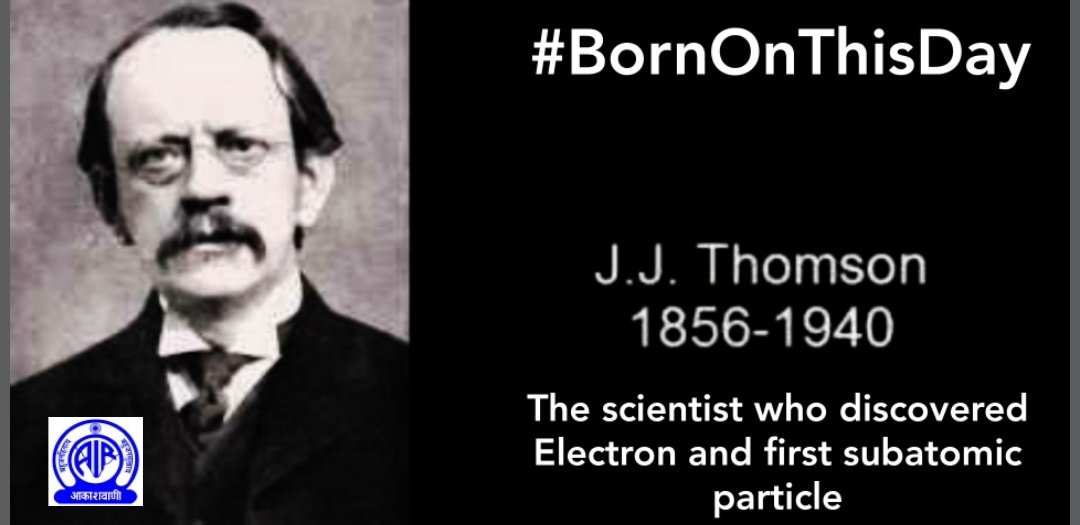
The electron was discovered by J. J. Thomson (Joseph John Thomson) in 1897 through his experiments with cathode rays. His work proved that atoms are not indivisible and contain smaller negatively charged particles called electrons.
J. J. Thomson, a British physicist at the Cavendish Laboratory (University of Cambridge), conducted experiments using a cathode ray tube. When he passed electricity through a vacuum tube, he observed a beam (cathode rays) that was deflected by electric and magnetic fields. This deflection showed that the rays were made of tiny negatively charged particles.
From these observations, Thomson concluded that these particles were much smaller than atoms and existed inside them. He initially called them “corpuscles,” but later they were renamed electrons, a term already suggested by Irish scientist George Johnstone Stoney.
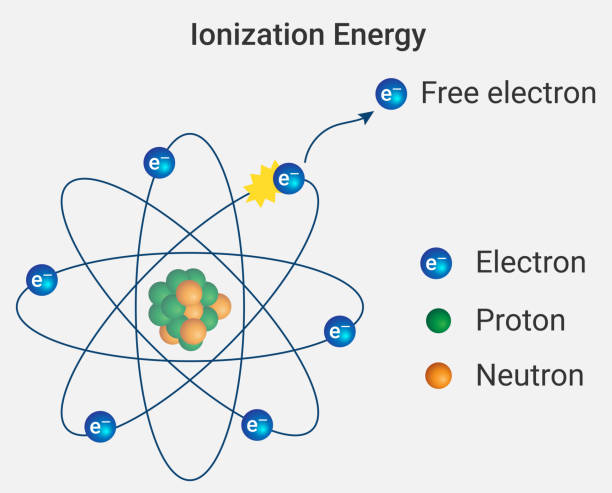
This discovery was extremely important in the history of physics because it was the first evidence that atoms have internal structure. Before Thomson’s work, atoms were believed to be the smallest and indivisible units of matter.
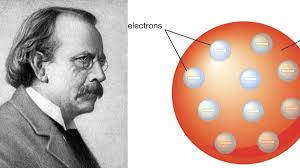
Thomson’s discovery also led to the development of the “plum pudding model” of the atom, where electrons were imagined as embedded within a positively charged sphere.
In conclusion, the electron was discovered by J. J. Thomson in 1897, marking a major breakthrough in atomic physics and changing our understanding of matter forever.