H
harsh kumar· 4 years ago
Author

Who is the National Animal?

3
804

Join this conversation

Sort By
Replying to the question above
Answered on11/10/26

The national animal of India is the tiger. Although there are plenty of people who will just know this from school, it is more interesting to actually think about why the tiger became the national animal.

in 1972 the Indian Board for Wildlife changed the animal to the tiger. This was due to the lion only living in a small area of the country (Gir forest, Gujarat) whilst tigers have historically roamed across huge areas of the country. From east to west, across the Sundarbans to the forested areas of the central highlands, Western Ghats and foothills of the Himalayas! The national animal should be something that is native to the whole country, not just one small area, and the tiger fits this much better.
Article image

Also, by the early 1970s the tiger population within India had drastically declined. This was due to decades of hunting by royals and sportsmen during the colonial period, and deforestation. At this time estimates showed that there were only around 1800 tigers left in the wild. This decision to make the tiger the national animal helped raise them to the forefront of people's minds. In April 1973, Project Tiger was launched by the government. This started with a few tiger reserves, the first being Jim Corbett National Park in Uttarakhand. The goal of Project Tiger was to protect the tigers and their habitat by creating large protected areas. These areas are heavily patrolled to protect the tigers and allow them to breed. Project Tiger came after the Wildlife Protection Act in 1972.

This has been successful. There was a decline in numbers in the early 2000s due to poaching and illegal trade of tiger parts. This caused some reserves such as Sariska in Rajasthan to lose all their tigers. This led to stricter policies being put in place. The National Tiger Conservation Authority was formed in 2006, more patrols, relocation and more scientific counting methods. This has helped increase tiger numbers. Since then, the all-India tiger estimates have shown constant growth. In 2022 there were around 3600+ tigers in the wild. This is 3/4 of all wild tigers in the world. The exact numbers may vary depending on the counting method, however if you need an exact figure it would be best to look up the latest report from the National Tiger Conservation Authority or Wildlife Institute of India.

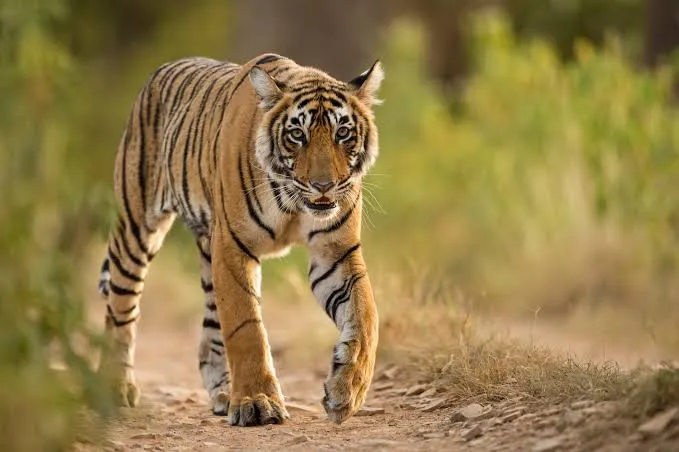
The Bengal tiger is one of the most recognisable big cat species. It has a beautiful golden orange fur with black stripes. White underbelly and facial features. Each tiger has a unique stripe pattern, helping researchers to identify individuals using pictures from camera traps. Males are quite large reaching 180-250kg and up to 3m long from nose to tip of tail. Females are smaller. Tigers are solitary hunters. They normally hunt at dusk and at night. They stalk their prey, which includes deer, wild boar and other large animals. Despite their size, they have an amazing stealth. Tigers are also great swimmers unlike many cats. They often take a swim to cool down. This is evident in the Sundarbans where mangrove swamp is home to tigers.

Tigers have lots of symbolism. They represent power, bravery, elegance and strength. They are found in many stories, temple carvings and are the mount of the goddess Durga. As a top predator they also indicate that the forest is healthy. If the area can provide tigers then it has lots of prey, clean water and a healthy habitat. Protecting tigers helps to protect a whole range of other species. Conservationists often refer to the tiger as an umbrella species.

However, they are still not safe. Tigers are an endangered species. They are still facing threats such as poaching, habitat loss and fragmentation and conflict with locals. Some tiger reserves have seen an increase in tiger numbers meaning they often stray into local villages. This can lead to attacks on livestock and occasionally humans. This will cause retaliation. Finding a balance between tigers and the local community is one of the biggest ongoing challenges. Therefore compensation schemes, community involvement and wildlife corridors linking reserves are vital. International Tiger Day (29th July) was created partly to highlight these issues.

The answer is simply the tiger. However, there is a lot more to this answer. It is a sad story, but the tiger was intentionally chosen over the lion. It was the start of an iconic conservation project and is a species that India has successfully brought back from a very low point.

Abhisek Ghosh
View Profile

Blogger and shayar

0
Replying to the question above
Updated on11/10/26

The Bengal Tiger is India's national animal. The government made it official in 1973, the same year India launched Project Tiger to protect the species. Before that, the lion actually held this title for a short stretch, but wildlife experts pushed for a change once they realized tigers had a much wider presence across the country.

Why the Tiger and Not the Lion?

Here's something most people don't know. Between 1972 and 1973, the lion was briefly India's national animal.

Wildlife experts raised a concern, though. Asiatic lions existed in just one small pocket of India, Gir Forest in Gujarat, while tigers roamed across a much larger stretch of the country, from the Sundarbans in the east to the forests of Madhya Pradesh in central India. A national symbol tied to one tiny region didn't represent the country's wildlife identity well, so the switch happened.

What Makes the Bengal Tiger Special

The Bengal Tiger (scientific name: Panthera tigris tigris) is one of six surviving tiger subspecies in the world, and India holds the largest wild tiger population of any country on earth.

A few facts that show why this animal earned the title:

  • Strength and symbolism: The tiger represents power, grace, and agility in Indian culture, qualities that date back to ancient folklore and mythology.

  • Apex predator role: Tigers sit at the top of the food chain, and their presence keeps deer, wild boar, and other herbivore populations in balance, which protects entire forest ecosystems.

  • Striped coat: No two tigers share the exact same stripe pattern, similar to a human fingerprint.

  • Weight and size: A male Bengal Tiger can weigh between 180 to 260 kg and measure up to 3 meters from nose to tail tip.

How Many Tigers Does India Have Today?

This is where the story gets genuinely encouraging. According to India's 2022 All India Tiger Estimation report, the country's tiger population stood at 3,682, making up roughly 75% of the world's wild tiger population.

Year

Estimated Tiger Population in India

2006

1,411

2010

1,706

2014

2,226

2018

2,967

2022

3,682

That's nearly a 2.5x jump since 2006, and conservationists credit Project Tiger, stricter anti-poaching laws, and expanded reserve networks for the turnaround.

Where Can You Actually See Wild Tigers in India?

If this question sparked some curiosity about spotting one yourself, here are reserves known for strong sightings:

  1. Jim Corbett National Park, Uttarakhand – India's oldest national park, named after legendary hunter-turned-conservationist Jim Corbett.

  2. Ranthambore National Park, Rajasthan – famous for tigers that are relatively comfortable around safari vehicles, which means better daytime sightings.

  3. Bandhavgarh National Park, Madhya Pradesh – has one of the highest tiger densities in India.

  4. Sundarbans National Park, West Bengal – home to the unique swimming tigers of the mangrove delta.

National Animal vs National Bird vs National Heritage Animal

People often mix these up, so here's a quick comparison to clear the confusion:

Category

Animal

Year Declared

National Animal

Bengal Tiger

1973

National Bird

Indian Peacock

1963

National Heritage Animal

Indian Elephant

2010

National Aquatic Animal

Ganges River Dolphin

2009

The elephant holds a separate title, the National Heritage Animal, given in 2010 to highlight its cultural and ecological importance, a status distinct from the national animal.

Avinash Kumar
View Profile

Hi, I’m Avinash Kumar. I’m someone who enjoys learning new things, exploring ideas, and sharing useful information with others. I like keeping things simple, practical, and helpful. Always curious to learn, improve, and grow, I believe even small steps can make a big difference.

0
Replying to the question above
Answered on07/28/26

The national animal of India is the Bengal Tiger.
It represents strength, courage, and India's rich wildlife heritage.

K
Modern Parenting Voice
View Profile
1
Replying to the question above
Answered on10/25/23

The magnificent Royal Bengal Tiger is national animal of India.Its scientific name is Panthera tigris .The Bengal Tiger is a striped animal with a thick yellow coat of fur.India choose Royal Bengal Tiger as national animal of India because the Royal Bengal tiger is the symbol of strength and grace.

National animals of other countries are:

  • National animals of Afghanistan is Marco Polo Sheep.
  • National animals of Argentina is Puma.
  • National animals of Australia is Kangaroo.
  • National animals of England is Lion, Bulldog.
  • National animals of Japan is Pheasant, Koi.
  • National animals of Pakistan is Markhor.
  • National animals of Poland is White Eagle.
  • National animals of Bangladesh is Royal Bengal Tiger.
  • National animals of Belgium is Lion.
  • National animals of Bolivia is Llama.
  • National animals of Bulgaria is Lion.
  • National animals of Brazil is Jaguar.
  • National animals of Bhutan is Takin.
  • National animals of Cuba is Cuban Crocodile.
  • National animals of China is Chinese Dragon.
  • National animals of Egypt is Saladin's Eagle.
  • National animals of Colombia is Andean Condor.
  • National animals of Chile is Huemul.

National Animals of Countries | Flags and Countries name With National  Animal - YouTube

Neha goyal
View Profile
0
Answered on09/18/25

A good forum-friendly reply for Fragrance Artisans could be:

Musk is a natural substance originally obtained from the male musk deer, which produces it in a gland to attract mates. Because of ethical and conservation concerns, real musk from animals is no longer commonly used in perfumery. Instead, most modern perfumes use synthetic or plant-based musk alternatives that replicate the warm, sensual scent while being cruelty-free and sustainable.

Would you like me to make this reply more short and conversational (forum-style), or more detailed and educational to showcase Fragrance Artisans’ expertise?


Sophie Taylor
View Profile
0
0
Replying to the question above
Answered on10/08/23

The national animal of India is the majestic tiger, Panthera tigris. It is a symbol of strength, grace, and power. The tiger is also revered in Indian culture and mythology, and is often depicted as a guardian deity.

Tigers are the largest cats in the world, and can weigh up to 660 pounds. They have a thick orange coat with black stripes, and a powerful build. Tigers are apex predators, and play an important role in maintaining the balance of the ecosystem.

India is home to the largest population of tigers in the world, with over 4,000 tigers living in the wild. However, tigers are endangered due to habitat loss, poaching, and human-tiger conflict.

The Indian government has taken a number of steps to protect tigers, including establishing tiger reserves and cracking down on poaching.

Article image

V
View Profile
0