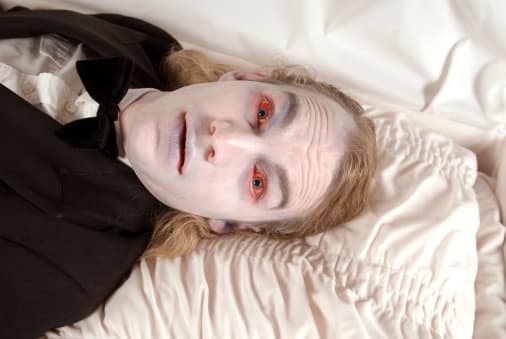
People often die with their eyes open because the muscles responsible for closing the eyelids relax after death. To be honest, the eyes don't automatically close when someone dies. If the eyelids aren't fully closed before or shortly after death, they may remain partially or completely open.
I think this surprises many people because movies often show people peacefully closing their eyes at the moment of death, but that's not always what happens in real life.
Normally, blinking and closing your eyes are controlled by muscles and nerves, especially the orbicularis oculi muscle, which closes the eyelids.
When a person dies:
-
Brain activity permanently stops.
-
The muscles gradually lose their tone and relax.
-
The eyelids are no longer actively held shut.
-
Depending on the position of the eyelids at the time of death, the eyes may remain open, partially open, or closed.
In some cases, medical professionals or family members gently close the person's eyes soon after death. If this isn't done before the muscles become stiff due to rigor mortis, the eyelids may be more difficult to close later.
Is It Normal?
Yes, it is completely normal for someone to die with their eyes open, partially open, or fully closed.
Several factors can influence this, including:
-
The person's muscle relaxation at the time of death.
-
The cause of death.
-
Whether the eyes were closed shortly after death.
-
Natural changes that occur in the body after death.
I have noticed that many people believe open eyes indicate pain, fear, or an unnatural death, but medically, that's usually not the case.
Common Misconceptions
There are several myths surrounding this topic.
Some people believe that dying with your eyes open means:
-
The person was frightened.
-
They were in severe pain.
-
Their soul couldn't rest.
-
It has spiritual or supernatural significance.
However, there is no scientific evidence supporting these beliefs. In most cases, open eyes after death are simply the result of normal muscle relaxation and natural postmortem changes.
Healthcare professionals, hospice staff, and funeral directors see this quite often.
If a person's eyes remain open after death, they are usually closed gently during postmortem care whenever possible. This is a routine part of caring for someone after they have passed away and is done for dignity and appearance rather than for any medical necessity.
The exact appearance of the eyes after death can vary from person to person, and none of these variations necessarily indicate how peaceful or painful the person's final moments were.
While it can be emotionally difficult for loved ones to see, it is a common and medically understood part of the body's natural changes after death.
Must Read: In which country did the maximum number of people die due to covid?