Introduction
The moving coil galvanometer is a very sensitive device which is used in the detection and measurement of small electric currents. It is important in electrical measurement as it is precise and reliable especially in laboratory experiments and scientific research. The gadget will work under the basic electromagnetic principles, hence allowing translation of the electrical energy into mechanical motion, which can then be measured through a calibrated scale.
In this article, we will talk about how the moving coil galvanometer works, how it is made, how it is derived, and how it can be used, with pictures to help (Figure). Our goal is to give everyone, students and professionals alike, a full understanding.
Basic Principle of Operation
The Electromagnetic Interaction
The motion of coils of current through a magnetic field and the reverse process is what makes up the working of the moving-coil galvanometer. Under the law of force of electromagnetism, an electric current flowing through a coil placed in a magnetic field is acted upon by a force, and this may be in the form of a torque.
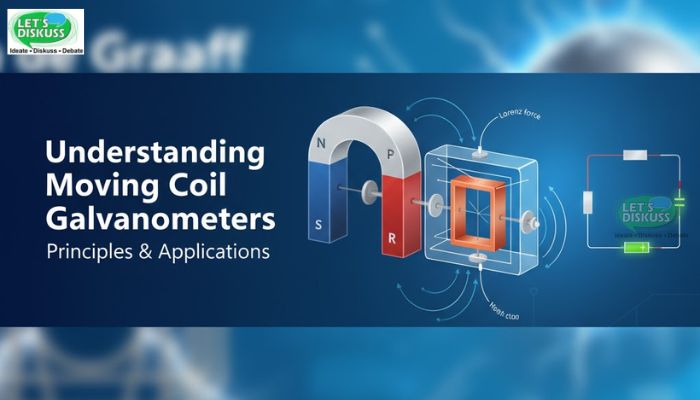
Fig. 1 (conceptual): A graphical representation of a coil that is covered by a magnetic field and it has current flowing through it.
When electric current is passed through the coil it produces a torque which is proportional to the size of the current, then the coil starts to move or rotate.

Construction of a Moving Coil Galvanometer
Major Components
A moving coil galvanometer is usually built with:
- The Coil: It's usually rectangular or round and is made of fine copper wire wound around a former.
- Magnetic Field Source: Permanent magnets or electromagnets that make a uniform magnetic field are the sources of magnetic fields.
- Suspension System: A thin torsion wire or phosphor-bronze strip holds the coil up and gives it a restoring torque.
- Pointer/Needle: A part of the coil that shows how much it is bending on a scale.
- Calibration and Scale: To read the size of the current, use the angle of deflection.
Fig. 2: Construction of a Moving Coil Galvanometer
This figure illustrates the main parts: the coil (C), magnetic poles (N and S), suspension wire (T), pointer (P), and scale.

Working Principle
Magnetic Torque and Coil Deflection
An electric current I flows through the coil and interacts with the magnetic field B to create a torque τ. This torque makes the coil spin until the restoring torque τr from the suspension wire balances out the magnetic torque.
Fig. 3: Diagram showing the coil deflected at an angle θ due to the magnetic torque.
The angle of deflection, θ, is directly related to the current, I, which makes it possible to measure.

Derivation of the Torque
The magnetic torque τ on the coil is given by:
τ=nBAI cosϕ
Where:
- n = number of turns of the coil,
- B = magnetic flux density,
- A = area of the coil,
- I = current flowing through the coil,
- ϕ = angle between the magnetic field and the normal to the plane of the coil.
Assuming the coil is wound so that the plane of the coil is perpendicular to the magnetic field (i.e., ϕ=0), the torque simplifies to:
τ=nBAI
This torque causes the coil to rotate by an angle θ\thetaθ.
Restoring Torque
The suspension wire or torsion wire exerts a restoring torque proportional to θ:
τr=−kθ
Where k is the torsion constant of the wire.
At equilibrium:
nBAI=kθ
Thus, the deflection θ is proportional to the current:
θ=nBA/k x I
Calibration: The proportionality constant nBA/k is obtained by calibration, enabling direct measurement of current.
Derivations and Quantitative Analysis
Derivation of the Deflection-Current Relationship
Starting from the equilibrium condition:
nBAI=kθ
Rearranged as:
I=k/nBA × θ
*This linear relationship is the basis for the galvanometer's measurement capability. The sensitivity S of the galvanometer is defined as:
S=Deflection per unit current/= × θ/I=nBA/k
A higher sensitivity implies a larger deflection for a given current.*
Example Calculation
Suppose:
- n=100,
- B=0.1 T,
- A=2×10⁻⁴ m2,
- k=10−6 Nm/rad.
Then,
S=100×0.1×2×10−4/10−6=2×10−3/10−6=2000 rad/A
This means a current of 1 A causes a deflection of 2000 radians (which is large; in practice, the galvanometer is designed for small currents).
Calibration and Measurement
Calibration Process
To calibrate a galvanometer, you send known currents through it and watch how it moves. The calibration factor, also called the sensitivity, is found by turning deflections into current readings.
Using the Galvanometer as a Volt or Ammeter
- As a Voltmeter: A high resistance is connected in series with the galvanometer. This lets it measure voltage across parts.
- As an Ammeter: A low-resistance shunt is connected across the galvanometer, which lets it measure bigger currents.
Applications and Practical Considerations
Applications
- Measuring small currents in laboratories.
- Detecting the presence of currents in circuits.
- In electromagnetic experiments like Faraday's law.
- In the construction of voltmeters and ammeters.
Advantages
- High sensitivity.
- Accurate and stable readings.
- Capable of detecting very small currents.
Limitations
- Limited current range.
- External magnetic fields can influence readings.
- Requires calibration for precise measurements.
Advanced Topics: Extension and Modifications
Moving Coil Galvanometers as Voltmeters and Ammeters
By adding high resistance in series or shunt resistors, the galvanometer's range is extended, making it versatile for different measurements.
Damping Mechanisms
To prevent oscillations, damping is used:
- Eddy Current Damping: Conductive damping coils are placed in the magnetic field.
- Air Damping: Air friction around the coil.
Conclusion
The moving coil galvanometer shows how electromagnetic principles can be used in real life to make accurate measurements. It works because of the basic torque that current-carrying conductors make in magnetic fields, which is balanced by a restoring torque. This lets it measure very small currents with great accuracy.
Students and professionals in the fields of electricity and electronics need to know how to build, use, and calibrate it. Even though digital instruments are now available, the moving coil galvanometer is still a beautiful and useful tool that clearly shows basic electromagnetic ideas.