
Introduction
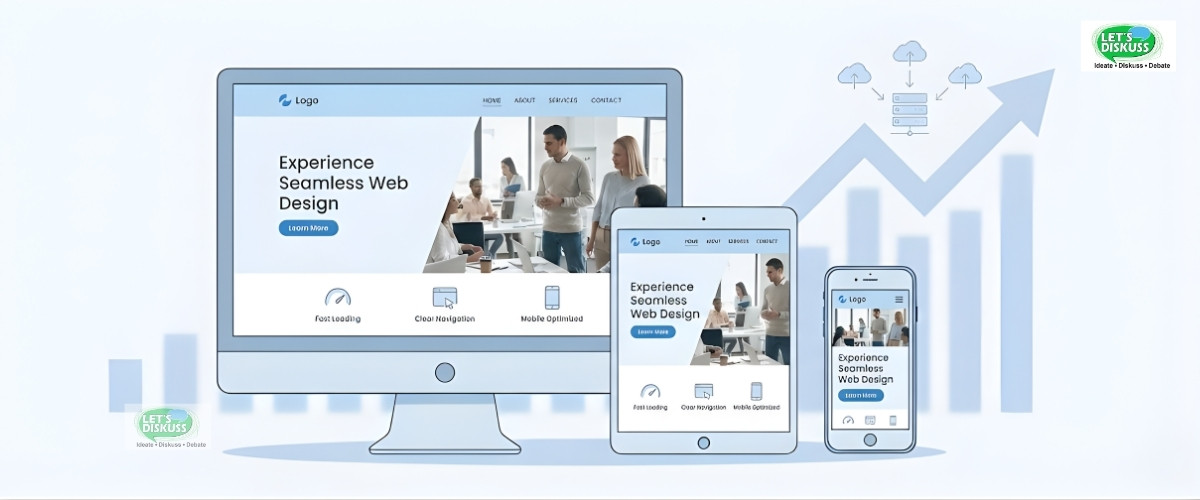
Simply having a website in today's modern business world is not enough. In the digital driven world, there are millions of websites online who are competing for your attention and engagement. That is why it is very important to have a user friendly web design to drive maximum traffic on your website and keep the users engaged.
A user-friendly website is not only well designed to look attractive, but should also have useful information, interaction tabs, and ease of using webpages. A user-friendly website directly influences how your brand is perceived by the users. To rank your website higher in the search engine, a positive user experience is a must. This positive experience can be curated if you have a user friendly website. All in all, we can say that a user-friendly website is essential for your brand growth strategy. We will explore all aspects of a user-friendly website in this blog.
Understanding User-Friendly Web Design
The following are the characteristics of a user friendly web design:
Easy to navigate
Visually balanced meaning that an appropriate ratio of visuals and words
Easy to use and is accessible
Intuitive for users with even minimum internet skills
Appropriate action buttons at the right place
Easy to scroll, click, search and read
Effortless comprehension
When it comes to usability, there are principles like simplicity, clarity, and consistency that play a helpful role. A user-friendly web design helps reduce confusion in the minds of users by avoiding clutter and ensuring that the user gets to the point that he is searching, in minimum possible time.
The Relationship Between Web Design and Traffic
There is a strong relationship between your web design and the traffic you are attracting. These two elements are closely connected. Here is how:
If your web design is good, it creates a positive first impression and the user spend some time surfing your website.
A poor web design leads to a high bounce rate since there are a number of other options served by search engines. Users quickly bounce to other websites.
If your web design is good, and you have clean, engaging layouts, it leads to curiosity in the minds of users, which encourages exploring. This also means higher engagement.
A clean web design also guides the attention of the user by highlighting important features and information. This reduces cognitive load.
Engagement metrics are better when you have a good web design.
Even search engines naturally improve your ranking if you have a good website design. This will improve the organic traffic, giving you an edge over your competitors.
Navigation and Site Structure
Navigation and structure of the website is the backbone of a good Web design. Users should be able to navigate easily while looking for information for which they have come to your webpage. They shouldn't be guessing or searching endlessly. Having clear layouts of menus, sidebars, quick links, and page hierarchy helps users navigate the website easily.
Having a clear site structure also helps in:
Internal linking of different webpages
Continuous receiving of information by the user through accessing related information. This means that the user is not fed breadcrumbs but complete information.
Well organised categories that saves the time and efforts of the user
Better accessibility which makes the user explore deeper
Mobile-Friendly and Responsive Design
Now that mobile users account for the majority of Web traffic, a mobile friendly website design is not an option but a mandate. Responsive design ensures that the user is able to access your website as soon as possible without losing patience. It ensures a seamless experience on any device, be it a smartphone, tablet or desktop.
Following are the features of a mobile friendly and responsive design:
Focus towards touch friendly buttons
Text which is readable on a mobile
Faster loading time
Minimal scrolling
Search engines also give higher ranking to mobile friendly websites which are responsive and clean. Therefore, having a mobile friendly design gives you increasing visibility and better traffic.
Page Speed and Performance
The speed at which your webpage loads plays an important role in garnishing overall user experience and attracting maximum traffic. Slow loading websites frustrates the users which leads to higher bounce rates. Even if the content on your website is good and has a visually attractive layout, if the speed of your page is not good, and it lacks overall performance, the user will lose his patience and move to other webpages available.
Speed of the page is so important that even a delay of a few seconds can cause users to leave. This will eventually hamper your engagement rates. For a better performing webpage, make sure that your website has:
Images that are optimised
Visuals do not have unnecessary coding
Enabled caching
A reliable hosting solutions
There are many tools that are available to test speed of the pages and improve performance. To drive more organic traffic, make sure to work on your page speed and performance.
Readability and Content Presentation
Content on your website affects how the user perceives your brand. It is not only the quality of the information but also typography choice, fonts, line spacing and contrast of your pages that impacts the reading experience of the user. If your text is not formatted properly, it can discourage the user and they will skip reading the information even if it is highly valuable.
Through the following ways, you can improve readability and content presentation on your website:
Use white spaces as the background where there is content heavy information because it provides a visual balance
Do not put too much clutter where there is user important information. Keep the design simple so that the focus is on the content.
Content should be properly formatted in headings, sub-headings, bullet points and short paragraphs.
Font and line spacing should ensure that the user can grasp key information easily without any strain on the eyes
Content should be presented in a hierarchy that guides the user
Avoid pop-ups and other such design elements that can distract the user from reading
Accessibility and Inclusive Design
Accessible Web design is an important element for a user-friendly website because it ensures that people from across the age groups and demography can access your website easily. In a country like India where there is still digital illiteracy, users should have less cognitive load while exploring a website.
Accessibility of a website can be improved with features like:
Alt Text
Fonts that are readable
Proper colour contrast
Keyboard navigation
Better structured
Easy to crawl
By making your website accessible, you create a traffic friendly website.
Trust, Credibility, and Design Elements
Trust is another factor which is important to create a website that drives traffic and has higher engagement rates. Having professional layouts and colour schemes of your brand colour with consistent branding provides you with credibility. Using images of high-quality, clean layouts, also creates credibility and trust in the minds of users.
Other than this, the following are the features in your website that makes it credible:
Security certificates like SSL
Privacy notices
Trust badges
Having user reviews and testimonials on your website
Branding like logo and other corporate visuals at every webpage
SEO Benefits of User-Friendly Design
A user-friendly website also helps your SEO efforts. This is because of the following reasons:
Search engines naturally promote websites which are user-friendly. Therefore, driving organic traffic to your website.
When you have a user-friendly design, there will be lesser bounce rates as a user will spend more time exploring your webpages
There will be improvement in the SEO Metrics Like more engagement rate and ranking of your website
A user-friendly website performance better not only in search results but also reduce friction and improves usability
A user-friendly website also ensures that the content is interactive and visually balanced that therefore help search engine to index
Measuring the Impact of Web Design
Measuring how your website design is affecting your overall ranking and traffic can be done through analytics. How users interact with your webpages, which webpage has maximum traffic, where they drop off, and which element attracts maximum attention are the sitemaps that you can study.
After understanding the insights, you can make changes in your web designs to make it more user-friendly. You can also use A/B testing to compare variations in design and identify what works for your brand. Continuously refining your design, choices and website performance allow you to maintain a steady traffic on the website and improve your ranking gradually.
Conclusion
A user-friendly web design is more than just good aesthetics. It is a powerful tool to improve your ranking, drive traffic organically and create a strong image for your brand. When users are able to access your website and navigate it without any load, they are likely to engage, explore and possibly return to your website in the future.
Apart from these benefits, it also strengthens your SEO performance. In the digital landscape where there are millions of websites available as a resource for the users. Making your website a top performer will garnish user loyalty and retention.
FAQs
A user friendly web design is visually balanced, accessible, easy to navigate and focuses on better content and page performance.