Introduction
Bookkeeping is an essential part of managing any business, especially a small business. It involves recording, organizing, and maintaining financial transactions, including sales, purchases, expenses, and payments. Proper bookkeeping helps business owners understand their financial position, manage cash flow, and make informed decisions. Without accurate financial records, it can be difficult for small businesses to track profits, control expenses, and plan for future growth.
What Is Bookkeeping?
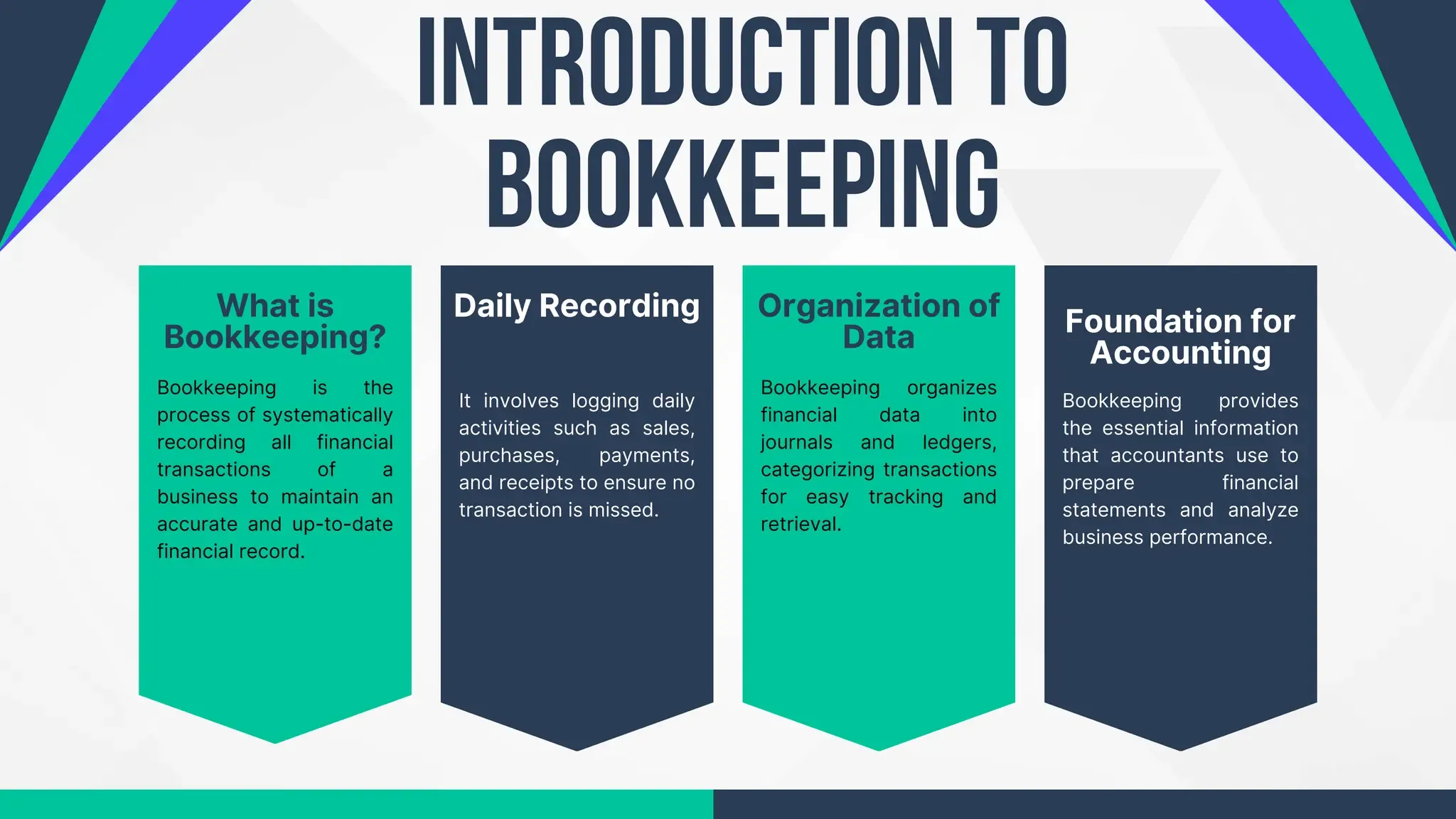
Bookkeeping is the systematic process of recording all financial transactions that take place within a business. These transactions include money received from customers, payments made to suppliers, employee salaries, rent, utility bills, and other business expenses.
Bookkeeping can be performed manually using registers and spreadsheets or digitally through accounting software. Common bookkeeping methods include single-entry bookkeeping and double-entry bookkeeping. Single-entry bookkeeping records each transaction once, while double-entry bookkeeping records transactions in at least two accounts, helping maintain accurate financial records.
Bookkeeping is closely related to accounting, but they are not exactly the same. Bookkeeping focuses mainly on recording and organizing financial information, whereas accounting involves analyzing, interpreting, and reporting that information to support business decisions.
Why Is Bookkeeping Important for Small Businesses?
1. Tracks Income and Expenses
Bookkeeping helps small business owners monitor how much money they earn and spend. By maintaining proper records, they can identify unnecessary expenses, control spending, and understand where their money goes.
2. Helps Manage Cash Flow
Cash flow is crucial for the survival of a small business. Bookkeeping allows owners to track incoming payments and outgoing expenses. This helps them ensure sufficient funds are available to pay suppliers, employees, rent, and other bills on time.
3. Simplifies Tax Preparation
Accurate financial records make tax calculations and filing easier. Bookkeeping helps business owners organize invoices, receipts, and expense records, reducing the chances of errors and helping them meet applicable tax requirements.
4. Measures Business Profitability
By recording income and expenses, bookkeeping helps owners determine whether their business is making a profit or experiencing a loss. This information allows them to evaluate performance and make necessary improvements.
5. Supports Better Decision-Making
Reliable financial information helps business owners decide whether to hire employees, purchase equipment, expand operations, or introduce new products. These decisions become easier when they understand their financial position.
6. Helps Obtain Loans and Investments
Banks and investors often require financial statements and supporting records before providing funds. Well-maintained bookkeeping records help demonstrate a business's financial performance and credibility.
7. Prevents Errors and Fraud
Regularly recording and reviewing transactions makes it easier to identify missing payments, duplicate expenses, and unusual financial activities.
Conclusion
Bookkeeping is a fundamental practice that helps small businesses maintain financial control, meet tax obligations, monitor profitability, and plan for growth. By keeping accurate and updated records, business owners can avoid financial confusion and make smarter decisions. Whether using accounting software or maintaining spreadsheets, every small business should establish a consistent bookkeeping system to support long-term success.