Advertisement

Advertisement banner

Advertisement

Advertisement banner

Advertisement

Advertisement banner
Science & TechnologyWho invented the first ever touch-screen...
G

| Updated on March 9, 2026 | science-and-technology

Who invented the first ever touch-screen phone?

5 Answers
V

@vikusingh1788 | Posted on September 29, 2023

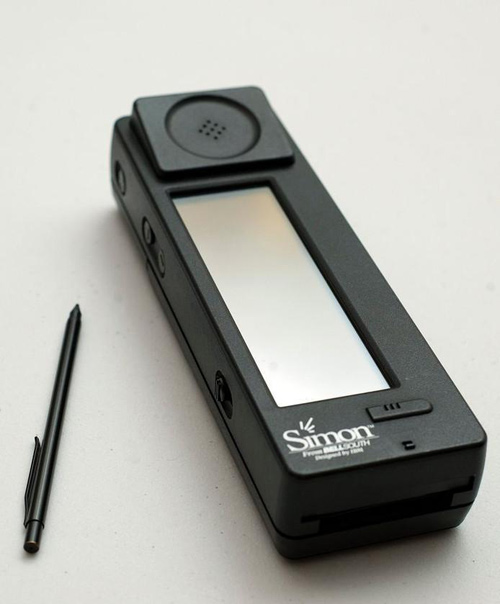
The first ever touch-screen phone was the IBM Simon Personal Communicator, which was released in 1993. It was invented by a team of engineers at IBM, led by Frank Canova. The Simon had a resistive touchscreen, which meant that users had to press down on the screen with a stylus in order to register their input.

Although the Simon was the first touchscreen phone, it was not a commercial success. It was expensive and had a number of technical problems. However, it paved the way for future touchscreen phones, such as the LG Prada, which was released in 2007, and the iPhone, which was released in 2007.

Today, touchscreen phones are the norm, and they are used by billions of people around the world. The invention of the touchscreen phone has revolutionized the way we communicate and interact with the world around us.

Letsdiskuss

Also Read- Who invented the airplane?

0 Comments
logo

@mohdsameer9331 | Posted on October 4, 2023

Without a doubt the principal touchscreen telephone was made by IBM in 1992. It was known as the IBM Simon Individual Communicator. The gadget consolidated a touchscreen show and offered different parts like email, fax, plan, and a touch-based interface. While it was a critical turn of events, it didn't get limitless inescapability by then, at that point.

Letsdiskuss

Is the IBM Simon Individual Communicator still accessible for procurement?

No, the IBM Simon Individual Communicator is presently not accessible for procurement. It was presented in 1994 as the world's first cell phone yet was suspended not long after because of restricted business achievement. The gadget highlighted a touchscreen, email capacities, and a set-up of underlying applications. Nonetheless, it was cumbersome, costly, and missing the mark on cutting edge highlights found in current cell phones.

Article image

0 Comments
logo

@nehagoyal8566 | Posted on March 9, 2026

The inaugural touchscreen phone, introduced in 1993 by the tech giant IBM, marked a pivotal moment in mobile communication. The IBM Simon Personal Communicator was the pioneering device to incorporate touchscreen functionality, heralding a more intuitive and seamless user experience in contrast to traditional keypads.

Following this milestone, Apple entered the arena with its own rendition of the personal digital assistant, the Newton Message Pad 100, which also operated via a touch screen. These advancements laid the foundation for integrating touchscreen technology into mobile devices.

The advent of the modern touchscreen revolution in the smartphone industry was catalyzed by the company founded by Steve Jobs. This transformative shift occurred in 2007 with the launch of the first iPhone, which departed from conventional buttons in favor of an innovative touch screen interface.

It is noteworthy that the initial breakthrough in this realm is attributed to the British engineer Eliot, who in the late 1960s pioneered and delineated the fundamentals of touchscreen technology. It is intriguing to note that Eliot's innovation was initially conceived for air traffic control rather than mobile phones

0 Comments
logo

@pandeychandan1725 | Posted on March 9, 2026

The first-ever touch-screen phone was the IBM Simon, also known as the IBM Simon Personal Communicator (SPC) or simply the IBM Simon. It was invented by IBM engineer Frank Canova Jr. and was released on August 16, 1994. The IBM Simon was not only a mobile phone but also had the functionality of a PDA (Personal Digital Assistant).

Frank Canova Jr. and his team at IBM created a device that featured a monochrome LCD touch screen, and it allowed users to make and receive cellular phone calls. Additionally, it had the capability to send and receive emails, and even had some basic applications like an address book and calendar.

The touch screen on the IBM Simon was resistive, meaning it responded to pressure. While it lacked the sophisticated touch technology we have today, it was groundbreaking for its time. The device was a fusion of a mobile phone and a handheld computer, setting the stage for the future development of smartphones.

The IBM Simon laid the foundation for the touchscreen technology that we now see in various devices, including the modern smartphones that have become an integral part of our daily lives. Frank Canova Jr.'s work on the IBM Simon played a crucial role in shaping the trajectory of mobile technology.

0 Comments
M

@michaeljons694 | Posted on March 9, 2026

While many people believe the iPhone was the first touchscreen phone, the technology actually dates back much further. The first-ever touchscreen phone was the IBM Simon Personal Communicator, which was co-developed by IBM and BellSouth.

Key Facts About the IBM Simon:

  • The Launch: It was first showcased as a prototype in 1992 but officially hit the market in 1994.
  • The Technology: Long before capacitive touch (used in modern smartphones), the Simon used a pressure-sensitive resistive touchscreen. It required a stylus or a very firm finger press to navigate.
  • Features: It was way ahead of its time, featuring a calendar, address book, world clock, calculator, notepad, and even the ability to send and receive faxes and emails.

The Evolution: Following IBM, other companies made significant leaps. The LG Prada (2006) was actually the first phone with a capacitive touchscreen (the kind that responds to light touch), released just months before the Apple iPhone (2007), which eventually revolutionized the interface with multi-touch gestures.

0 Comments