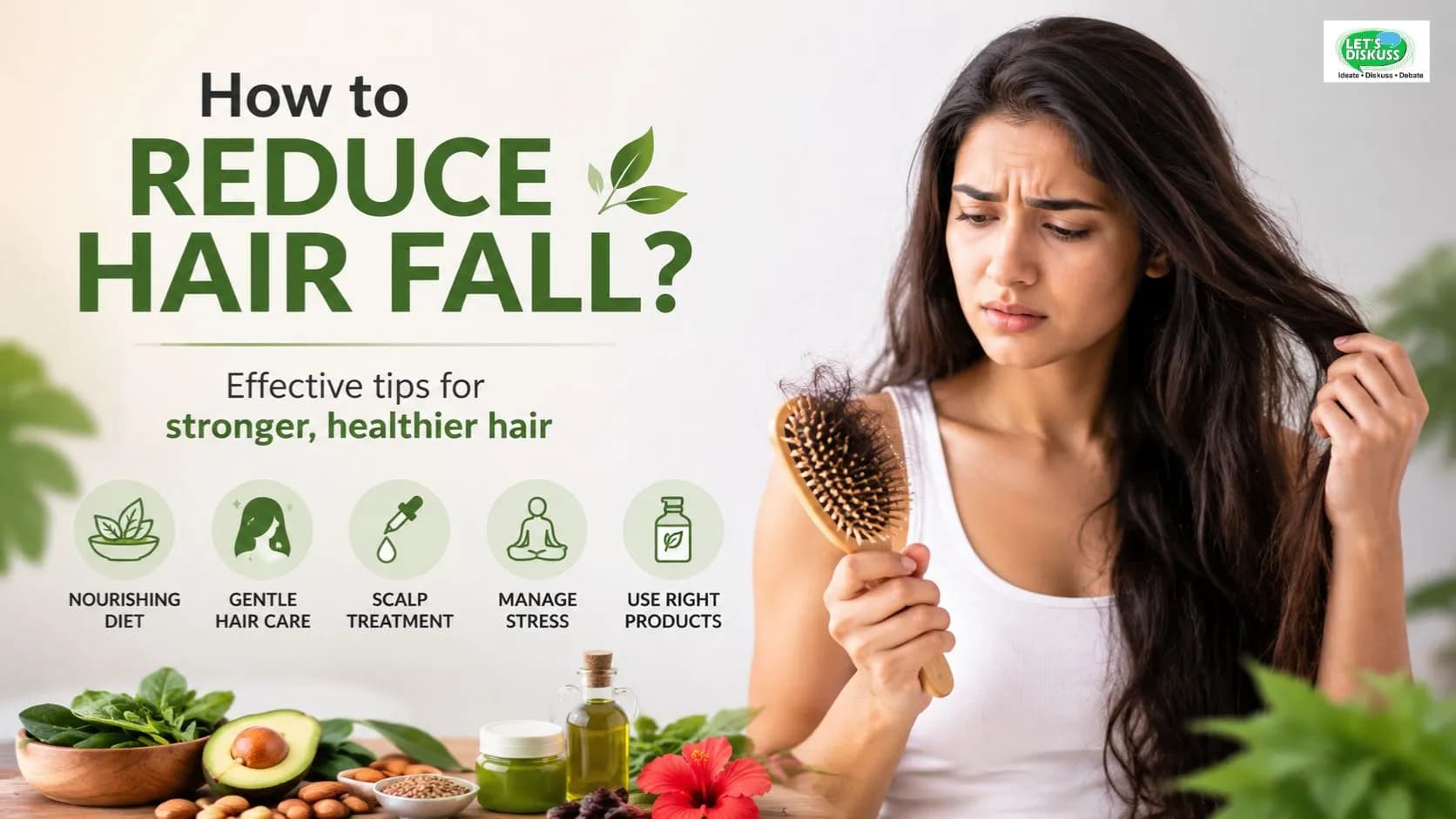
Losing 50–100 hairs a day is normal. To reduce hair fall beyond that, you need to find the cause first — common ones are genetics (androgenetic alopecia), stress or illness (telogen effluvium), low iron/ferritin, thyroid problems, or harsh hair care. Treatment is cause-specific: minoxidil and finasteride for pattern hair loss, iron correction for deficiency-driven shedding, and gentler hair handling for everyone. See a dermatologist if shedding lasts more than 3 months or you see visible thinning.
Is Your Hair Fall Normal or Abnormal?
The average scalp holds about 100,000 hairs. At any time, roughly 86% are actively growing (anagen phase), and around 13% are in the resting phase (telogen), which is when hair is naturally shed.
- Normal: losing 50–100 hairs a day.
- Worth watching: consistently over 100–150 hairs a day, widening hair part, a shrinking ponytail, or a receding hairline.
- How to check: the "pull test" — gently pull a small section of hair (40–60 strands) between two fingers. Pulling out more than 5–6 hairs suggests active shedding worth investigating.
If shedding has lasted more than three months, or you can see the scalp more than before, that's the point to get a proper diagnosis rather than guess at fixes.
What Causes Hair Fall
Hair fall is a symptom, not a single disease. Fixing it starts with identifying which of these applies to you:
- Androgenetic alopecia (pattern hair loss): The most common cause of permanent hair thinning. Driven by genetics and the hormone DHT (dihydrotestosterone), which gradually shrinks hair follicles. Shows up as a receding hairline or crown thinning in men, and diffuse thinning at the part line in women.
- Telogen effluvium: Sudden, diffuse shedding triggered by physical or emotional stress — childbirth, illness, fever, surgery, crash dieting, or major stress — usually starting 2–3 months after the trigger. Often resolves on its own once the trigger is resolved.
- Iron deficiency (low ferritin): One of the most common and most overlooked causes, especially in women. Low ferritin can cause hair shedding even when hemoglobin looks normal on a standard blood test — ferritin is the marker that actually matters.
- Thyroid disorders: Both an underactive and overactive thyroid can cause diffuse shedding.
- Alopecia areata: An autoimmune condition causing patchy, sometimes sudden hair loss.
- Traction alopecia: Gradual hair loss from tight hairstyles (tight ponytails, braids, buns, extensions) that pull on the follicle over time.
- Nutritional gaps: Low protein, zinc, or vitamin D can contribute to shedding, though diet alone rarely causes — or cures — genetic pattern baldness.
- Hormonal shifts: Postpartum, PCOS, and menopause are all common triggers.
- Medication or illness side effects: Certain drugs, chemotherapy, and chronic illness can trigger shedding.
How to Reduce Hair Fall: Medical Treatments
These are the options with real clinical evidence behind them, mainly for androgenetic alopecia — the most common cause of long-term thinning.
- Minoxidil (topical or low-dose oral): FDA-approved, works by extending the hair growth phase. Available over the counter as a topical foam/solution; low-dose oral minoxidil (LDOM) is prescribed off-label and has growing evidence for androgenetic alopecia, telogen effluvium, and several other hair-loss types. Needs consistent use for 4–6 months before results show.
- Finasteride (and dutasteride): Oral medication that blocks DHT production, slowing or reversing pattern hair loss in men. Not approved for women of childbearing age due to birth-defect risk. Regulators added a warning in 2025 about a possible link to suicidal ideation in a small number of users — anyone starting it should be screened and monitored for mood changes.
- Spironolactone: An anti-androgen used off-label in women, particularly where hormonal imbalance is driving the hair loss. Requires monitoring of blood pressure and potassium.
- Minoxidil + finasteride combined: Current best-evidence approach for male pattern hair loss — the combination consistently outperforms either drug alone.
- PRP (platelet-rich plasma): Injections of your own concentrated platelets into the scalp to stimulate follicles. Often used alongside minoxidil/finasteride rather than as a stand-alone fix.
- Low-level laser therapy (LLLT): Laser caps or combs with modest but real evidence for stimulating regrowth, usually as an add-on treatment.
- JAK inhibitors: For alopecia areata specifically — a newer class of drugs (baricitinib, ritlecitinib, deuruxolitinib) that has meaningfully improved outcomes for this autoimmune form of hair loss since 2022.
- Hair transplant surgery: A permanent, surgical option once medical treatment has been tried or for more advanced hair loss.
Important: these treatments target genetic and hormonal hair loss. If your hair fall is from stress, iron deficiency, or a hairstyle habit, the fix is elsewhere.
Nutrition and Hair Fall
Diet cannot cure genetic pattern baldness, but real nutritional deficiencies do make any type of hair fall worse — and fixing them is often the single highest-impact, lowest-risk step.
- Iron/ferritin: The most common nutritional driver of hair shedding, especially in women. A ferritin level below 30 ng/mL is linked to increased shedding in multiple studies. Ask specifically for a ferritin test — a standard hemoglobin/CBC test can look normal even when ferritin is low.
- Protein: Hair is made of keratin, a protein. Chronically low protein intake (crash diets, disordered eating) is a known trigger for telogen effluvium.
- Vitamin D: Low levels are consistently found alongside diffuse hair loss in research; correcting a deficiency is reasonable but won't help if your levels are already normal.
- Zinc: Deficiency is linked to hair shedding; supplementing without a confirmed deficiency has limited evidence of benefit.
- Biotin: Widely marketed for hair growth, but true biotin deficiency is rare, and evidence for biotin supplements helping people who aren't deficient is weak. Get levels tested rather than assuming you need it.
Practical rule: get a blood test (ferritin, thyroid panel, vitamin D, and a general CBC) before buying supplements. Supplementing a nutrient you're not actually deficient in doesn't help and can occasionally cause harm.
Hair Care Habits That Reduce Shedding
None of these reverse genetic hair loss, but all of them reduce unnecessary breakage and mechanical shedding:
- Avoid tight hairstyles — tight ponytails, buns, braids, and extensions cause traction alopecia over time. Alternate styles and loosen them.
- Reduce heat styling — blow-dryers, straighteners, and curling irons weaken the hair shaft; use a heat-protectant and the lowest effective temperature.
- Be gentle when wet — hair is at its weakest when wet; use a wide-tooth comb, not a brush, and avoid vigorous towel-drying.
- Space out chemical treatments — bleaching, relaxing, and perming damage the hair shaft; give hair recovery time between treatments.
- Use a mild, sulfate-free shampoo if your scalp is sensitive or dry, and don't over-wash to the point of stripping natural oils.
- Scalp massage has modest evidence for improving hair thickness by increasing local blood flow — low-risk and reasonable as an add-on, not a stand-alone treatment.
- Don't smoke — smoking is associated with worse hair loss outcomes and poorer response to treatment.
Lifestyle Factors
- Manage stress: Chronic stress is a well-documented trigger for telogen effluvium. This won't fix genetic pattern baldness, but it removes a real contributing factor.
- Sleep: Poor sleep affects the hormonal and inflammatory pathways linked to hair cycling.
- Crash diets and rapid weight loss: A common, underrecognized trigger for sudden diffuse shedding — gradual, adequate-calorie weight loss is safer for your hair.
- Recent illness, fever, surgery, or childbirth: Expect shedding 2–3 months later; this is usually telogen effluvium and typically resolves within 6–12 months on its own.
When to See a Dermatologist
Book an appointment rather than self-treating if:
- Hair fall has lasted more than 3 months with no clear trigger (illness, stress, delivery)
- You see patchy bald spots, not diffuse thinning
- There's scalp redness, itching, scaling, or pain along with the hair loss
- You're a woman with hair loss plus irregular periods, acne, or excess facial hair (possible PCOS)
- Over-the-counter treatment (minoxidil) for 4–6 months hasn't helped
- You want to start finasteride, spironolactone, or oral minoxidil — these need a prescription and monitoring
A dermatologist can run the right blood tests (ferritin, thyroid, vitamin D), examine the scalp with a dermatoscope, and in some cases do a scalp biopsy — this is the fastest way to stop guessing and start the treatment that actually matches your cause.
FAQs
How many hairs is it normal to lose in a day?
50–100 hairs a day is normal. Consistently losing more than that, or noticing thinning, a wider part, or a smaller ponytail, points to a problem worth investigating.
Can hair fall be reversed?
It depends on the cause. Telogen effluvium (stress- or deficiency-driven shedding) is usually fully reversible once the trigger is fixed. Androgenetic alopecia can be slowed and partly reversed with minoxidil and finasteride, especially if started early, but it isn't curable. Scarring alopecias can cause permanent follicle loss.
Does biotin help with hair fall?
Only if you're actually biotin-deficient, which is uncommon. For most people with normal biotin levels, supplementing has little evidence of benefit — a blood test is more useful than a bottle of gummies.
Is hair fall from stress permanent?
Usually not. Stress-triggered shedding (telogen effluvium) typically starts 2–3 months after a stressful event and resolves within 6–12 months once the stress or trigger resolves.
Can diet alone stop hair fall?
Diet can't cure genetically driven pattern baldness, but correcting a real deficiency — especially low iron/ferritin — can stop deficiency-driven shedding. Fixing a deficiency you don't have won't help.
What's the fastest way to reduce hair fall?
There's no overnight fix — hair growth cycles are measured in months. The fastest realistic path is: get tested (ferritin, thyroid, vitamin D), start minoxidil if pattern hair loss is likely, stop mechanical damage (tight styles, heat, harsh chemicals), and give any treatment at least 4–6 months before judging results.
Are minoxidil and finasteride safe to use together?
Current evidence shows the combination is more effective than either drug alone for male pattern hair loss. Finasteride carries specific risks (not for women of childbearing age; a 2025 regulatory warning on rare mood-related side effects), so it should be started under medical supervision.
Also Read:
- Does dandruff cause hair fall?
- What Causes Your Hair to Fall Out?
- How can I get healthy and shiny hair?
- What are the best hair oils for men in summer?
Sources
- American Academy of Dermatology (AAD) — Hair Loss: Diagnosis and Treatment
- StatPearls (NIH) — Telogen Effluvium
- Serum ferritin and vitamin D levels in diffuse hair loss — PMC
- Assessment of Serum Ferritin Levels in Telogen Effluvium — Cureus
- Dermatology Times — International Hair Loss Consensus Coverage
- 2026 Hair Loss Treatment Options — Doctor Guide
- 2026 Balding Treatment Roundup — FDA-Approved Options
This answer is for general information and does not replace a diagnosis or treatment plan from a licensed dermatologist.
Sophia Hernandez is a Registered Dietitian (RD) and health and beauty writer with over 12 years of clinical experience in nutrition, dietetics, and preventive health. She holds a Master of Science in Nutrition and Dietetics from Columbia University Mailman School of Public Health and a Bachelor of Science in Food Science from the University of California, Davis — credentials that place her nutrition writing within one of the most evidence-based and clinically rigorous frameworks in the field. Her content covers clinical nutrition, skin health and diet, weight management, gut health, sports nutrition, eating disorders, beauty from within, and the science behind health and wellness trends that are frequently misrepresented in popular media. Her work has appeared on platforms including Healthline, Everyday Health, and Self, where she contributes medically reviewed articles and nutrition guides for readers who need health and beauty content grounded in verified clinical evidence — not influencer-driven wellness trends. Over 12 years, Sophia has worked with patients across clinical settings including hospitals, outpatient nutrition clinics, and private practice — covering conditions including diabetes, cardiovascular disease, eating disorders, and skin health. She has published 400+ articles and nutrition guides, presented at the Academy of Nutrition and Dietetics (AND) Annual Food and Nutrition Conference, and is a credentialed member of the Academy of Nutrition and Dietetics and the American Society for Nutrition (ASN). Across all her writing, every nutrition claim is supported by peer-reviewed research, every dietary recommendation reflects current clinical guidelines, and no wellness trend is endorsed without evaluating the evidence behind it — because in health content, the gap between what sounds good and what is clinically supported can directly harm readers who act on it.
